WE’VE spent the last few weeks home for the holidays on the KwaZulu-Natal South Coast, virtually exploring some of the interesting places on my doorstep.
Let’s wander off now and do some exploring further afield. When my husband, Bill and I do take off into the wide blue yonder, southern Africa’s wild places are usually our choice of destination but we’ve discovered some great towns, dorpies and even cities on the way there.
Over the next few weeks come with me on a virtual road trip to revisit some of my favourite urban spaces. I’ll start with one of the very best, a fairly substantial town they call the Jewel of the Karoo.
Its cultivated demeanour and gracious air of solid respectability belie Graaff-Reinet’s somewhat roguish past. It once had a reputation as a rough frontier town. Just nine years after it was established to bring order to the lawless Camdeboo Plains and Sneeuberg Mountains, Graaff-Reinet even staged its own revolution. Its denizens, by all accounts a rather wild bunch, drove out government representatives and declared the town an independent republic.Their republic was short-lived. The English took it back a year later.
By the mid 1800s, because of its strategic geographical position, South Africa’s fourth oldest colonial town had grown into the most important commercial centre in the Cape Colony interior. Even the exodus of the many families who joined the Great Trek did little to slow its progress.

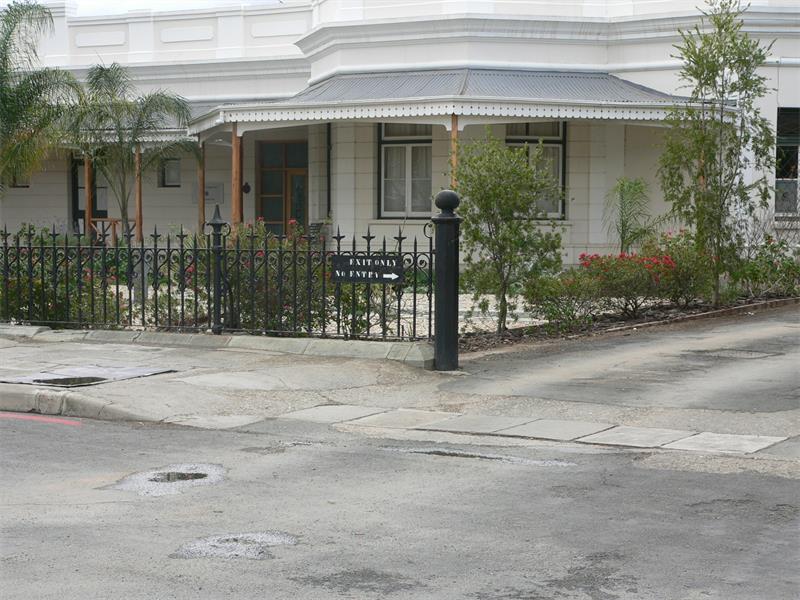
The opening up of the Kimberley diamond fields and, in 1879, the arrival of the railway line from Port Elizabeth ushered in a period of unprecedented wealth and expansion. Many of the now carefully restored and maintained grand homes and elegant commercial buildings – a number of them National Heritage Sites – date back to that prosperous era.
Today Graaff-Reinet is a beautiful town, set in a horeseshoe bend in the Sundays River. Ringed by mountains, it is almost completely surrounded by the newly proclaimed Camdeboo National Park. The imposing Groot Kerk, designed by Cape architect J Bissett, on similar lines to England’s Salisbury Cathedral, dominates the spotless town centre. Last time we visited the town, a resident pointed out its unique feature. He told us that it was the only church in South Africa with a chimney.
Shady old trees line the graceful streets and everywhere it is obvious that the people of Graaff-Reinet care about their architectural heritage. Most of the old buildings, private and public, are in wonderful condition, their authenticity marvellously intact. The late Anton Rupert, a renowned South African philanthropist, was born in Graaff-Reinet and was very involved in much of the restoration work.
There are lovely old churches; grand Victorian dwellings dripping with broekie lace; an ornate town hall; fine examples of stately Cape Dutch architecture; and delightful examples of the simple, flat-roofed, green-shuttered Karoo-style town houses. Many of the old buildings are now put to use as museums, antique shops and galleries.

On our first, three-day visit to Graaff-Reinet, quite a few years ago, we were charmed by the town and its friendly people. The best way to explore Graaff-Reinet is on foot, we discovered, but wear sturdy walking shoes as there is plenty of walking to be done. We spent a sunny afternoon and the next, drizzly, cold day, getting to know the town. After buying a ‘package deal’ ticket, which covered the entry fees to five museums, we set off on our walking tour.
If you don’t have time to see all five museums, at least make sure you see Reinet House, a fine example of a Cape Dutch H-shaped house. The elegant dwelling and the interesting exhibits it houses offer a wonderful glimpse back in time. It is thought that Reinet House might have been designed by Louis M Thibault, who designed The Drosty that now, together with the adjacent Stretches Court, is a luxury hotel complex.
Stretch’s Court is my favourite place in the town centre. It was named after Captain Charles Lennox Stretch who was appointed government land surveyor at Graaff-Reinet in 1823. Apparently, the captain was highly respected for his integrity and public spirit. He bought a large piece of ground adjacent to The Drosty, dividing it into allotments in 1858. Many of these were bought by labourers and freed slaves. Their charming cottages have been beautifully restored, the doors, window frames and shutters painted bright rainbow colours.
The simplicity of the white-washed, recently restored `Klein London’ (as in London Missionary society) Church, now put to use as an art gallery, offsets perfectly the art work on show inside. When we first visited Graaff-Reinet, it housed an exhibition of the panels by JH Pierneef that once adorned Johannesburg Station. Now known as the Jan Rupert Centre, this little church was rescued from obscurity and disrepair through Dr Rupert’s intercession. Restored and renamed after Dr Rupert’s brother, it was handed over to the Save Graaff-Reinet Foundation in 1986.

There were some poignant exhibits at the war museum. This peaceful town must have endured so much during the Anglo Boer War, a particularly nasty civil war that would have divided the community, even some families. The cold wind saw us interrupting our walking tour quite frequently for coffee breaks – and breakfast at our favourite Graaff-Reinet restaurant, housed in a section of the handsome Graaff-Reinet Club. Built in 1876, it is the second oldest social club in South Africa.
During the Anglo-Boer War it was frequented by the Coldstream Guards who were stationed in the town. The mantelpiece clock they presented to the club still keeps perfect time.
When we were museumed out, we ignored the drizzle and took a walk along charming Cradock Street to admire all its restored buildings. The longest street in Graaff-Reinet, it is also the town’s second oldest and is something of an architectural showcase.
It was such a pleasure to stroll through the town centre, absorbing its history. The townsfolk are used to camera-clicking tourists. They seem to appreciate visitors taking time out to enjoy their wonderful heritage, which they preserve so carefully. Even shopping in Graaff-Reinet is a delight.

Many of the businesses, including antique shops, galleries, restaurants, coffee houses and McNaughton’s, one of the best little books shops in South Africa, are housed in historical buildings, the interiors as lovingly maintained as the exteriors.
While staying in Graaff-Reinet, we also did a day trip to nearby Nieu Bethesda, another enchanting towns, which we will visit next week, and we spent some time in the Camdeboo National Park but we felt that our three-day visit didn’t do the town justice.
We spent just a couple of hours there a few years later, on our way to the Karoo National park, but didn’t have time to do much more than stock up with supplies after a quick sight-seeing drive and a stop at the towns famous book shop (it really is a must for bookworms). Then we heard that the Camdeboo National Park had expanded and was now offering camping facilities and self-catering accommodation in safari tents. Two years ago, returning from a wedding in the Western Cape, we spent four days in the wonderful new campsite and heartily recommend it to any campers travelling in the area.
The national park, which includes the magnificent Valley of Desolation, has been greatly expanded and offers first class wilderness experiences, excellent birding and wonderful game viewing.
Amazingly the camp is just a few minutes drive from the centre of town, so whether you like wilderness or a more urban, cultural experience, the jewel of the Karoo now offers the best of both worlds.

HAVE YOUR SAY
Like our Facebook page, follow us on Twitter and Instagram
For news straight to your phone, add us on BBM 58F3D7A7 or WhatsApp 082 421 6033