Tent Travels: A little piece of yesterday
Fort Nottingham is a small settlement with big history.
A LOUD but not unfriendly voice hailed us just as we are about to return to our vehicle. It was the festive season and we were heading to Gauteng for Christmas, taking a slow route that included a bit of Midlands meandering along the way. After spending the night at a campsite near Nottingham Road we woke to a wet and misty morning. It was definitely the type of morning that encourages one to go in search of breakfast at a friendly wayside inn – or at least one of the delightful coffee shops that pepper the Midlands.
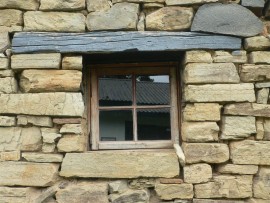
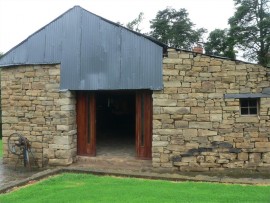
On an impulse, in search of a breakfast venue, we followed a sign to Fort Nottingham. We soon found ourselves in a green and pretty enclave – hardly a town really – and we decided to take a look at the museum. Unfortunately it was still closed. No problem – the rain had abated to a grey drizzle, so we stopped to take a quick look at the beautiful stone building that housed the museum before continuing on our way.

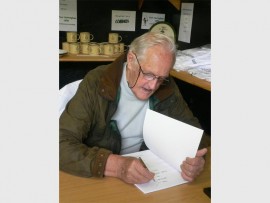
But David Fox was having none of that. He was delighted to find two wet but interested strangers in his village and stalked off to fetch the museum keys. David was the Chairman of the Fort Nottingham Advisory Committee and the unofficial keeper of its history. He also held the title of Chevalier de l’Ordre National de Madagascar and told us he visited Madagascar regularly. And he was the author of a delightful and informative publication, ‘The History of Fort Nottingham’. We took shelter under the eaves of the museum and waited for him to return.
Fort Nottingham celebrated its 150th birthday in 2005. There was a photograph display of the grand banquet, held by candlelight in the museum, that formed part of the lively celebrations. The fort was established in 1856 when the Acting Governor of the Colony of Natal sent a small detachment of the 45th Foot, the Sherwood Foresters, a regiment from Nottingham in England, to establish an outpost there.
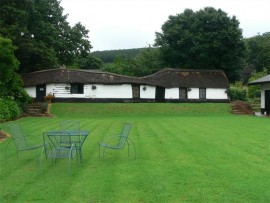
In the Durban area, the names, 45th Cutting and nearby Sherwood, also acknowledge the influence of the 45th Foot in KwaZulu-Natal and the province’s Robin Hood connection. The building of Fort Nottingham was in response to the constant raids by the San on the early settlers’ farms. The museum, we learned was the Fort Nottingham stable. Other thatched building arranged around the square and some of the houses along the one road leading into Fort Nottingham, were part of this early settlement.

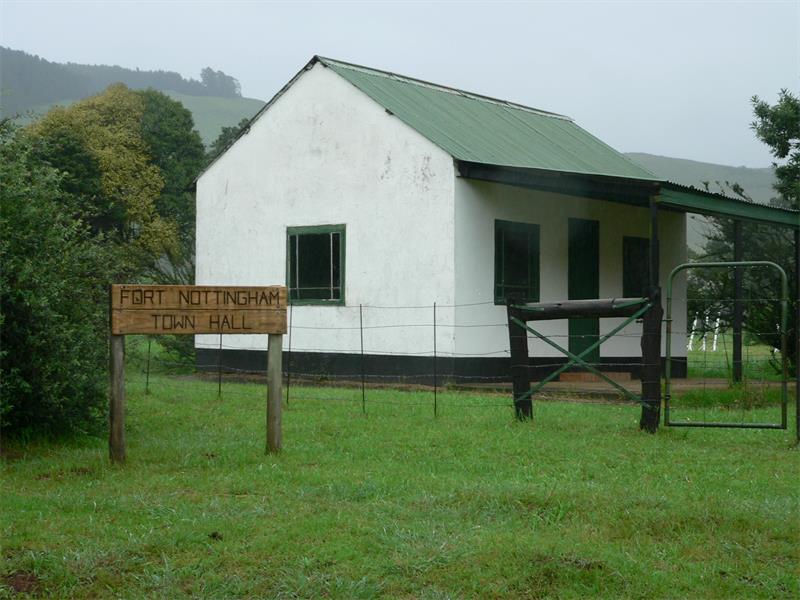
The town’s development was arrested by the coming of the railroad and the establishment of its sister town, Nottingham Road, which grew up around the railway station. However, its lack of progress has preserved Fort Nottingham’s old-world charm. It is a truly beautiful little spot, completely unspoiled and uncommercialised. It also boasts the smallest town hall in South Africa.
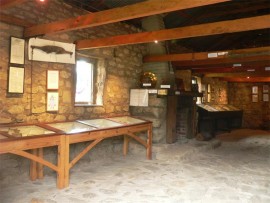
David returned with the keys and opened the museum doors to an eclectic collection of treasures from a bygone age. He then proceeded to conduct us on an excellent guided tour of the museum, his fascinating stories and quirky anecdotes bringing to life the early settlers and soldiers who once peopled the small settlement. Like all towns, even the very smallest, Fort Nottingham has had its fair share of human drama, tragedy, scandal and intrigue.

After our leisurely tour of the museum, interrupted now and then by the arrival of chatty townsfolk, we were let loose in the craft and curio shop – a quite amazing emporium that also stocked David’s book. The sun had come out by then so we were also able to take a walk around the little town and a look at the commonage. Surely any town with a commonage just has to be worth visiting.
We left Fort Nottingham, fully informed about its fascinating history and delighted by the friendly welcome we had received. It is the quaint and quirky moments that pop up unexpectedly along the way that make travelling around southern Africa such a joy.
HAVE YOUR SAY
Like our Facebook page, follow us on Twitter and Instagram
For news straight to your phone, add us on BBM 58F3D7A7 or WhatsApp 082 421 6033