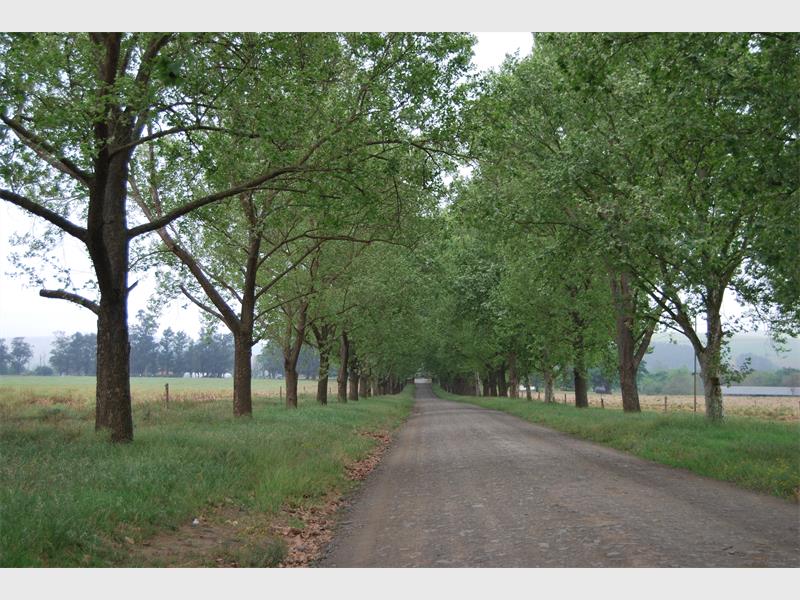
FOR the last few weeks we’ve stayed close to home, virtually visiting some of the KwaZulu-Natal South Coast’s beauty spots. Now lets venture a little further afield to do some Midlands meandering, visiting some of the delightful places in the green and pleasant KwaZulu-Natal Midlands area. Betwixt the mountains and the sea, this region lacks the grandeur of our Drakensberg mountains, the family attractions of the seaside and the wildlife experiences of our wonderful game reserve. When comparing Allan Paton’s green and rolling hills with these attractions, it should be no contest. One would expect the Midlands region to be squeezed off the provincial tourism map.
Amazingly, it isn’t.
You see, the Midlands region doesn’t try to be what it is not. It doesn’t sell itself as particularly wild, grand or unique.
It simply trades on its prettiness and its gracious rustic charms – and employs some pretty powerful tools to advertise these attributes. Is there a soul in South Africa who doesn’t know about the Midlands Meander? And considering all the overseas tourists we bump into whenever we meander through the Midlands, it is clear that many foreigners must know about the popular tourist route as well.

The friendly Midlands folk, really know a thing or two about tourism and are well aware that excellence keeps the tourist dollars rolling in. Whether you visit a craft shop, a gallery, a deli, a restaurant, pub or coffee shop, you are sure to experience quality and excellent, friendly service, not to mention really lovely settings, ambience, décor – and stunning gardens.
Accommodation in the Midlands region is just what you would expect, much of it upmarket in an understated country sort of way and all unashamedly pretty.
Not surprisingly, wedding venues abound here in this romantic region. There is accommodation for all budgets, too, ranging from posh B&Bs and fancy hotels to simple but pleasant self-catering units. There is even a quaint camping site on a farm and a big family camping site at Midmar Dam for the under-canvas brigade. There are also sorts of interesting tourists attractions, too, my favourite being the renowned Baynesfield Estate, a must for anyone with green fingers.

It is with optimism, generosity, love and faith in the future that a gardener first digs into the earth to create something that will take decades, even centuries, to reach maturity. Did Joseph and Sarah Baynes ever imagine the legacy they would leave the people of South Africa when they laid out the three hectare garden on their farm, Nel’s Rust, near Richmond? Today Nel’s Rust, which Jospeh bequeatherd to the nation, is known as Baynesfield Estate and we have spent some relaxing weekend in the little cottage that provides very reasonably priced accommodation for overnight visitors.
A natural pioneer, he was to achieve so much, both as a farmer and a public figure, in the 83 years allotted to him.
We also visit the estate when the regular open days and vintage fairs are held but it is so special to spend a night or two there when it is quiet and we can have the gardens – and the romance that infuses them – all to ourselves. The story of the estate dates back to 1850 when eight-year-old Joseph, who was born in Yorkshire, came to the fledgling colony of Natal with his father.

After buying Nel’s Rust in the lovely Umlaas Valley, he started the first butter factory in the colony, even equipping it with a refrigeration room. He also launched the bacon industry in the young colony. A 15km canal he constructed from the upper Umlaas River drove turbines that generated electricity for the farm and fuelled the mill to grind the maize he grew on his estate.
Later, as a Member of Parliament he was behind the scheme to drain Congella Swamp, doubling the size of Durban harbour.
He was also chairman of the Indian Immigration Board and fought for better conditions for the indentured Indians, brought to the colony as labourers. As a pioneer Natal farmer he is best remembered as the `Conqueror of the Tick’. He was the first person in South Africa to dip cattle, a practice that initially earned him scorn. Joseph and his first wife, Maria, lived in a humble dwelling on the farm. Sadly, in 1874, a year after they were married, Maria died while giving birth to a daughter who also did not survive.

Three years later Joseph married Sarah Ann Tomlinson and, four years after their wedding, he started building the grand red-brick home that is now known as Baynes House. It is a stately Victorian home, with a wide verandah, plenty of broekie lace, a turret and an elegant flight of stairs leading to the ornate front door. Joseph and Sarah must have loved their garden. They planted many of the garden’s now-massive trees and profusely flowering shrubs, including the eye-catching camelia bushes on either side of the stairs. The couple did not have children and when Joseph died, in 1925, he left Nel’s Rust, which he asked to be renamed Baynesfield Estate, to the people of South Africa.

Today, Baynesfield is run by a board of trustees and an annual grant is made to the committee that manages the museums established on the estate. The original humble homestead is now a woodcrafters’ museum, housing a wonderful collection of old wood crafting tools, and a blacksmith’s workshop. The handsome building that was the original butter factory is the dairy museum and also has a display on the indentured Indians. Visitors can see the farm diaries and various show trophies in what was once Joseph’s office.
The tractor museum displays vintage farm machinery, steam engines and tractors and is home to the Natal Vintage Tractor and Machinery Club.
There are also a hobbies museum, a wireless museum and a gardening museum. The open days and vintage fairs are held every three months or so, the Christmas fairs being the most festive. In the original homestead, the smithy is fired up and woodworkers demonstrate the use of their lovely old wood craft equipment. It is amazing what they can achieve without modern power tools.

Much of the noisy action revolves round the tractor museum, where all the old steam engines, antique farm machinery, stationary motors and tractors are fired up and set to work.
The bandstand in the garden is also put to use. Tables and chairs are set out under the massive old trees and guests can enjoy live music with their tea and cake. All sorts of home-grown produce and hand crafts are on sale at the country fair, the stalls set out in shady nooks alongside the tea garden.
Tours of the grand old house are offered and all the museums are buzzing with visitors.
Of course, by December, the magnificent, flower-filled garden is in its riotous summer glory. Joseph’s and Sarah’s garden is probably at its best at this time of the year when the trees are green and leafy and the sweeping, manicured lawn sets off the voluptuously flowering beds. This Midlands green creation is, however, always an island of beauty, tranquility and birdsong and it is just as lovely any time of the year, with each season bringing its own charms. Gardening is a year-round art form and the wise gardener plants with all four seasons in mind. Joseph, Sarah and those who have come after them have successfully done this to create a garden for all seasons.
HAVE YOUR SAY
Like our Facebook page, follow us on Twitter and Instagram
For news straight to your phone, add us on BBM 58F3D7A7 or WhatsApp 082 421 6033