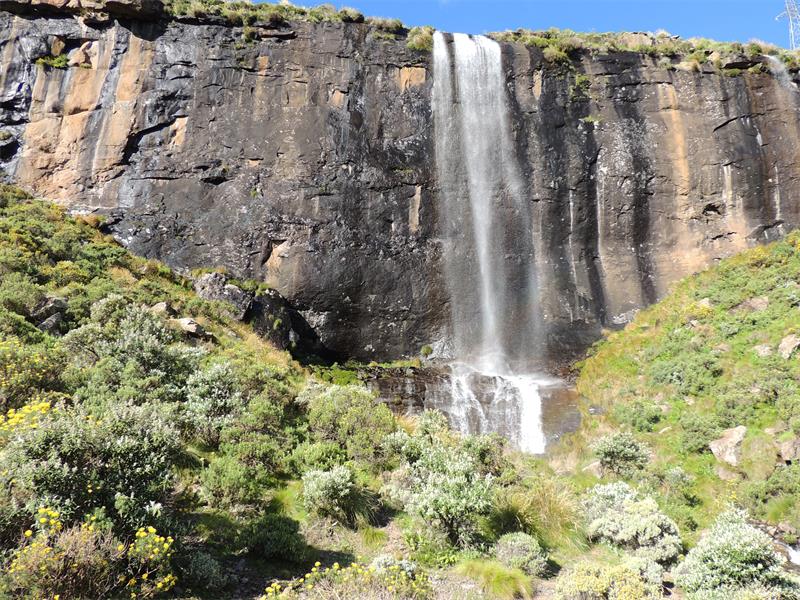
TRAVELLING to Johannesburg the long way via Sani Pass and Lesotho was prompting many happy memories as we drove this familiar route. Then we reached Sani Top and everything had changed.
The funny little border post remained the same and even though it was summer, the same old coal fire sent out smoke signals, filling the air with the smoky aroma I always associate with Lesotho.
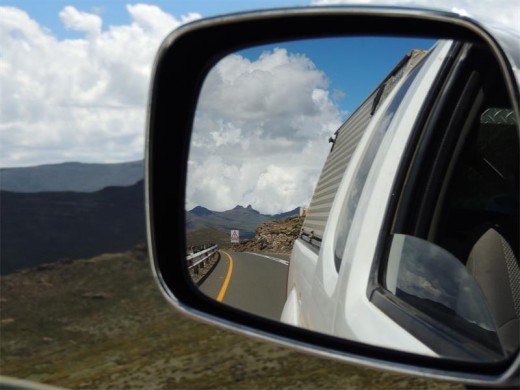
However, a fancy new car park was in the process of being built and Sani Top had benefited from a general clean-up. Most amazing, though, was the good tarred road that stretched out before us, replacing the rutted old gravel road that used to suffice.
Even more amazingly, we were soon to discover that the road had been tarred all the way from Sani to the Caledonspoort border post. Miracles of miracles – it certainly was a great surprise. More changes awaited us at what used to be the old, rustic Sani Top chalet.
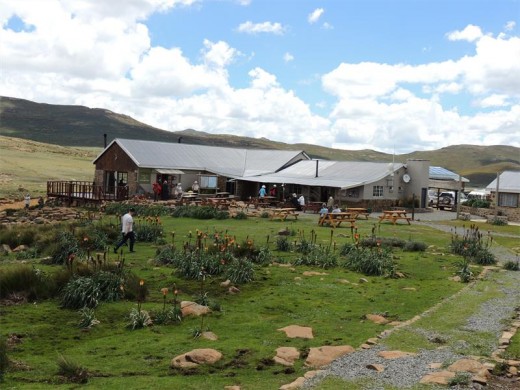
It had changed its name to Sani Mountain Lodge and had undergone a complete transformation, upgrading itself from a simple mountain chalet into a smart, upmarket establishment. Things were certainly happening here in this remote corner of Africa, at the top of Sani Pass.
Another recent development at Sani Pass was a new lodge, Sani Stone Lodge, about 8km from the border post and we’d thought about spending the night there. We were way ahead of schedule, though, and reached to turn-off at about 2pm.
It was far too early to stop. Instead we decided to drive on further into Lesotho to find somewhere else to spend the night. Although the new road added to our comfort, it didn’t really make the journey much quicker.
It was still a twisty mountain road and the local people and animals used it extensively so speed was out of the question.
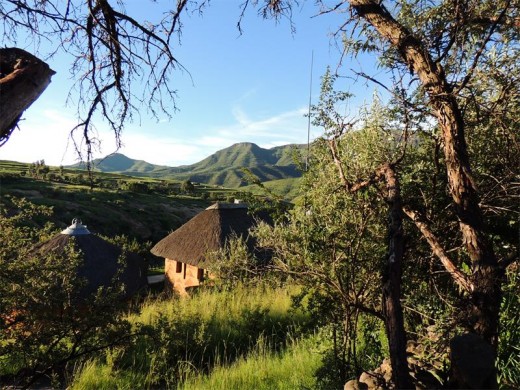
We constantly had to slow down and wait until it was safe to overtake ambling pedestrians, groups of school children, packs of donkeys, flocks of goats or sheep, horses and dogs. Lesotho is so beautiful, though, and life there is lived in the slow lane.
A visit to the kingdom in the sky should never be rushed.
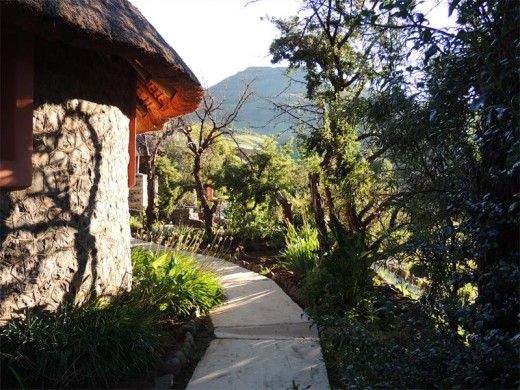
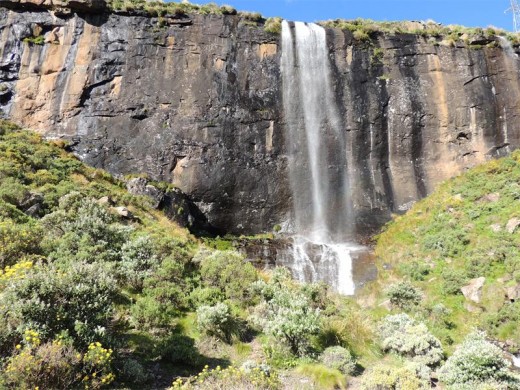
The route through the highlands of Lesotho offered an extravagance of beauty, almost too much to take in. The magnificent sculptured mountains were intense shades of green and after generous summer rains they were oozing moisture.
Like big soggy sponged they sent water rushing down the mountains in foaming falls and glittering crystal streams. The rivers were full, sometimes overflowing, and the rocky outcrops, with their sheen of silvery moisture, shimmered in the sun.
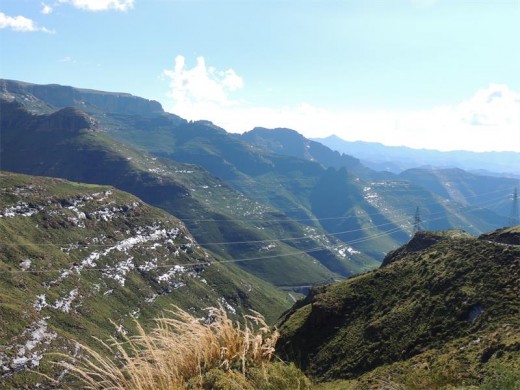
For long periods the road would wind alongside a twisty stream or river then it would wend its way upwards to skirt the edges of their green and pleasant valleys. Suddenly it would soar again, high over roller coaster mountain passes, offering mountainscape views that seemed to have no end.
It was all too beautiful for words. Evening was approaching and we needed to start looking for an overnight spot. We’d heard about possible accommodation at Liphofung Cave and Nature Reserve so when we saw a signpost advertising it we turned off the main road and went in search.
A good cement road took us through a pretty little village to a boom gate where a guard asked us to wait while he called the manager. After a little while, he arrived and welcomed us warmly.
When we asked about accommodation he took us to a pair of attractive, comfortably fitted-out traditional-style rondavels separated from each other by a small communal kitchen and basic but clean ablution block.
Overnight accommodation would cost us R250 per four-bed rondaval. There were also more up-market, double-storey rondavels with private kitchenettes and bathrooms.
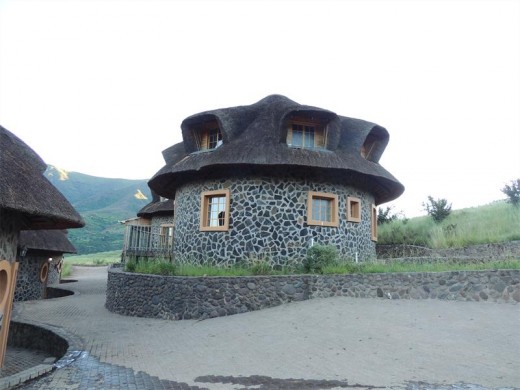
These would have only cost us a princely R450 for up to four people but were not quite complete yet and were waiting for their water connections.
Liphofung Cave is the smallest of four reserves that fall under the Lesotho Highlands Development Authority, the implementing agency for the Lesotho Highlands Water Project.
As well as the reserves, its tourism portolio includes lodges, one of which is situated near Katse Dame, and the Katse Botanical Garden in Katse village.
I’d love to see this garden as it apparently features a wonderful selections of flowering plants adapted to their lofty home.
Between Oxbow and Butha-Buthe, Liphofung Nature Reserve is about 30km away from the Caledonspoort border post into South Africa.
The actual cave is a sandstone overhang in the valley of a tributary stream of the Hololo River. If we’d had more time we would have enjoyed a guided walk to see it as it apparently boasts some striking San rock art.
This art and the many stone age implements found at this site show the cave has been used by humans since prehistoric times. It often accommodated King Moshoeshoe when he visited that part of his Kingdom.
YOU MIGHT ALSO BE INTERESTED IN: Tent Travels: A saunter up Sani
Like so many traditionally built structures in Lesotho, the information centre, craft shop and accommodation are built from local stone and blend in beautifully with their stunning natural surrounds.
We spent an absolutely wonderful evening there, enjoying the pretty setting and a view of the verdant river valley and sandstone formations.
We also enjoyed being almost part of the village and it was lovely to be able to watch the villagers going about their business as night set in.
The simple, rustic lifestyle of theses gentle, dignified people has probably not changed much for the last 100 years – although we did spot a few cellphones – and we were very conscious of the peace and contentment that the village seemed to generate.
After sleeping soundly through the night, we were roused early by the sounds of the village waking up. Dogs barked, roosters crowed and a couple of donkeys sang a hearty duet to welcome the new day.
Children smart in their neat uniform were heading off to school, perhaps with a long walk ahead of them, and many adults were draped in traditional Lesotho blanket to ward off the early morning chill.
YOU MIGHT ALSO BE INTERESTED IN: Tent Travels: A short mountain interlude
When we packed up and set off back along cement road to rejoin the main road, the children we passed waved shyly at us, blessing our journey with their beautiful smiles.
Soon after rejoining the road we drove thorough Butha-Buthe to the Caldonsport border post. In just a few minutes our passports were stamped and we were back in South Africa after yet another memorable sojourn in the kingdom in the sky.
HAVE YOUR SAY
Like our Facebook page, follow us on Twitter and Instagram
For news straight to your phone, add us on BBM 58F3D7A7 or WhatsApp 082 421 6033