MOTHER Nature is just the cleverest of gardeners when it comes to choosing colours for her seasonal palettes.
Spring in my coastal indigenous garden is celebrated with a burst of pretty brights, especially sunny yellows and buttery creams.
YOU MIGHT ALSO BE INTERESTED IN : Invasives and Natives: Grey leaves, good and bad, and small Barlaria wars
Come summer and the floral palette changes, with plenty of restful green foliage and colder floral colours predominating. That is when many plants with cool blue flowers, like Agapanthus and Plumbago, come into bloom.
Autumn seems to be all about pinks and mauves, with the various Plectranthus species and my ribbon bush (Hypoestes aristatas) putting on a fine show, seemingly to bridge the restrained summer palette and the winter carnival still to come.
For winter in our corner of Africa is all about hot, vivid colour. In this season the gardens – and our wild places – are aflame with brilliant yellows, oranges, corals and reds. What a celebration it is.
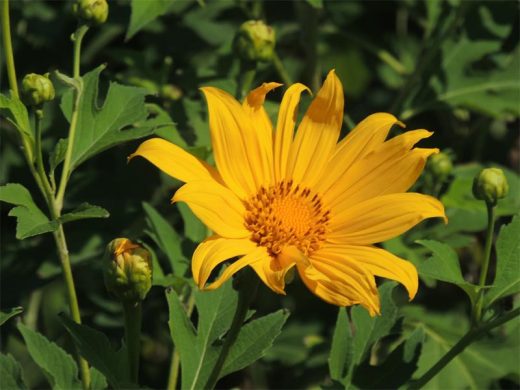
This month, as we move into winter so many bright flowering plants are just beginning to bloom but unfortunately a particularly eye-catching one, now brightening up our road verges with a profusion of cheerful yellow flowers, shouldn’t be there at all.
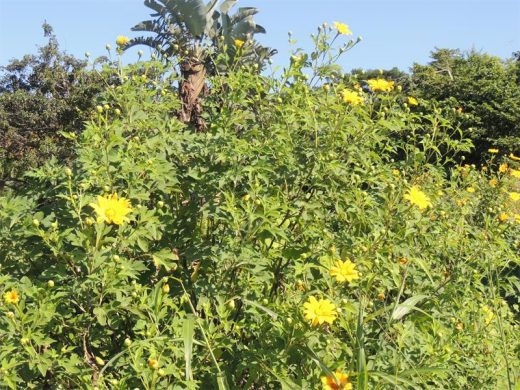
It is a listed alien invader. It is hard not to miss these glorious Mexican sunflowers and it is so sad to think that these lovely plants are actually damaging our environment.
They are a member of the daisy family and are known in botanical circles as Tithonia diversifolia. According to the Wildlife and Environmental Society of South Africa handbook of invasive alien plants in KwaZulu-Natal, they originate from Central America.
They form dense, extensive colonies, invading verges, river banks and urban areas, competing with and replacing the indigenous vegetation. They spread their seeds prolifically and are hard to control. If their bright flowers alert you to a colony that has made its home on your property, pull the plants out by hand as quickly as possible, before they can produce seeds.
The Mexican sunflower is such a pretty plant but there are so many other indigenous plants that would provide glorious winter colour in your garden so there is just no excuse for harbouring this troublesome alien on your property.
YOU MIGHT ALSO BE INTERESTED IN : Invasives and Natives: Triffid trials and a soapy native
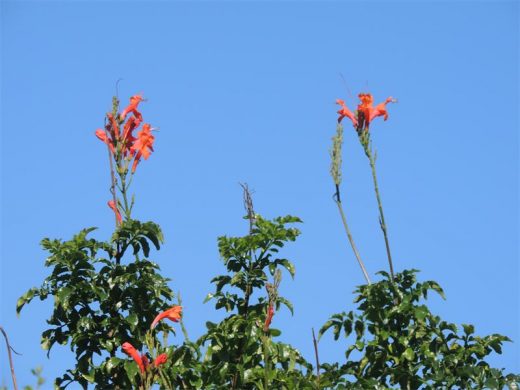
Many of the plants that are starting to flower now are rich sources of nectar, attracting plenty of insects and sweet-toothed birds. I’ve noticed that the corners of my garden where Tecomaria capensis is coming into bloom are already abuzz with grateful insects.
This popular garden subject, which many gardeners know as Cape honeysuckle, is one of the best known of our indigenous gems and is freely available at most nurseries in this province. It comes in an assortment of pretty colours – red, orange, yellow and salmon – and is great for screening or can be pruned and shaped into a hedge.
The sunbirds sip politely, using their long beaks to access the nectar, but other birds simply rip open the flowers to get at the sugary treat.
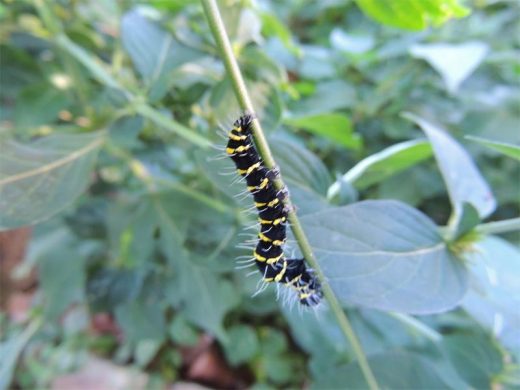
The flowers are magnets to all sorts of insects and, according Charles and Julia Botha, authors of ‘Bring Nature Back to your Garden’, the plant is a larval food plant for no less than ten moth species. Of course that makes Cape honeysuckle a hit with the insect-eating birds, too.
The resident sunbirds are already hovering around the Leonotis leonurus, waiting for its velvety orange flowers to open. Although its common name is wild dagga, it is no relation to Cannabis sativa (dagga), by the way.
It is also known by the descriptive name of lion’s paws, but it is perhaps its Zulu name – utshwala-bezinyoni – birds’ beer – that says it all. Its plentiful nectar is irresistible to sunbirds but even when the flowers disappear, the streaky-headed seedeaters love it seeds, according to Julia and Charles.
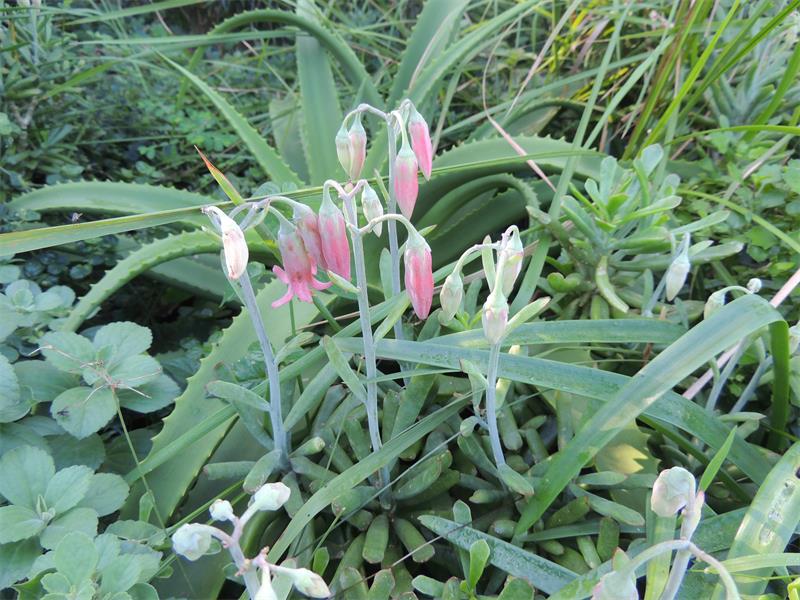
Winter is a good time for succulents and my various Cotyledon species are starting to put on a show. How pretty are their clusters of little orange and coral bells. The best known of this genus is Cotyledon orbiculata, commonly called pig’s ear because of its big, round, succulent leaves.
One of my favourite winter floral treats are the winter-flowering Kniphofia species, which also provide a nectar feast to the sunbirds and many insects.
There are tons of different species and they are often two-toned, ranging in all shades of red and orange and yellow to white. Every year when they come into bloom, their bright colours lighting up the grassland section of my garden, I make a note to buy more of these so-called torch-lilies or red hot pokers.
YOU MIGHT ALSO BE INTERESTED IN : Invasives and natives: Worrisome wattle and acacia memories
One of the best collections I have seen was at the lovely Pietermaritzburg Botanic Gardens.
Perhaps the very best things about the winter indigenous garden, though, are the aloes that are just about to start blooming but that is a whole new subject. Let’s wait until they are at their best before we chat about these seasonal floral treasures.
HAVE YOUR SAY
Like our Facebook page, follow us on Twitter and Instagram
For news straight to your phone, add us on BBM 58F3D7A7 or WhatsApp 082 421 6033