ONE of the most beautiful alien trees that have successfully set up home in South Africa is the weeping willow, known in botanical circles as the Salix babylonica.
Unfortunately, it has been a little too successful and is a serious invader of grasslands and river courses. It has therefore earned itself a place on South Africa’s alien invasive list.
YOU MIGHT ALSO BE INTERESTED IN : Invasives and Natives: A tale of two trees
It is, however, a very interesting tree with a fascinating South African story to tell but before we go into this, let’s look at its South African cousin, Salix mucronata, which, by the way, has quite a few subspecies.
It is generally a small, slightly drooping tree but it doesn’t have the its alien cousin’s long ‘weeping’ branches that often sweep the ground. In her Trees of Natal, Elsa Pooley lists two Salix mucronata subspecies, one each in KwaZulu-Natal and the Transkei, and points out that the indigenous willows are not as popular garden subjects as the foreigners.
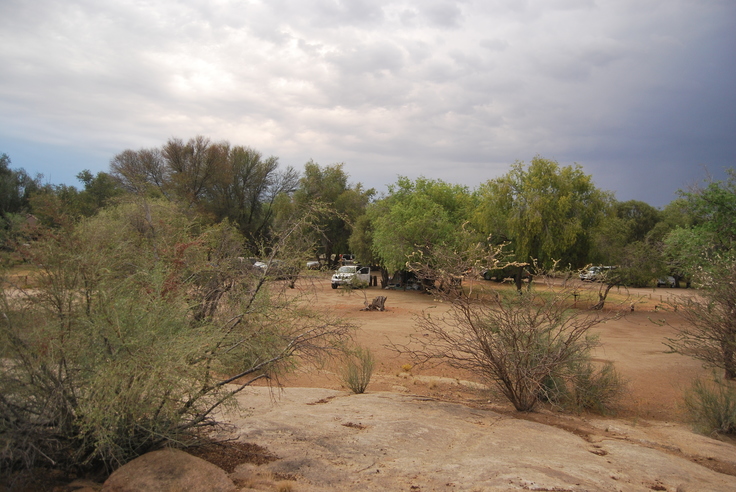
They are lovely trees that deserve more attention from local gardeners. One of the places you can visit to appreciate their beauty is the rest camp at Augrabies National Park, alongside the Orange (or Gariep) River. It is this native and the foreign willows that grow near this great South African river that are discussed in a fascinating book, ‘The Side of the Sun at Noon’ (Jacana), by Hazel Crampton.
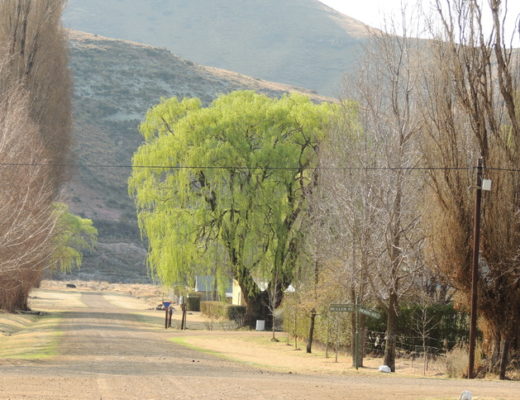
She makes the point that no one knows when the weeping willow, which originated in China, was introduced but that a date in the early 1920s has been suggested. Hazel, however, thinks that this alien tree was brought here much earlier and uses accounts of early travellers and explorers to support her theory that the Salix babylonia was well established alongside the Orange River long before the Colonial era.
She also makes the point that Kakamas, near Augrabies Falls on the Orange, was an ancient meeting place of people from all over the world. Situated next to one of the safest drifts on the Orange, Kakamas was the centre of “one of the great pre-historic transregional trade networks”.
Weeping willows grow easily from truncheons or broken branches, which were often used as swimming logs or to make rafts. When left to their own devices the discarded rafts and swimming logs could easily take root and turn into flourishing trees.
The tree is also frost tolerant, drought resistant and even insect resistant, all factors that assisted its spread along our rivers and streams.
“Willows love water and the Vaal and its tributaries provided it with a riverine system perfect for its disposal.”
But why would the ancient traders have brought the weeping willows here from as far afield as China in the first place? Its generic name, Salix, gives us a hint.
“It was trade – and the tree’s powerful medicinal properties – that were responsible for its initial leap inland. Trade was an essential part of all African economies. Sophisticated marketing chains governed the sale and resale of goods, their value determined by demand and supply,” says Hazel.
YOU MIGHT ALSO BE INTERESTED IN : Invasives and Natives: Trees with tales to tell
You see, Salix babylonia, the weeping willow, is rich in salicylic acid, used for centuries as a pain reliever and anti-inflammatory drug. Even in ancient Greece the physician Hippocrates used extract of willow bark to reduce fevers and relieve pain.
And we are still using a synthetic version of willow bark extract for pain, fever and inflammation. We know it as aspirin, initially manufactured from the bark of a tree that was perhaps an important import for traders who plied the ancient trade routes of Africa.
HAVE YOUR SAY
Like our Facebook page, follow us on Twitter and Instagram
For news straight to your phone, add us on BBM 58F3D7A7 or WhatsApp 082 421 6033