ALTHOUGH South Africa boasts a wealth of indigenous succulents it only has one indigenous cactus.
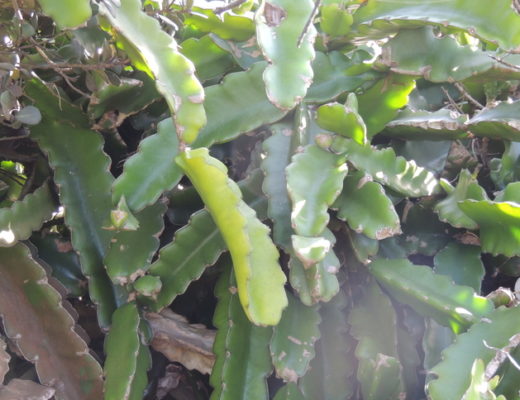
And this plant doesn’t look anything like most people’s idea of a cactus. It goes by the name of Rhipsalis baccifera and is described as a straggling pendulous epiphytic succulent in Elsa Pooley’s Guide to Wild Flowers of KwaZulu-Natal and the Eastern Region. It doesn’t even have proper spikes, just clusters of harmless hairy spines. With its juicy white (sometimes pink or red berries) it looks a bit like mistletoe and this probably earns it the common name of mistletoe cactus.
We do see quite a few alien cacti growing in the wilds in this country as many of them have become troublesome weeds, including various prickly pear species, like Opuntia ficus-indica and Opuntia monacantha. In his book, Pooley’s Trees of Eastern South Africa, Richard Boon points out that both of these plants are classed as invaders, except for spineless horticultural varieties. They are very useful plants so it is good to know that non-invasive varieties have been developed. Their tasty fruit is used for making all sorts of products including jams and alcohol drinks.
They are also used as fodder and for hedging. According to Richard, cochineal insects feed on Opuntia species and are the source of cochineal or carmine dye used to colour food, cosmetics and fabric.
The good news is that conservationists have had good results using biocontrol agents to control the invasive prickly pear species.
Another cactus that has made South Africa’s unwanted list is the invasive Cereus jamacaru or queen of the night, an attractive plant with large white flowers that bloom at night. Unfortunately it has become invasive and should not be cultivated.
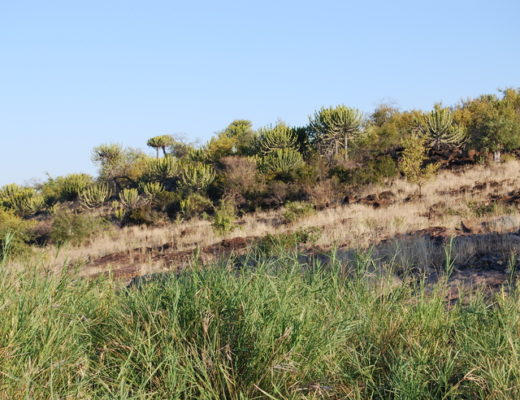
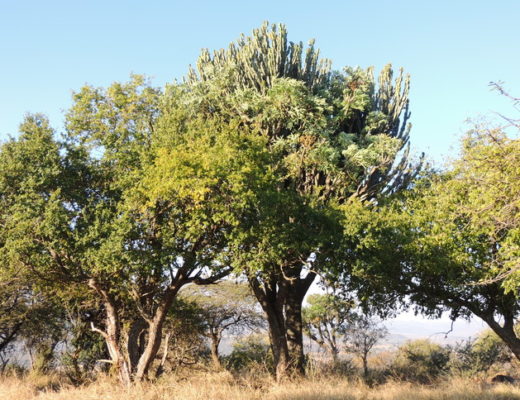
The most cactus-like South African natives are some of the members of the Euphorbia family like the Euphorbia ingens, commonly known as the naboom.
According to the ‘Guide to Succulents of southern Africa’, by Gideon F smith and Neil R Crouch., they are widely distributed in the northern savannahs. Another common and eye-catching member of this genus is Euphorbia tetragona or honey euphorbia. Like the naboom it grows into a robust tree and this species can be found in the Eastern Cape and KwaZulu-Natal valleys. Not all Euphorbias are large, cactus-like trees. The ground hugging Euphorbia pulvina looks like an overgrown pincushion. Euphorbia Woodii is a dwarf succulent, described in the succulent guide as a ‘Medusa-like head growing prostrate on the soil surface’.
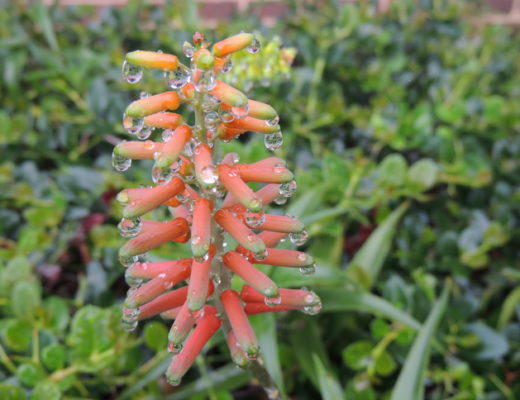
Our larger, tree-like aloes are also good susbstitutes for cacti. These wonderful southern African natives have eye-catching relations, much prizes by succulent plant fans, like all the attractive Bulbine, Gasteria and Haworthia species.
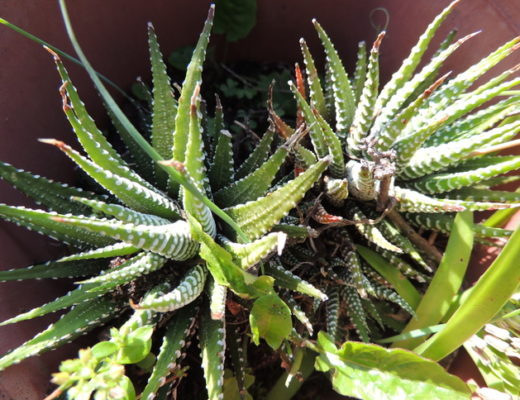
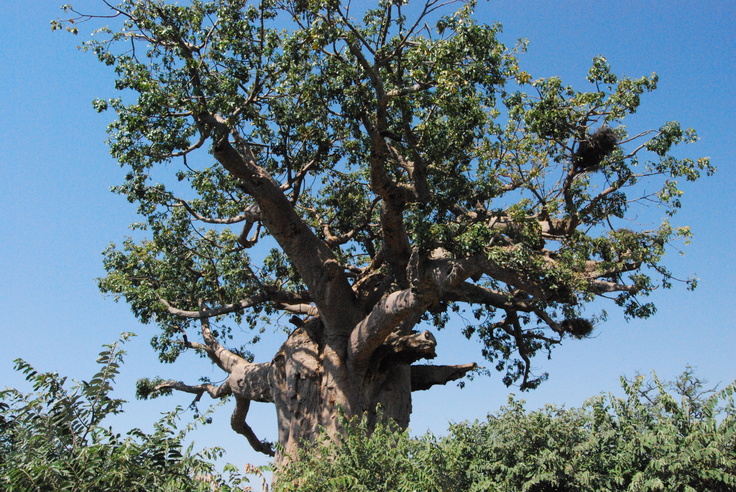
There are many other southern African succulent families, most of which are great, water-wise, interesting and good-looking garden subjects. Of course our biggest southern African succulent is the Baobab (Adonsonia digitata), which can grow into a massive, huge-girthed tree.
In their succulent guide, the authors point out that plants like succulents that must survive periods of extreme stress tend to be rich in chemicals that often provide medicinal application. Succulents have long been part of the medical arsenal of the people of southern Africa.
They have many other uses. Some are used as food, some provide fibre for ropes and weaving and many are sold as traditional medicine. The two authors make the point that succulents are playing an ever increasing role in the quest to ensure sustainable plant material for traditional medicine practices and enough food to feed our ever-increasing southern Africa population.
HAVE YOUR SAY
Like our Facebook page, follow us on Twitter and Instagram
For news straight to your phone, add us on BBM 58F3D7A7 or WhatsApp 082 421 6033