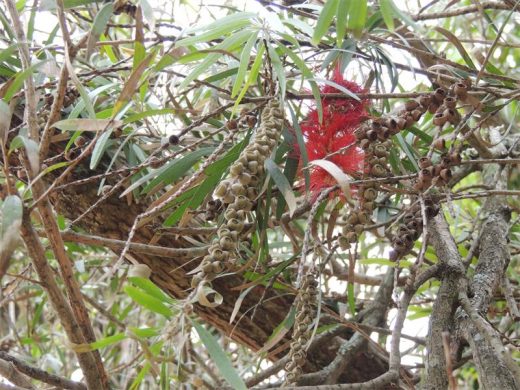
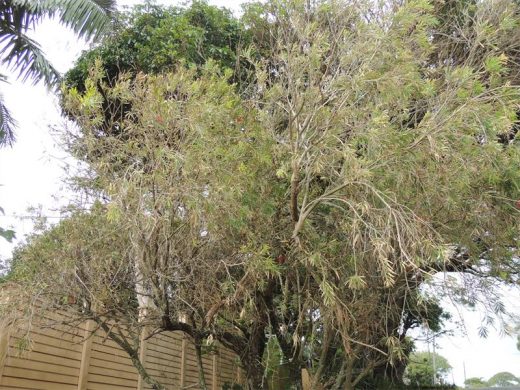
MANY south African gardeners are unaware that the attractive weeping bottlebrush (Callistemon viminalis), a popular garden tree or shrub, has been classed as an alien invasive, thanks to its nasty habit of out-competing indigenous species.
YOU MIGHT ALSO BE INTERESTED IN : Invasives and natives: Welcome these wild flowers
It is such a pretty tree, with its graceful weeping habit and attractive pinky red flower spikes that do, indeed, look like bottle brushes. A native of the Australian states of New South Wales and Queensland, it often occurs along watercourses in these areas.
In South Africa it is spread by birds, animals, winds and by humans who persist in cultivating it even though it is an outlawed category 1b invader.
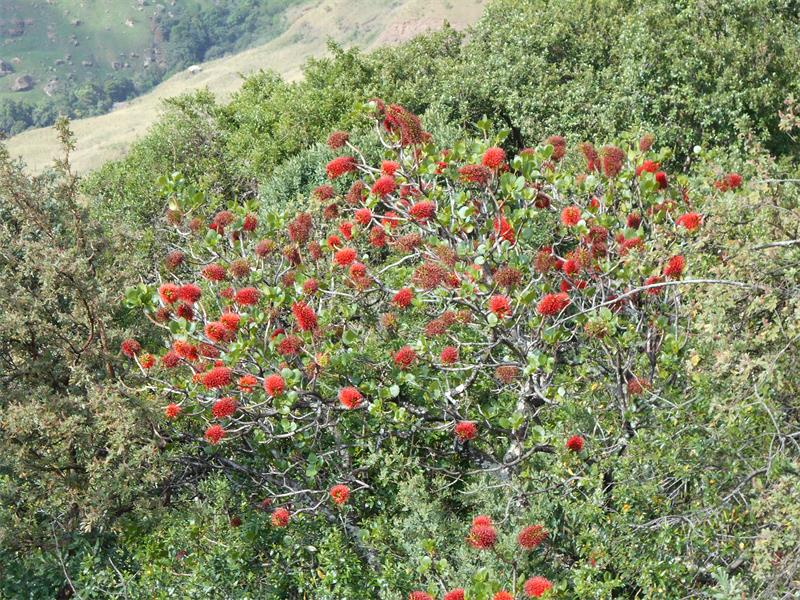
Fortunately, if KwaZulu-Natal gardeners do have to rid their properties of a weeping bottlebrush tree, there is an excellent indigenous replacement available in the form of the Greyia sutherlandia, commonly known as the glossy or Natal bottle brush.
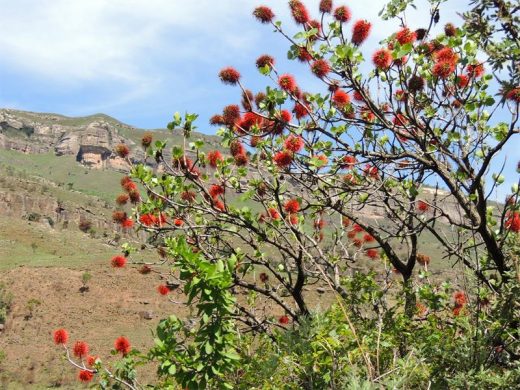
It is one of our province’s most striking trees, particularly in spring when it bursts into bloom, covering itself with scarlet, bell-shaped bottlebrush flowers. In summer, the flowers are replaced by attractive, large, roughly textured leaves that turn red and auburn in autumn.
Our indigenous Natal bottlebrush, a stocky, rather gnarled,, little tree, likes to grow on mountain slopes but it adjusts well to living in gardens.
Together with the red blooms, its interesting shape and attractive leaves make it a good form plant and it is a good idea to choose a spot where it can be used as a striking focal point. It will even grow quite happily in a pot if you need a courtyard tree.
It is a useful tree, too, as it attracts bird, bees and other insects, supporting our important pollinators, and is a good water-wise choice.
I recently visited the royal Natal National Park in the northern Drakensberg and wherever we walked the flowering Greyia sutherlandii trees were shouting for our attention. Against the backdrop of the spring green mountains, what a glorious spectacle they provided.
HAVE YOUR SAY
Like our Facebook page, follow us on Twitter and Instagram
For news straight to your phone, add us on BBM 58F3D7A7 or WhatsApp 082 421 6033