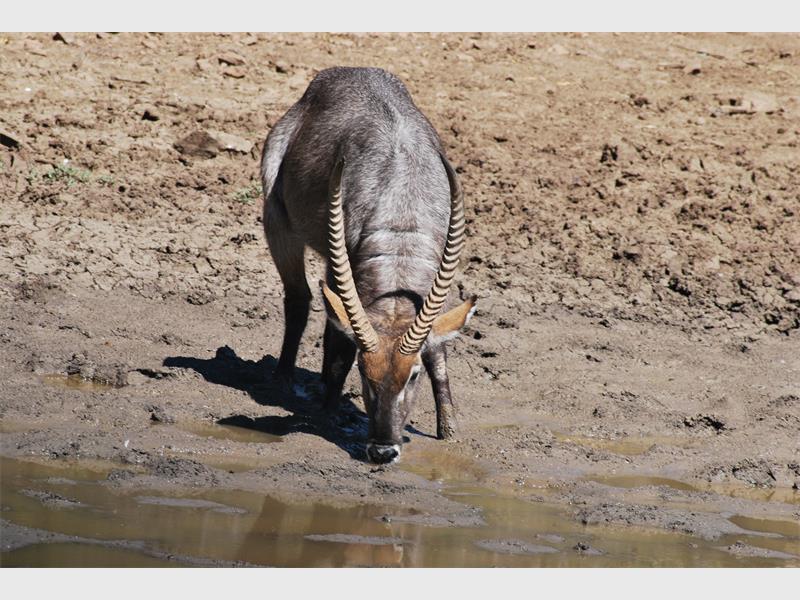
THE longer Bill and I spent in Pilanesberg National Park, the more this ruggedly beautiful piece of wilderness impressed us.
And even more impressive was the fact that that, according to the official map and guide book, it had only taken a single decade to transform a “scenic crater inhabited by cattle and the odd baboon troop” into one of southern Africa’s premier wildlife destinations.
YOU MIGHT ALSO BE INTERESTED IN : Tent Travels: Green, gold … and patriotism in Pilansberg
Our third and last day in the park started on a high note. Shortly after packing up camp at Bakgatla and setting off on an early morning game drive, we encountered a black rhino. These shy thicket-dwellers are much harder to spot than the more sociable white rhinos and we hadn’t encountered one for absolutely ages. We were thrilled to see it out in the open, nibbling a thorn tree, right next to the road.
Of course, the most commonly used names for our two rhino species don’t actually refer to their colours. The black rhino is actually dark grey. It is also known, more descriptively, as the hook-lipped rhinoceros because of its pointed, rather triangular upper lip. An imposing creature, it is however, quite a bit smaller than the white rhino and lacks the distinctive hump on the neck.
Also known as a square-lipped rhino, white rhino’s name is a derived from the word, ‘wide’ referring to its broad, square muzzle.
The muzzle shapes of the two rhinos are adapted to their eating habits. The black rhino is a browser that uses its prehensile hooked upper lip to pluck leaves and shoots from thorny trees.
The white rhino is a grazer that tends to keep its big head close to the ground, looking for all the world like it is mowing the lawn.
White or black, it is always bitter sweet to see them, the pleasure of the sighting toned down by the knowledge that these magnificent are being relentlessly targeted by poachers and crime syndicates for their horns. Will my grandchildren still enjoy the privilege of be able to see them in the wilds?
Elated by our black rhino sighting we continued on our way, driving the length of the park, all the way to the bottom Bakubang gate, enjoying excellent game viewing for most of the way. Heading north again we stopped at Kubu, a lovely, remote picnic area, for breakfast then we turned west off the tar to explore the network of less travelled gravel roads there.
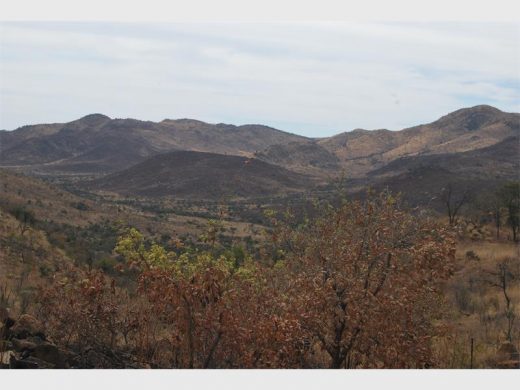
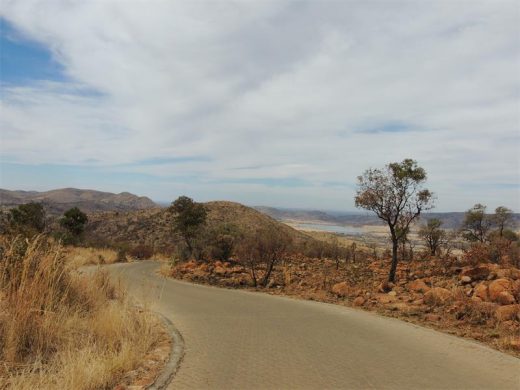
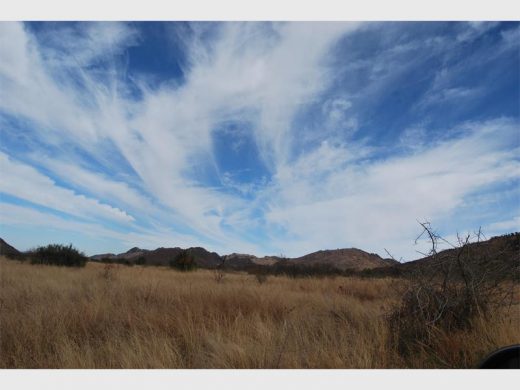
The scenery was even more breathtaking than it had been the previous day. Steep slopes and big hills, some carpeted in vegetation, others bare, rugged rock, towered over dams and streams, bright green water lines and fertile, grassy valleys.
YOU MIGHT ALSO BE INTERESTED IN : Tent Travels: Adventures on the road to Pilanesberg
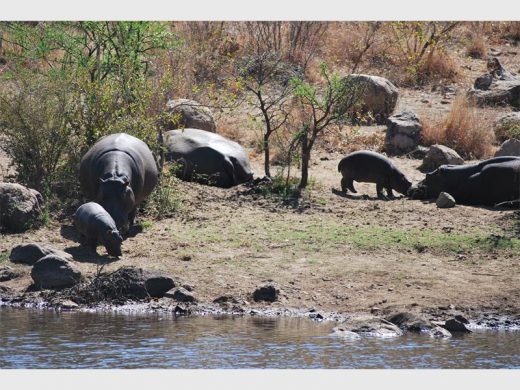
The valleys and plains were filled with a wide assortment of game and there was always something interesting to see. There were also plenty of view sites, hides and picnic sites along that day’s visitor-friendly route and we were frequently able to stop at lovely remote places.
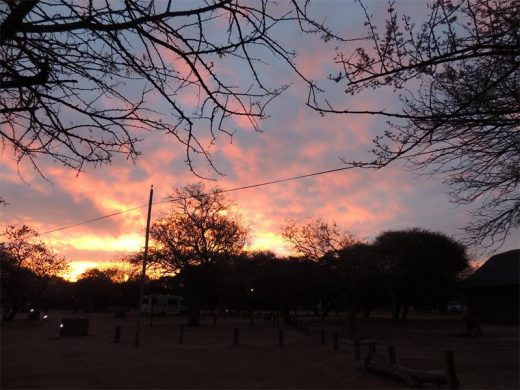
Wherever we went, the park seemed so pristine and it was difficult to imagine that most of it had been farmland before the establishment of the park in 1979. Soon after Pilanesberg National Park was proclaimed it underwent massive and rapid rehabilitation and development, the authorities quickly removing farmsteads, gum tree plantations and other alien plants, windmills, cattle kraals and other signs of human settlement.
The construction of the perimeter fence was an early project – and considering the rugged, undulating nature of the park it was no mean feat. The old police station and staff housing were removed but the courthouse has been transformed into the attractive Pilansberg Centre, boasting a restaurant, shops and game viewing decks.
Perhaps the most impressive chapter in Pilanesberg National Park’s history is what was known as Operation Genesis. It saw the introduction of 6 000 animals, representing 22 species to the newly established park.
Once the new inhabitants had settled in well, lion, cheetah and wild dog were introduced, alongside the resident predators, the leopard, brown hyena, jackal and caracal, to keep everything in balance.
The park’s official guide book describes the reintroduction programme as an “outstanding success” that restored to the Pilanesberg the abundance of game explorer and hunter William Cornwallis-Harris had recorded in 1836.
We spent most of the day out in the park, exploring its extensive network of excellent game viewing roads and visitor facilities, then we spent our final night in the park at the attractive and well-appointed Manyane Camp.
Leaving the next morning we discussed the future of a park that would would definitely revisit for an longer stay as soon as possible. Perhaps by then the Heritage Park Project, launched in 2005, will be well underway.
The guidebook describes it as a vision shared by communities, Government and landowners, to expand Pilanesberg to the north, ultimately linking it with Madikwe Nature Reserve on the South African and Botswana border. It is an ambitions plan that will take many years to complete but if it comes to fruition, Pilanesberg will be part of a conserved area that is more than 250 000ha in size.
Now that would really be a conservation feat!
HAVE YOUR SAY
Like our Facebook page, follow us on Twitter and Instagram
For news straight to your phone, add us on BBM 58F3D7A7 or WhatsApp 082 421 6033