FOR a number of reasons Bill and I were able to enjoy short camping trips to various resorts in the Drakensberg area last year, but most of the excursions had taken place during our colder months.
I love the Berg’s winter austerity – its monochrome scenery when the mountains are draped in their khaki winter clothes and dragons race across the slopes, scarring them black with fire. The Drakensberg in its cold, dry season has a strange beauty all of its own.
YOU MIGHT ALSO BE INTERESTED IN : Tent Travels: Closer to home
All the same it is lovely to see the transformation that spring and its bountiful rain bring to the Drakensberg, one of the most dramatically beautiful regions in South Africa.
In November, we decided it was time to pay the Berg a spring time visit and to spend a long weekend in a resort that we had only recently discovered. Living on the KwaZulu-Natal South Coast as we do, we are close to the Southern Berg and know this area well. We’ve also spent quite a bit of time in the Champagne Valley in the Central Berg area but we haven’t yet done too much exploring of the northern stretches of our great ‘Barrier of Spears’.
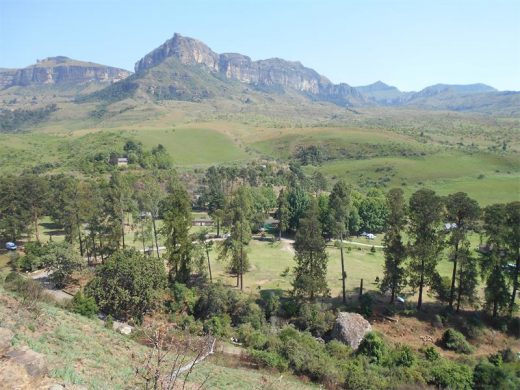
The previous year, we’d spent a weekend at Royal Natal, a simply wonderful mountain resort administered by Ezemvelo KZN Wildlife and situated within the uKhahlamba Drakensberg Park World Heritage site.
Our main reason then had been to try out the famous Cannibal Cave parkrun, which starts and ends just outside the Royal Natal entrance but we’d been blown away by what is some of South Africa’s most splendid mountain scenery.
We’d really loved staying there so, after deciding that a return visit was long overdue, we found ourselves heading inland to the Northern Berg one beautiful Thursday morning in November.
We arrived at a nearly empty Mahai campsite at around noon and found ourselves a shady elevated site, overlooking a big open grassed area.
Mahai is a large, well-appointed and very lovely camping area that can accommodate up to about 400 campers and is particularly popular with big groups of outdoorsy families. For nature lovers who are allergic to canvas, the lovely Thendele Camp offers excellent self-catering accommodation.
The whole of Royal Natal is stunning, boasting a diversity of habitats that supports many threatened and endemic bird and plant species.
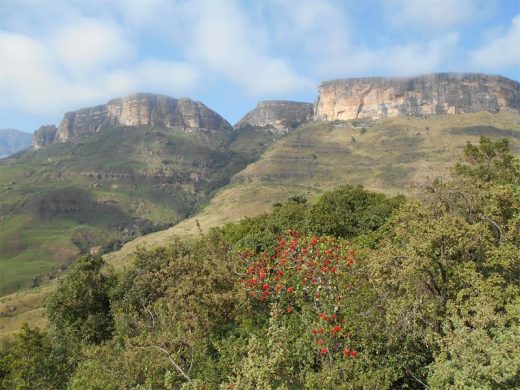
Its most prominent feature is the world-famous Amphitheatre, a solid, curved rock wall about 5km in length and some 500m high. Bracketed by the Eastern Buttress, standing just over 3 000m above sea level in height, and the 3 165m high Sentinel, the Amphitheatre overlooks the lush, well watered Thendele Valley. It is such a solid presence at Royal Natal, visible from so many angles.
Above the Amphitheatre is the Mont-aux-Sources peak that, as its name suggests, is the source of many water courses. Two drops of rain might strike this lofty peak simultaneously but make two very different journeys to the sea. One drop might become part of South Africa’s longest river, the Orange, as it starts its 2 200km journey from this peak to the Atlantic Ocean.
The other drop might find itself plunging 947m down the plateau via South Africa’s biggest waterfall and journeying 500km to the Indian Ocean, as part of KwaZulu-Natal’s biggest river, the Thukela.
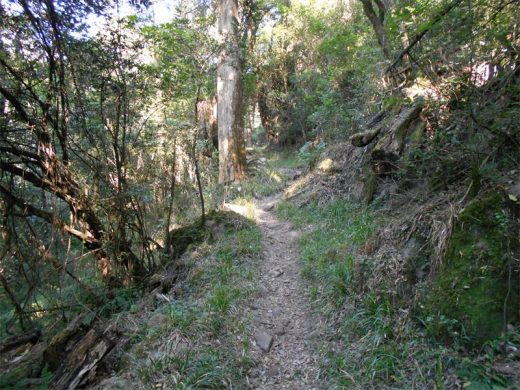
It was a very hot day so, after setting up camp, we hid from the sun and enjoyed a lazy afternoon in camp. Evening came along bringing a welcome drop in temperature so we did a gentle stroll along the green and leafy riverside walkway to the pretty Cascades. An easy route along a paved, level wheelchair friendly surface, this walk really is a tree hugger’s delight.
YOU MIGHT ALSO BE INTERESTED IN : Tent Travels: It’s spring in Rhodes
To beat the heat we were up early and walking before 6am the next morning, following the previous evening’s route to the Cascades then climbing the very steep, partially paved pathway to Outlook Rock, stopping often to enjoy the views and to catch our breath.
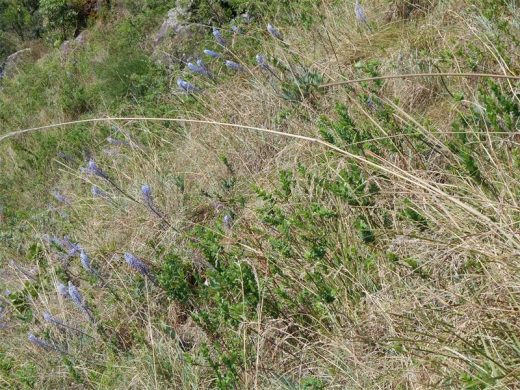
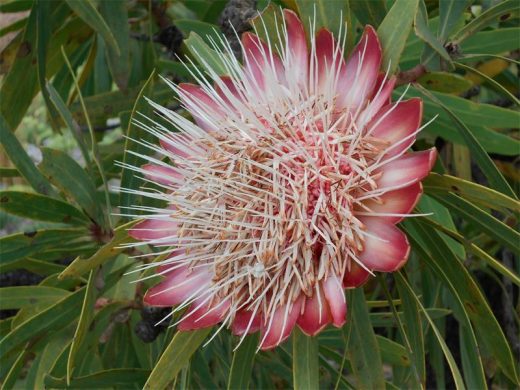
The mountains were looking magnificent, the grass and trees impossibly bright shades of green and the high-altitude grasslands sporting a profusion of multi-coloured wildflowers. Some slopes were swathed in the misty blue of flowering scilla and here and there a striking Natal bottlebrush, covered in flame-coloured blooms, stood out dramatically against all the greens.
From Outlook Rock the going was much easier and even more spectacular as we followed a fairly level mountain path across green slopes, across streams and through stands of trees to lovely Tiger Waterfall. We stopped there for a rest and some excellent high-altitude birding before making our way back to camp via a gently sloping route.
By the time we reached our campsite, Mahai was starting to fill up, mostly with big groups of young families. With the central area to run around, play ball games, throw frisbees and ride bikes, trikes and scooters, Mahai in perfectly suited for happy family activities.
The next day was another early start for us. We drove through to nearby Harrismith to do the Harrismith parkrun, one of those free, 5km runs or walks that take place in parklike surroundings all over South Africa – and in about 20 other countries – every Saturday morning.
This parkrun is held at the Platberg Reserve and follows a scenic, sometimes undulating course along gravel roads and trail paths. Like all other parkrunners we’ve met, the Harrismith runners and walkers were friendly and welcoming and we enjoyed notching up a new parkrun venue.
We also were richly rewarded for our efforts. Stopping for breakfast at the Sterkfontein lookout and picnic site, we enjoyed an excellent sighting of a rarely-seen bearded vulture, this special bird surfing the thermals above our heads for the whole time we were there.
A fairly leisurely day followed our parkrun exertions although we did a few gentle strolls around the camp. By evening Mahai was packed with visiting families and we enjoyed a grandstand view of the cricket, rugby and soccer matches, the bike races and the frisbee throwing competitions taking place below us on the ‘oval’. What a wonderful place Mahai is for children.
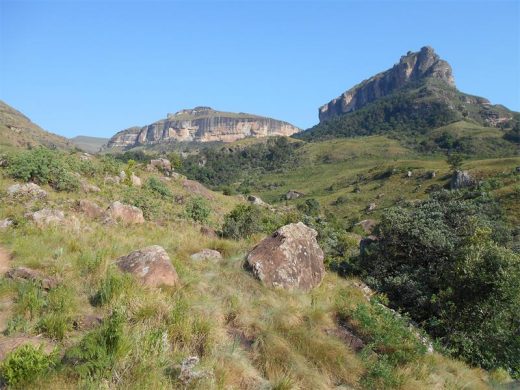
We were leaving after lunch the next day but we had plenty of time for a final mountain walk. This time we followed the winding, fairly gently sloping route from the campsite to Outlook Rocks, then came down the steep paved pathway that we’d walked up on our first day at Royal Natal.
Once again the springtime walk through the flower-filled mountains was champagne for the soul, leaving us absolutely exhilarated. It was the perfect way to round off a long weekend at one of South Africa’s most beautiful, well-appointed, family-friendly and easily accessible eco-destinations.
HAVE YOUR SAY
Like our Facebook page, follow us on Twitter and Instagram
For news straight to your phone, add us on BBM 58F3D7A7 or WhatsApp 082 421 6033