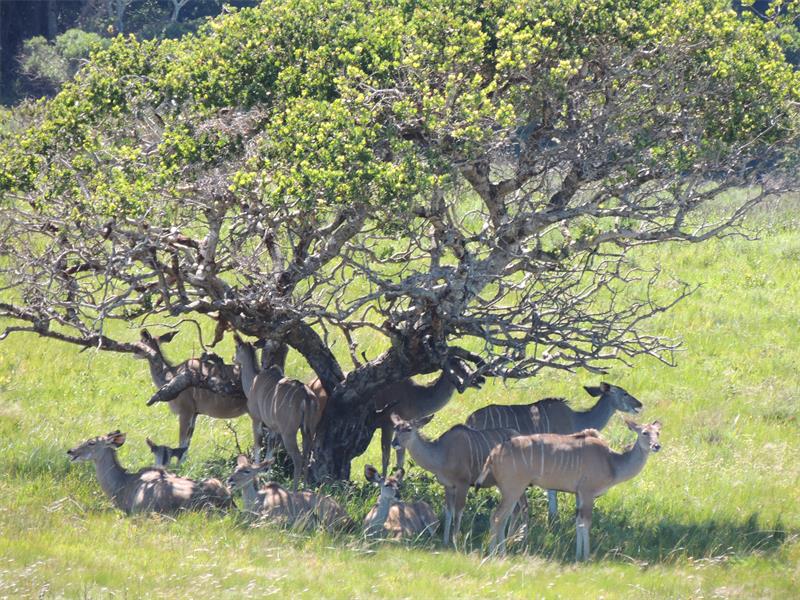
THE stately umdoni tree likes wet feet, thriving in damp even swampy places and along water courses.
There are particularly striking examples of this tree in the iSimangaliso Wetland Park. Look out for stands of them when you do the Eastern Shores and Western Shores game drives.
YOU MIGHT ALSO BE INTERESTED IN : Invasives and Natives: February in the indigenous garden
Uvongo, my KwaZulu-Natal South Coast home town, has more than its fair share of these beauties growing in gardens, on pavements and in our public open spaces. Some venerable giants seem very old and are reminders that, before our area was so drastically transformed by urban development, it must have been a well-watered grassy Eden, boasting plenty of little streams and wetlands.
Also known as the waterberry tree, the umdoni goes by the formal name of Syzygium cordatum and is a particularly useful tree for wildlife friendly gardening.
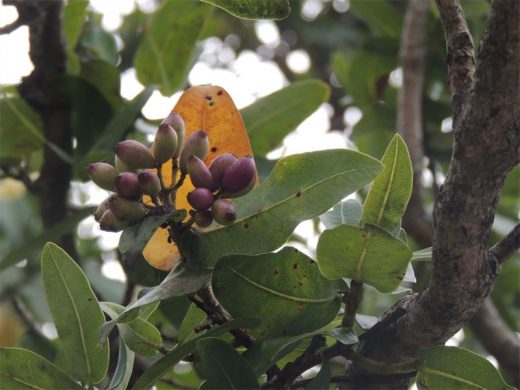
In their book, ‘Bring Nature Back to Your Garden’, indigenous gardening pioneers Charles and Julia Botha refer to the signature rosette arrangement of their leaves and their fluffy creamy pink-tinged flowers that produce oodles of nectar, thereby attracting all sorts of insects.
These trees are also prolific producers of deep purple berries that are loved by monkeys, birds and even children. The turacos or louries can’t resist them.
That’s not their only wildlife use. The Bothas tell us that 11 moths and three butterflies breed on Umdoni trees. The fruit is also used to make wine and to produce purple dye.
In Richard Boon’s ‘Pooley’s Trees’ he says that there are about 500 Syzygium species around the world, six of which occur in southern Africa.
The cloves we use for cooking are the dry buds of one of the species, the Syzygium aromaticum.
Unfortunately three alien Syzygium species are problematic in South Africa and are either proposed or declared invades. They are Syzygium cumini or the Jamboland plum from India and tropical Asia, the Syzygium jambos or rose apple from South East Asia and the and Syzygium paniculatum or Australian water pear from Eastern Australia.
There is absolutely no reason to plant foreign, potentially problematic Syzygium trees when the beautiful, useful umdoni tree is so easy to grow.
HAVE YOUR SAY
Like our Facebook page, follow us on Twitter and Instagram
For news straight to your phone, add us on BBM 58F3D7A7 or WhatsApp 082 421 6033