I HAVE a confession to make. For many years, I wasn’t too crazy about Kruger’s much-loved Letaba perhaps because we’d had a noisy, unpleasant introduction to this big, popular rest camp, many years ago.
YOU MIGHT ALSO BE INTERESTED IN: Tent Travels: Beautiful Balule and a river sunset
We’d stayed there over a long weekend and it had been extremely crowded and noisy. The few occasions we had returned since then had been more pleasant, but the camp had always been a little too busy for my taste. My mild antipathy towards it changed dramatically on our most recent visit and Letaba has since moved up quite a few notches on my favourite Kruger rest camp list.
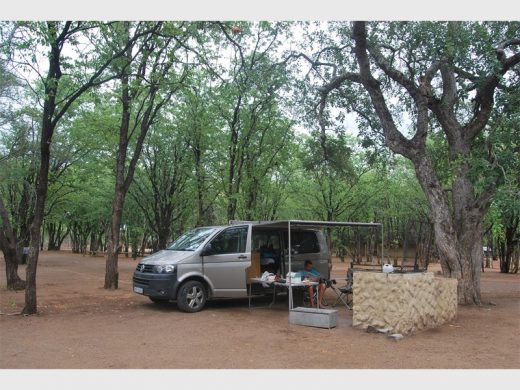
We had a short distance to travel to get there from Balule, our previous destination, so we avoided the main tarred road. Instead we took a slow, meandering, and scenic cruise, following the S92, S44 and then the S45. Much of this route was alongside river banks, first next to the tree-lined Olifants River then, after its confluence with the Letaba, next to this, one of Kruger’s largest waterways.
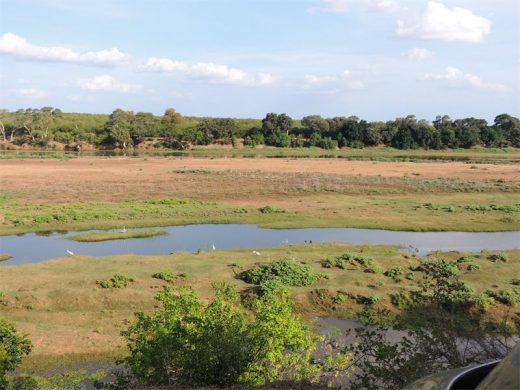
Letaba means ‘river of sand’ and it is well named. It is a beautiful, wide waterway that threads its sparkling way through the extensive sand banks along the rocky bed. Its banks are more open and less tree-lined that many of the other Kruger rivers, allowing visitors a better view of the water and of all the animals and birds that make use of this life-sustaining water source.
The bridge over the Letaba is something of a Kruger icon. You are allowed to leave your vehicle and walk along the central section of this bridge and this is a Kruger experience that shouldn’t be missed. There is always something to see from famous Letaba bridge.
As we headed north we began to encounter mopane trees, initially scrubby then vast stretches of tall, dark-limbed, willowy trees. Their foliage is often rust, red, copper or golden at other times of the year but now, at the height of summer they were a brilliant emerald green.
These northerly occurring trees reminded us that Letaba was, in effect, the gateway to Kruger’s more remote northern reaches. The south is famed for its abundance of game but I love the untamed spirit that is such a prominent feature of the northern part of the park – and contrary to expectations, Bill and I have always enjoyed surprisingly good game viewing and birding there.
When we eventually arrived at Letaba, we were surprised to find it more than half empty. With it being far less crowded than we’d ever experienced before, we gained a deeper appreciation of this beautiful older Kruger rest camp’s charms and its interesting history. The camp is prettily situated on a bend in the Letaba.
River and is a green and peaceful riverine Eden, a haven for many different species of birds and animals, including the bushbuck that tiptoe around the camp. It is a big, shady, well-appointed and attractive camp that offers all the facilities you might need. As well as the usual shop, restaurant and swimming pool it has a wonderful enviro centre that boasts a fascinating and informative elephant display. Visiting families really shouldn’t miss out on this impressive Kruger treat.
Perhaps Letaba’s biggest attraction, though, is its wealth of stunning trees. The groves of tall mopanes give the rest camp its distinctive atmosphere but there are also many shade-giving apple-leaf trees and venerable old forest giants like mahoganies and weeping boerbeans.
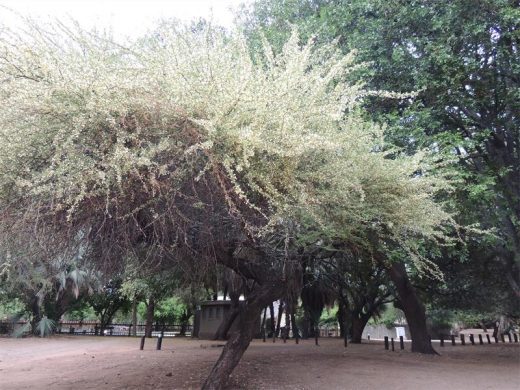
Our camp, in among the mopanes, was shady and cool and we were constantly serenaded by the many vocal woodland kingfishers that are common summer visitors to the park. Kruger was full of these beautiful pastel blue birds and their liquid call will always remind me of that Kruger holiday.
It was a particularly hot day so we spent a peaceful afternoon at the attractive swimming pool then set off for a short evening drive, stopping at the bridge then pulling off the road and spending the rest of the evening watching all the riverside action from our vehicle.
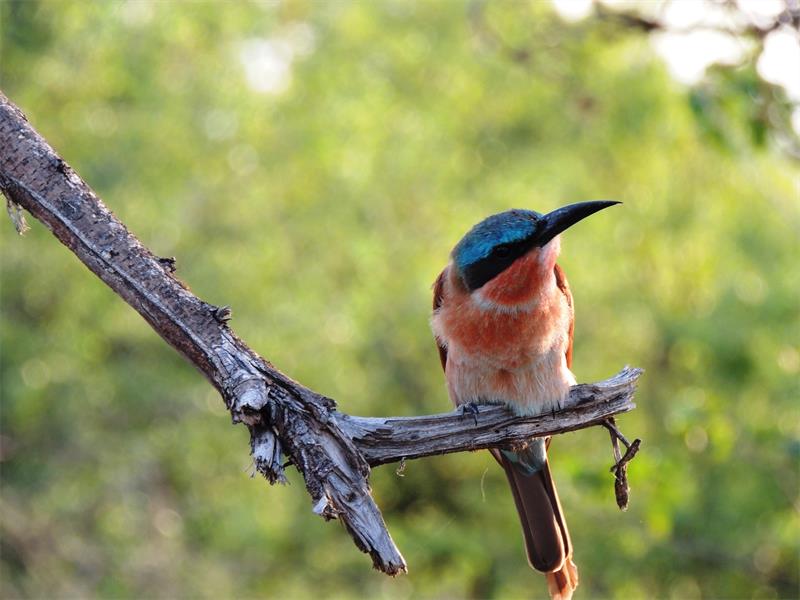
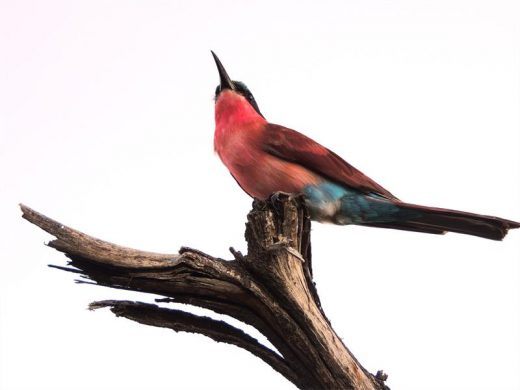
There was a lovely selection of waders and water birds around as well as the usual big groups of Egyptian geese and waterbuck. As Letaba is situated in elephant country we weren’t surprised to see quite a few pachyderm sundowner parties taking place in the river bed, too. Best of all, though,were the many exquisite carmine bee-eaters that kept us company, chattering away to each other and successfully hawking flying insects from a branch right next to our vehicle. What a treat.
We started our second day ticking off all sorts of interesting birds during an early morning stroll around the camp periphery – a bit of physical exercise well worth the effort. Once again, we were blown away by Letaba’s wealth of wild life, magnificent riverine trees and natural beauty.
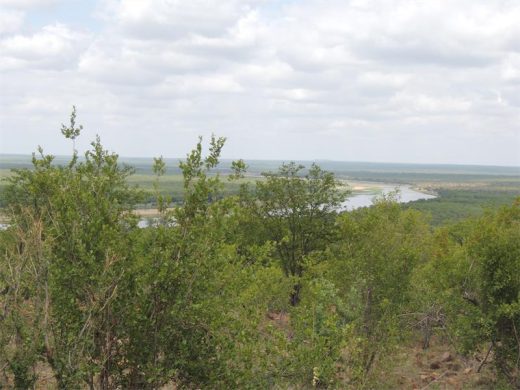
We stayed close to camp for our morning game viewing drive, exploring the many nooks, crannies and lookout points along the S62, overlooking Engelhard dam. It is an incredibly scenic area and there is always plenty to see. It being a watery route, there were plenty of thirsty animals along the way as well as all the usual hippos, waterbuck and water birds but the highlight of that day was a visit to the Matambeni bird hide, on the edge of the dam, where we spent more than an hour watching two exquisite klipspringers on the rocky outcrop right next to the hide. These dainty, surefooted little antelope are hard to find and seeing them is always a treat.
It was even hotter that day so after our drive we retreated to the swimming pool area with our books then, instead of going for a drive, lit the braai fire early and spent a relaxing evening in camp. On this Kruger visit we’d really fallen for Letaba’s charms and were glad that, although we would be leaving the next morning, we’d spend another night at Letaba as we headed back south.
We both agreed that Letaba had been worth getting to know and that it was definitely one of the park’s most beautiful rest camps.
HAVE YOUR SAY
Like the South Coast Herald’s Facebook page, follow us on Twitter and Instagram
For news straight to your phone, add us on WhatsApp 082 421 6033