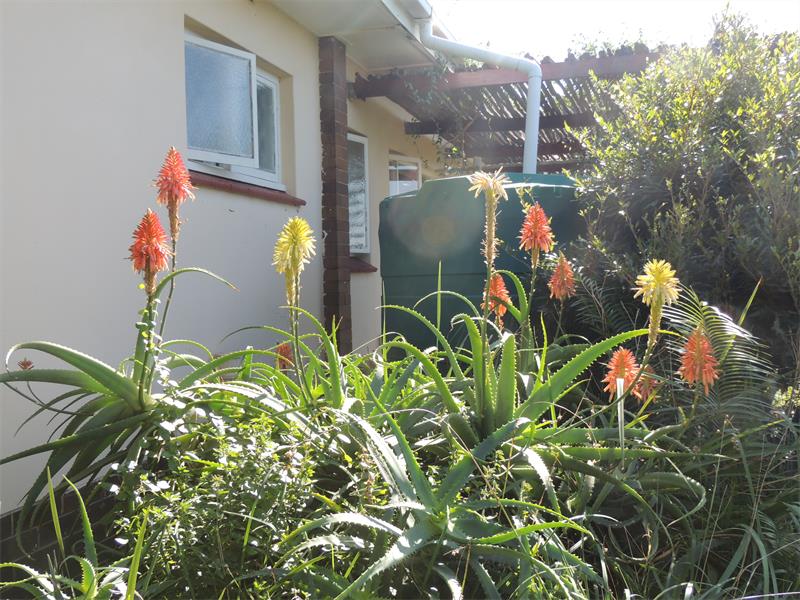
WE are now well into June and it is officially winter, with our coldest, longest day, the southern hemisphere’s winter solstice, only a week away.
YOU MIGHT ALSO BE INTERESTED IN : Invasives and Natives: Cultivate the gentle art of wildlife-friendly gardening
Things are, however, hotting up in the June indigenous garden where Mother Nature is putting on a fiery show to warm us. Colourwise, it is all about hot reds, oranges and yellows, all the flame colours that set the winter garden and veld alight.
My kranz aloes (Aloe arborescens) are looking magnificent. While the flowers are usually a sort of brick red, these easily cultivated and rewarding aloes also produce orange, a pretty lemony yellow and even two-toned blooms. I have tried to collect as many different ones as possible and they really do create a colourful splash this time of year.
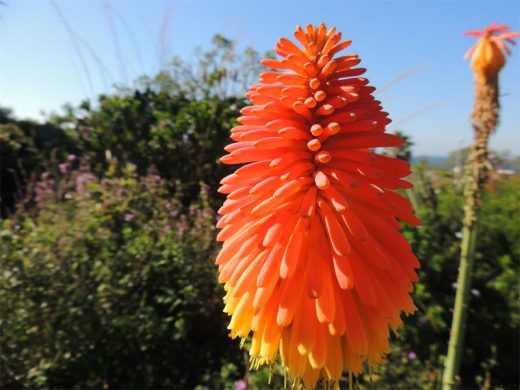
Also adding orange tones to the winter scene are my kniphofias – the gorgeous red hot pokers that are so eye-catching in the wild. They make excellent garden subjects and every year when they come into bloom I am inspired to plant a few more.
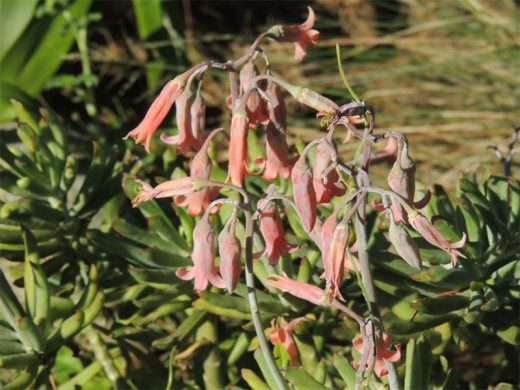
There are various other succulent plants, like the pigs ears (Cotyledon orbiculata) and their assorted cousins that are starting to contribute to the warm winter palette.
The brick-red, bell-shaped flowers, contrasting with the pastel dusty green, ‘pig’s ear’ leaves, are so eye-catching.
Amazingly, my Mandela Gold strelitzia is still flowering. Its gorgeous golden crane-shaped flowers have graced my garden for months on end. Perhaps one of the most widely used and best known of our indigenous plant, the Cape honey suckle (Tecomaria capensis) is also starting to flower. At this time of the year, its pretty red, orange, salmon and yellow flowers brighten up so many gardens, parks, commercial landscapes and public spaces throughout South Africa.
The flowering period for the ribbon bushes (Hypoestes aristata) is coming to an end but there are still a few plants covered in gorgeous mauve blooms. Together with the last of the pale blue plumbago flowers, they provide a cool contrast to all the hot winter shades.
A few of my trees are discarding their leaves and looking forward to their winter sleep but here along the balmy KwaZulu-Natal coast, most of our indigenous trees stay green. We are so lucky here as we don’t have to worry about frost, either.
Our green winter gardens must be a treat for inland visitors whose gardens are pretty dormant and brown at this time of the year. All the same, there is something magical about the stark beauty of those wintry inland gardens and the way that they sleep through the coldest months, quietly preparing their spectacular spring awakenings.
Here in KwaZulu-Natal the changing of the seasons is much more subtle and not nearly as dramatic.
HAVE YOUR SAY
Like our Facebook page, follow us on Twitter and Instagram
For news straight to your phone, add us on WhatsApp 082 421 6033