There is a substance that is at the root of heart disease; chronic lung disease; cancer of the lungs and contributes to bladder, mouth, tongue and breast cancer; stroke, Alzheimer’s and other degenerative neurological disease; and finally, premature ageing of the skin and connective tissues.
YOU MIGHT ALSO BE INTERESTED IN : Turning the Tide on Lifestyle Diseases – The most powerful method of reversing disease
It is responsible for both shortening lifespans as well as reducing the quality of life of users. To contrast it to Dr David Katz’s well known saying (lifestyle medicine adds years to life and life to years), it takes away years from life and life from years.
What is this thief of health and how prevalent is it in South Africa? Tobacco use in all its forms, but particularly cigarette smoking is the cause.
In a landmark study of the prevalence of smoking in South Africa published in 2015, conducted by the Health Sciences Research Council, (https://www.hsrc.ac.za/en/research-data/view/7539) the following results were established from interviewing 10,000 households across the spectrum of our population.
YOU MIGHT ALSO BE INTERESTED IN: FREE lifestyle health seminars offered in Port Shepstone
“Results: Of adult South Africans, 17.6% (95% confidence interval (CI) 6.3 – 18.9) currently smoke tobacco. Males (29.2%) had a prevalence four times that for females (7.3%) (odds ratio 5.20, 95% CI 4.39 – 6.16; p<0.001). The provinces with the highest current tobacco smoking prevalence were the Western Cape (32.9%), Northern Cape (31.2%) and Free State (27.4%). Among current tobacco smokers, 29.3% had been advised to quit smoking by a healthcare provider during the preceding year, 81.4% had noticed health warnings on tobacco packages, and 49.9% reported that the warning labels had led them to consider quitting. Conclusion. A large proportion of adult South Africans continue to use tobacco. While considerable gains have been made in reducing tobacco use over the past 20 years, tobacco use and its determinants need to be monitored to ensure that tobacco control strategies remain effective.”
A few comments about these results: I am delighted that women (Women’s Day coming up!) are more interested in their health than men.

Although the usage of tobacco products is going down, there is still some way to go. I am also encouraged that the health warnings at least have some impact on people’s beliefs and behaviour, although 20% of people have never noticed or refused to read the health warnings on each pack. What saddens me though is that only 30% of users had been advised to quit smoking by their health advisers, and I wonder how many of those health advisers who did discuss the subject had given any practical information as to how to go about doing it.
There is a huge gap between knowing something is harmful, and actually stopping the behaviour. The biggest factor of course is that nicotine is highly addictive.
Another factor is that smoking can be so intimately involved in so many other behaviours – driving, talking on the phone, drinking alcohol, watching TV, partying or socialising, eating, drinking coffee, etc. Because of the unconscious connection, each of these behaviours causes an automatic reaching for the cigarette. Peer pressure is also a powerful determinant – especially but not exclusively for young people. If your friends or family smoke, the chances are high that you also will smoke.
I read one study that showed that if a teenager smokes one cigarette, the chances of them becoming a lifetime addict is 5%. If they smoke two cigarettes, the risk jumps to 95%. The most probable reason is that many kids try out smoking for kicks, and usually find it most unpleasant at first. However if their peers smoke, they are more likely to persist through that nastiness and quickly become hooked.

How does one go about quitting smoking? It is difficult, with very high levels of relapse. The relapse rate is greater with women than with men. Studies have shown that it takes between 5-30 attempts for most people to give up. Mark Twain is quoted as saying “quitting smoking is the easiest thing in the world to do – I have done it a thousand times!” Even though there is no confirmation that he actually said it, it does confirm the addictive nature of smoking. Does that mean that trying to quit is futile? By no means. But it does mean that having some support and guidance in the process leads to better success.
Over the next few weeks, we will go through some steps, modelled on one of the earliest community-based support-group programmes, called the 5-day plan to stop smoking.
This programme was first developed and presented by a doctor/minister team, Dr Wayne McFarland and Elman Folkenberg in 1960, 4 years before the US Surgeon General’s report linking smoking with cancer.
Over the years more than 20 million people around the world have attended 5-day plan smoking cessation seminars. With the passage of time the programme has been updated and adapted with increased available research and experience. It has formed the basis for many other smoking cessation programmes, both private as well as government sponsored interventions.
Is it worth while going through all the stress and suffering of withdrawal effects? You bet. Having conducted numerous stop-smoking seminars over the years, I have spoken to so many people who express this huge sense of freedom. Some years ago one of our attendees was a 60 year-old gentleman who had smoked 40 cigarettes per day for 40 years. Battling with early emphysema, we helped him with the assistance of medication, to quit. One year later he wrote me a letter , thanking our team profusely for the help and expressing appreciation for the difference in the quality of his life since quitting. If he could do it, so can you.
Stay tuned, and get informed, so that you too can find freedom from this thief of our health and vitality.
To health and well-being,
Dave Glass
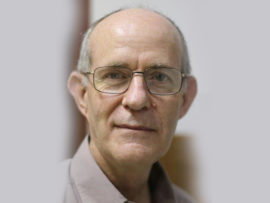 Dr David Glass graduated from UCT in 1975. He spent the next 12 years working at a mission hospital in Lesotho, where much of his work involved health education and interventions to improve health, aside from the normal busy clinical work of an under-resourced mission hospital.
He returned to UCT in 1990 to specialise in obstetrics/gynaecology and then moved to the South Coast where he had the privilege of, amongst other things, ushering 7000 babies into the world. He no longer delivers babies but is still very clinically active in gynaecology.
An old passion, preventive health care, has now replaced the obstetrics side of his work. He is eager to share insights he has gathered over the years on how to prevent and reverse so many of the modern scourges of lifestyle – obesity, diabetes, ischaemic heart disease, high blood pressure, arthritis, common cancers, etc.
He is a family man, with a supportive wife, and two grown children, and four beautiful grandchildren. His hobbies include walking, cycling, vegetable gardening, bird-watching, travelling and writing. He is active in community health outreach and deeply involved in church activities. He enjoys teaching and sharing information.
HAVE YOUR SAY
Like our Facebook page, follow us on Twitter and Instagram
For news straight to your phone, add us on WhatsApp 082 421 6033