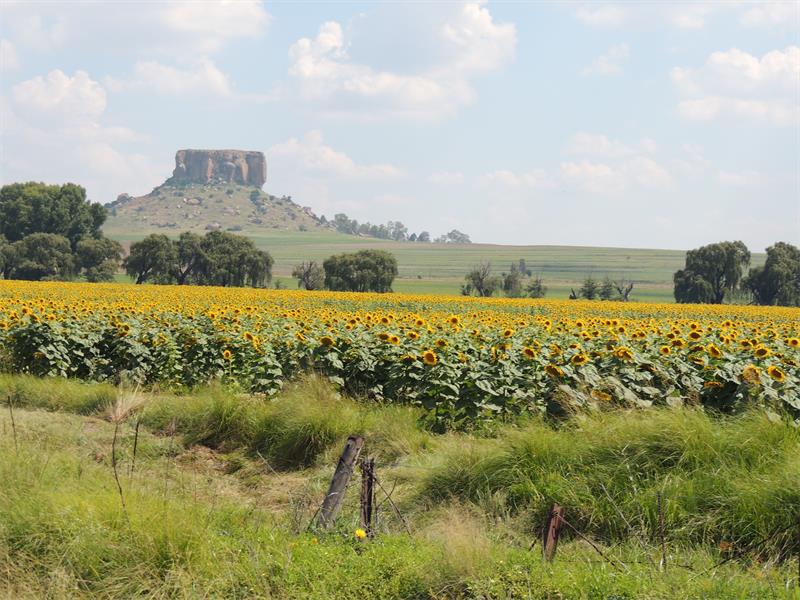
THE Eastern Free State is all about mealie fields, sunflowers, green-carpeted koppies, golden rock formations and curvaceous landscapes.
ALSO READ: Wrapping up Kruger trip
In short, it is a truly spectacular corner of South Africa; and perhaps the best place to appreciate it is the magnificent Golden Gate National Park. After a leisurely and scenic drive there from the Clocolan showgrounds, where we’d spent the morning at the annual vintage tractor fair, we set up camp at the park’s well-appointed and attractive Glen Reenen camping area.
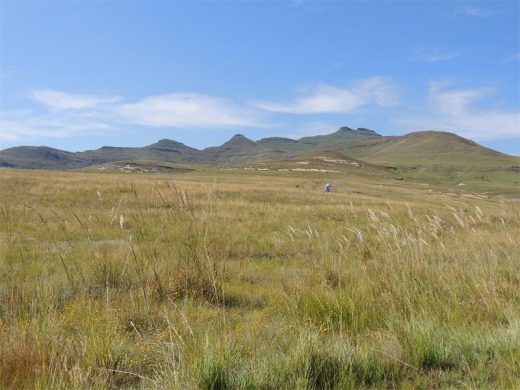
One of our 19 proudly South African national parks, Golden Gate is special for a number of reasons, not least its amazing sandstone buttresses and magnificent mountain scenery. Perhaps its greatest claim to fame, though, is the fact that it is our only grassland national park.
This lofty protected place, at the foothills of the Maluti Mountains, has some interesting vegetation. In its kloofs and gorges that are protected from frost and fire, you will find fragments of indigenous afromontane forest. Lower down, there are stands of those foothill slope survivors, tough, fire-resistant protea bushes and gnarled ouhout. In a park where fire is a regular occurrence and where temperatures can drop to minus 15 degrees Centigrade plants have to be tough to survive.
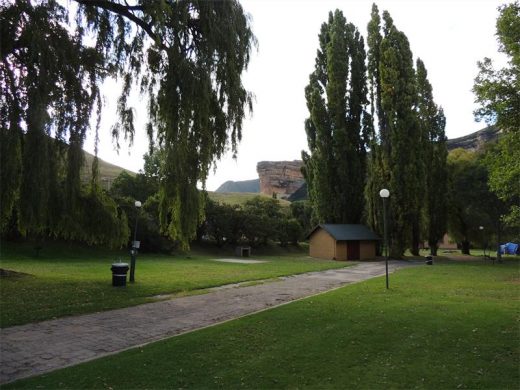
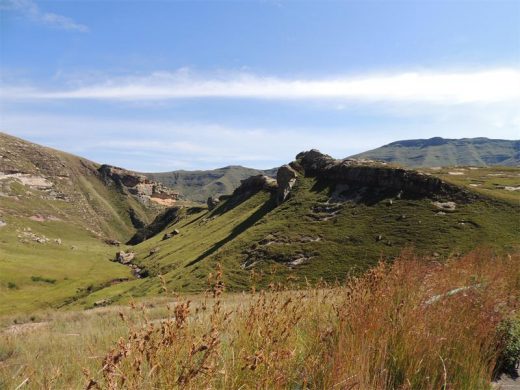
Mostly, though, the park consists of rolling mountain grasslands, representing amazing biodiversity. We’ve been there in winter when the mountains were bleak and brown but with plentiful summer rains the grassy slopes were emerald green and at their prettiest – but don’t just admire them from afar. When we took a mountain stroll that afternoon the summer grasslands were showing off their wealth of plant life with a celebratory sunburst of multi-coloured flowers.
The park is home to more than 60 different species of grasses and enough highland flower species to keep flower people occupied for hours.
The harsh environment is also home to a surprising amount of animals and birds that have adapted to the high life in Golden Gate. On previous visits we have often spotted substantial herds of eland and once again, when we took a late afternoon drive, we found quite a few black wildebeest – quaint creatures with long white ponytails.
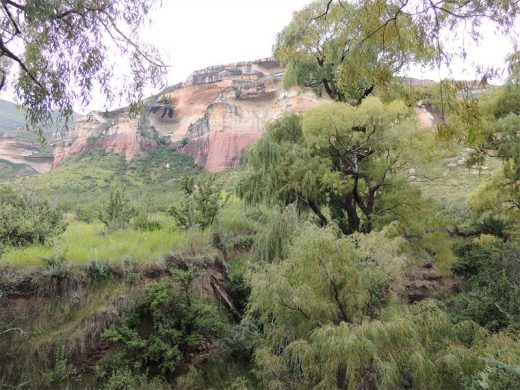
While there is game to see driving round this beautiful park ise more about appreciating its incredible scenic beauty. Its most striking features are the sandstone cliffs and rock formations that turn gold as the sun sets. Golden Gates gets its name from its two massive sandstone ‘gates’ on either side of the road. The magnificent Brandwag buttress, near the hotel must be one of the most photographed rock formations in South Africa.
The origins of these striking formations go back 200-million years when the area was a soupy swamp and a layer of muddy red sediment was laid down. Four million years later the swamp turned into a desert and another layer, of yellow sandstone, was added. Volcanic activity between 160-million and 100-million years ago was responsible for the topping, the mountains’ cap of basalt.
Over eons rivers and streams have carved this layered land into the dramatic natural sculptures we see today. As for the black streaks on the rock faces – they are formed by water leaching the manganese dioxide out of the basalt cap.
High altitude birding is one of the park’s many attractions. The Cape vulture, bearded vulture and bald ibis are among the much-sought highland avian residents of the park. We have often seen vultures and other raptors at the Golden Gate ‘vulture restaurant’ or feeding station on Oribi Loop but we were saving a visit there for the next day.
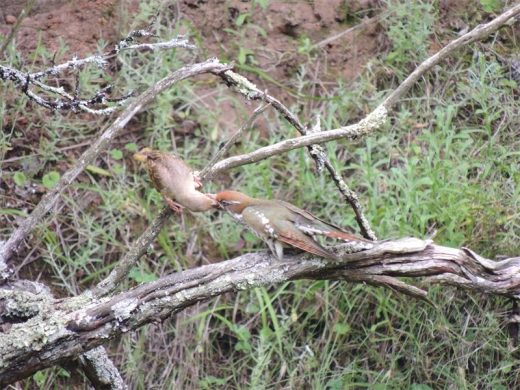
Instead, after our lovely late afternoon drive, we settled down to watch some in-camp birding activity. It wasn’t quite as exciting as raptor spotting at the feeding site but there were some lovely birds around our camp. It was also fascinating to watch a weaver couple’s frantic efforts to feed a particularly demanding foster child, a young Diederik cuckoo, now larger than its surrogate parents, that had been foisted on the unsuspecting weavers by its delinquent biological parents.
HAVE YOUR SAY
Like our Facebook page, follow us on Twitter and Instagram
For news straight to your phone, add us on WhatsApp 082 421 6033