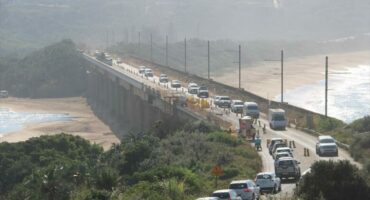
The Republic of South Africa is quite a large country, covering a total of 1 221 million sq km with a coastline measuring 2 500 km, and it is brushed on the west coast by the cold Benguela current and on the east coast by the warm Agulhas current.
Because of the two different temperatures of these sea currents, the vegetation adjacent to them is vastly opposite as the inland sea breeze from the Agulhas current carries more moisture than the Benguela current.
Due to this fact, the lush and dense and bushy vegetation is on the east coast while the west coast is the opposite.
ALSO READ : In a Nutshell: Water problems
The west coast vegetation is, to say the least, very spare and hardy as moisture deposition is minimal and sporadic. Some areas do not even experience rain and the sea mist that envelopes the coastal belt, is their only source of dampness.
My interest in vegetation, especially trees, was heightened once we moved to the eastern Free State in the area just adjacent to the escarpment. The weather there is quite changeable, with thundering and barking thunder storms in the summer heat to the chilly willy windy cold winters.
Naturally, not all of the country is covered with the trees and shrubs of a hundred years ago as the farmers, once they settled and built their homestead, their farming aspirations came to the fore and it was either mielies, cattle or sheep. In all these farming endeavours, clearing of the land of the indigenous shrubbery and trees was done – in order to allow grass to grow for grazing and to make the earth bare for planting.
This was therefore a necessary undertaking and happens in all agriculturally dependent countries as people must be fed. My concern about the state of the land was peaked when we lived in a small town, amongst a small farming community, in the eastern Free State.
The area around town was developed grazing pastures and mielie fields, so no trees except around the farm dwellings and in odd places on the farm to provide wind breaks for the cattle.
Due to the fact that the people in the location do not have or cannot afford electricity, in the winter months these residents would venture into the town to cut wood to feed their home fires.
The reason for them coming to town is because the present residents plus their forebears, had eradicated the trees around their residential area and now are doing the same to the town’s tree population.
Within the next five years I venture that the town itself will be devoid of trees, except for those in private gardens, as they have paid the price and become charcoal in a house in the location. Who must speak on behalf of the trees?
Who will be able to convince our local authorities that chopping down trees is not acceptable, and supply the people with electricity or gas for cooking and heating? Save our forests and save our trees before we become a barren landscape.
HAVE YOUR SAY
Like the South Coast Herald’s Facebook page, follow us on Twitter and Instagram