I’m learning about plants all the time and especially the important value to the local eco system of indigenous and endemic plants, insects and birds. So many people living on the coast come from other parts of the country, and see the wonderful lush green KwaZulu-Natal hills as a sub-tropical blessing. Spoilt for choice, we visit our local nurseries amazed with the variety of magnificent plants just looking for new homes.
These days I know quite a bit more, and especially that with the welcoming environment of our mild and moist climate, many of the thriving plants are actually invasive here. It’s been a hard lesson to learn because they are so beautiful one doesn’t like to believe that they could actually make it hard for our delightful indigenous gems to survive – it’s literally a jungle out there.
For many years I carefully cultivated one of the most stunning plants I’d seen after spotting a magnificent hedge of these flame-coloured flowers and learned that it was a golden shower (pyrostegia venusta).
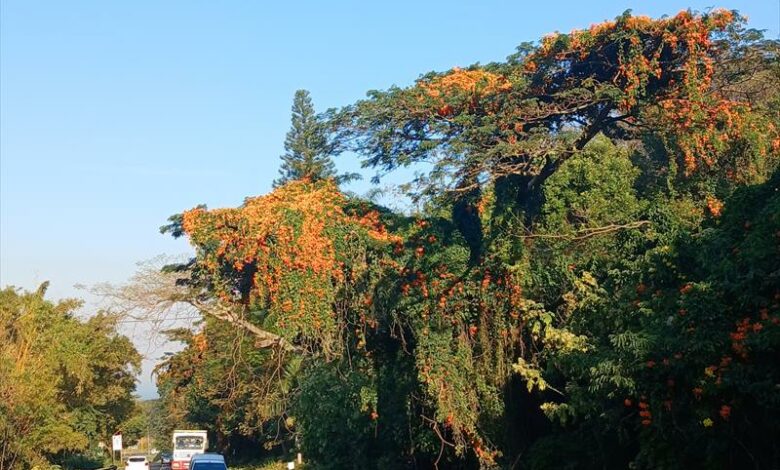
While not a declared invader, it spreads very aggressively, climbing up the tallest of trees or whatever supports it, including fences, other plants or even small buildings by branching profusely and climbing using its clinging tendrils and covering them. The word pyrostegia is Greek derived: pyro meaning ‘fire’ and stege meaning ‘covering.’ Species name venusta means pleasing. beautiful, graceful, or charming and it truly is glorious – but, it can be very destructive, adding so much weight that big branches break which can be really dangerous to anything underneath.
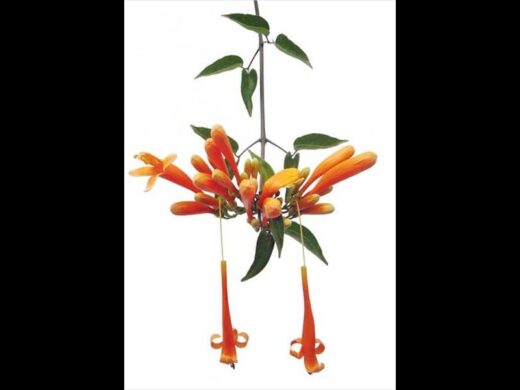
They are currently blooming profusely, and while they are delightful to look it, they clearly need to be diligently managed and controlled, therefore I urge you to pull them out of trees and bushes in your garden and on your pavement, chop them low and keep them as contained as possible so that they are not likely to smother, weigh down and overwhelm other trees and plants in the area.
Consider planting more indigenous erythrina, commonly known coral or lucky been tree umsintsi (isiXhosa) umsinsi (isiZulu) which offer beautiful blooms of similar colour with far fewer ‘side-effects’ and which will attract many beneficial pollinators, which will of course in turn attract more birds – local really is lekker.
HAVE YOUR SAY
Like the South Coast Herald’s Facebook page, follow us on Twitter and Instagram