August 1 will mark the second time Marine Protected Areas (MPA) Day will be celebrated, with the importance of these areas highlighted on a national and global level.
Part of the programme to celebrate these ‘game reserves of the sea’ will be the MPA Day webinar which welcomes leading marine experts who will share interesting facts about their research on MPAs at 7pm.
Dr Judy Mann, Executive of Strategic Projects at the Two Oceans Aquarium Education Foundation said MPA Day is about sharing with more and more people the importance of the oceans by helping them to explore this underwater world.
“Do MPAs really work? is often asked, so we’re very excited to welcome a knowledgeable team for the webinar, which will provide listeners with answers to this interesting question as well as valuable insight about research being conducted in our MPAs,” said Mann.
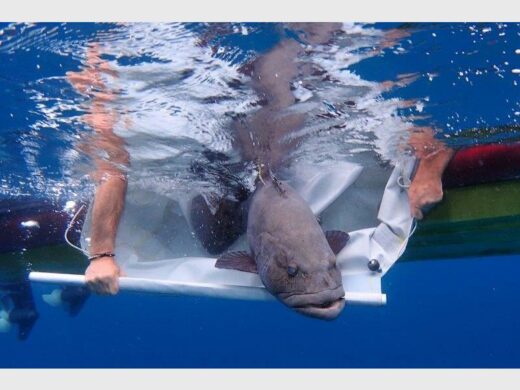
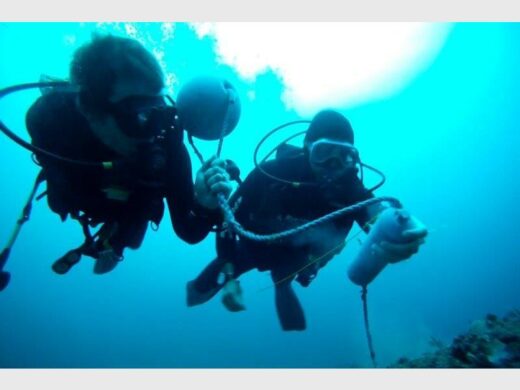
The webinar will include a panel of four speakers who will talk for 10 minutes each with time for questions. Topics to be discussed will include survey fishing and its role in MPA management, fish tagging and how it has been used in MPAs, acoustic telemetry and its relevance to MPA research, visual census and underwater videos and how they are used in MPA research.
The speaker panel will include Professor Colin Attwood, associate Professor in the Biological Sciences Department at the University of Cape Town. Attwood’s primary research focuses on the effect of fishing on fish populations and evaluating alternative strategies to conserve fish and to sustain fisheries. His work entails biological analyses, movement and migration studies, fishery assessment and modelling.
He has previously worked for the South African National Antarctic Research Programme and the Benguela Ecology Programme, and was a Senior Specialist Scientist at the Department of Environmental Affairs and Tourism (Marine and Coastal Management).
Another speaker is Dr Bruce Mann, Senior Scientist at the Oceanographic Research Institute (ORI). Mann has been working at the ORI in Durban since 1992, with much of his research focusing on the biology and population status of linefish species, with a particular focus on how MPAs can be used to ensure their effective management.
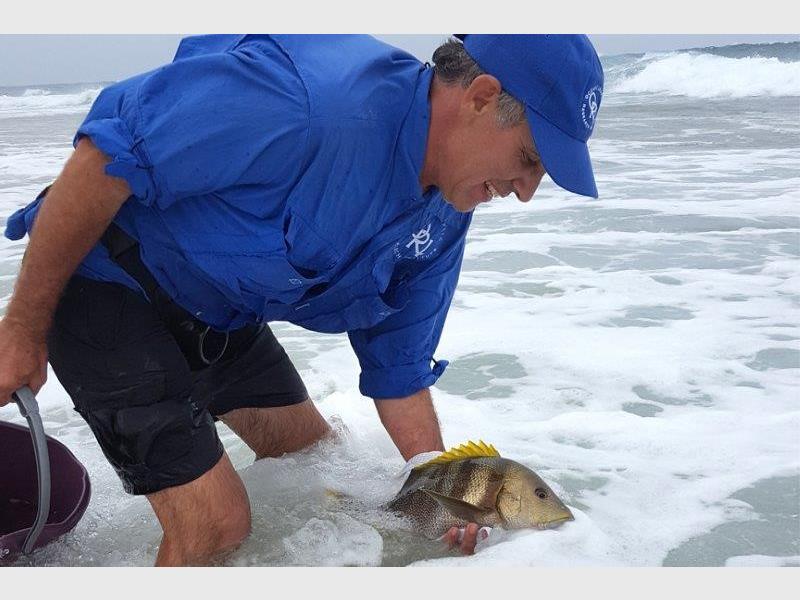
Based on surf-zone fish monitoring and tagging work conducted in the iSimangaliso MPA since 2001, Mann obtained his PhD degree in 2016, as well as being involved in establishing the Pondoland MPA in the Eastern Cape where he has run a reef fish monitoring and tagging project for the past 15 years.
Also, Dr Ryan Daly, a scientist at the ORI will be a speaker. Since 2010, Daly has led studies on the ecology and migration dynamics of apex predators, such as bull sharks and giant trevally, in southern Mozambique, with his work on bull sharks earning him his PhD from Rhodes University in 2014.
Between 2017 and 2019, Ryan held the position of Research Director for the Save Our Seas – D’Arros Research Centre in the Seychelles, where he coordinated marine research projects on multiple shark species, giant trevally, mantas, turtles, and coral reefs.
He is now continuing his research on movement patterns of various shark and ray species using acoustic and satellite telemetry.
Meanwhile, Dr Anthony Bernard, Instrument Scientist at the South African Institute for Aquatic Biodiversity (SAIAB) will also be a speaker.
Bernard’s research is focused on understanding the ecology of subtidal reef ecosystems within South Africa and the roles that natural disturbance – such as climate change – and anthropogenic disturbances – such as fishing – play in shaping community and population structures.
Integral to this research is the role that MPAs play in biodiversity conservation and as experimental controls, or baselines, from which to measure the impacts of direct anthropogenic disturbances. A large component of Bernard’s research activity is also directed towards the development of sampling methods to best survey fish and invertebrate populations associated with reefs from the shallow subtidal down to the edge of the continental shelf.
To register for the webinar visit, https://us06web.zoom.us/webinar/register/WN_UTAiAZAUTUyuSNU4bkCqLA
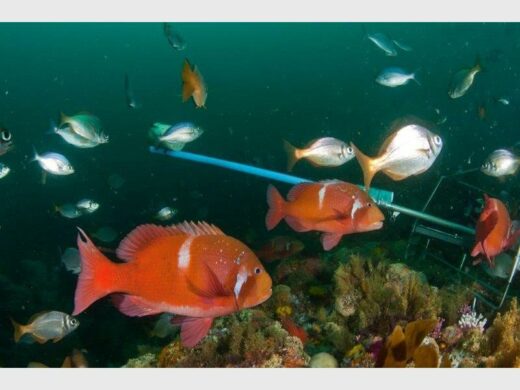
PHOTO: STEVE BENJAMIN
HAVE YOUR SAY
Like the South Coast Fever’s Facebook page