Cogta engages with community development workers
KZN Cogta MEC, Bongiwe Sithole-Moloi, said CDWs serve as vital fieldworkers, acting as a crucial link between the government, stakeholders, and the communities they reside in and serve.
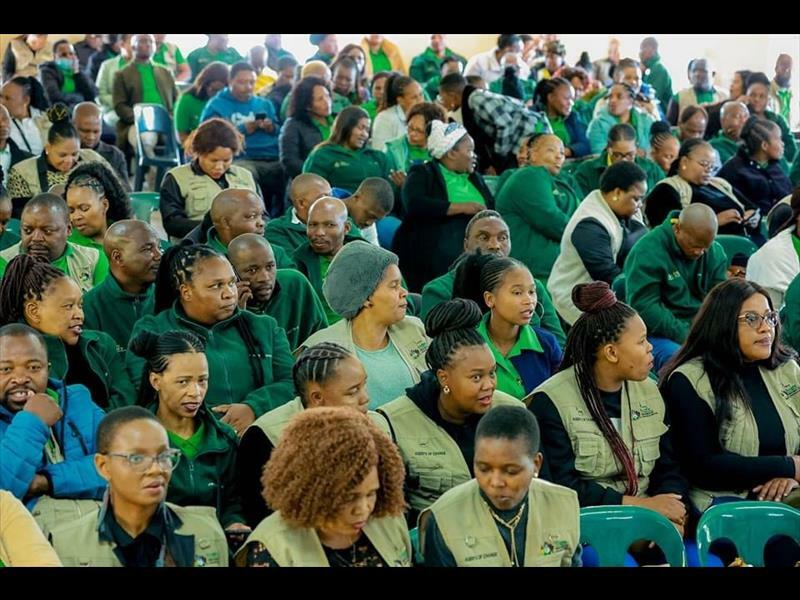
The KwaZulu-Natal Department for Cooperative Governance and Traditional Affairs (Cogta) recently held a meeting with all Community Development Workers (CDWs) employed by the department from municipalities across the province.
The meeting in the KwaNdwalane Traditional Council was aimed at discussing the department’s programme for the 2023/2024 financial year, addressing concerns raised by CDWs, and outline plans for equipping and training them to enhance their effectiveness in bridging the gap between municipalities and communities.
According to KZN Cogta MEC, Bongiwe Sithole-Moloi, CDWs serve as vital fieldworkers, acting as a crucial link between the government, stakeholders, and the communities they reside in and serve.
She said CDWs are supposed to play a pivotal role in ensuring that interventions at community level are coordinated, communicated, and integrated in a fair and balanced manner, taking into account the local socio-leadership dynamics.
“KwaZulu-Natal currently employs 377 CDWs across 34 municipalities, each contributing to the development and welfare of their respective communities. The purpose was to discuss issues concerning their duties. CDWs are based in municipalities and work alongside ward councillors to ensure that community-level interventions are coordinated, communicated, and integrated in a fair and balanced manner, taking into account the local socio-leadership dynamic,” said Sithole-Moloi, adding that KZN Cogta employs 377 CDWs across 34 municipalities, each contributing to the development and welfare of their respective communities.
The MEC said while they acknowledge that more work needs to be done as some wards remain without CDWs, the number is still significant and should enable them to tailor relevant interventions in communities.
Sithole-Moloi said they have plans to increase the number of CDWs, aiming to ensure that all wards have dedicated individuals.
“However, our progress is limited by the availability of resources. Increasing the number of foot soldiers reflects our commitment to strengthening our engagement with communities and improving service delivery. The government’s vision for CDWs is to ensure that local government structures such as War Rooms and Ward Committees are functional and address the needs of the community. CDWs are supposed to be visible to the communities and intervene to assist families, schools, and clinics which are used by communities on a daily basis.
Our engagements addressed challenges raised by the CDWs, such as tools of trade. We have attended to all these issues as the department; however, we would like to emphasize that CDWs are the representation of the government. We expect them to be the interpreters of government programmes and assist communities in accessing government services,” she said.

Like the South Coast Fever’s Facebook page