Grand Slam season: Anyone for tennis as French Open and Wimbledon emerge on the horizon
It's almost time to sit back and enjoy two of tennis's greatest tournaments.
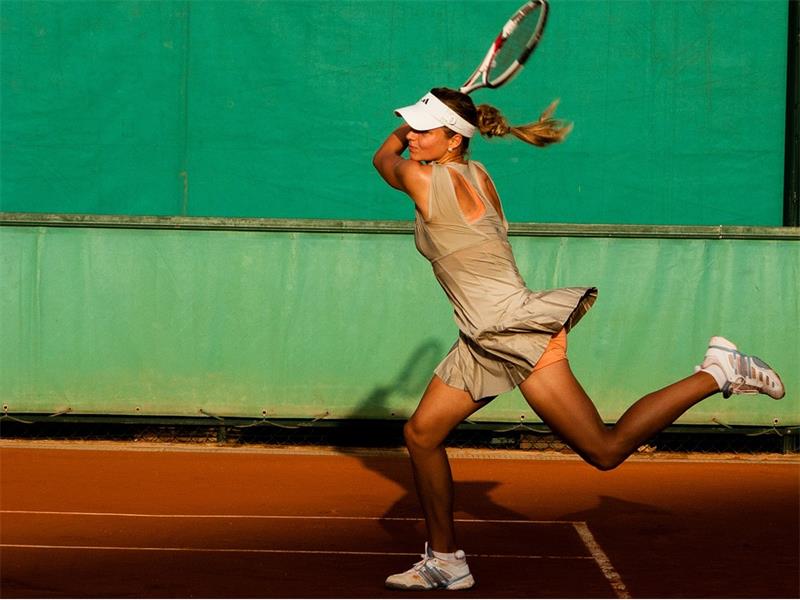
WITH back-to-back grand slams about to get under way, it’s a case of game, set and match for tennis fans, worldwide.
The French Open, played at Roland Garros, a 21-acre complex on the southern boundary of the Bois de Boulogne in Paris, gets under way this Sunday, May 28.
Wimbledon, the most loved of all the four grand slam tournaments, follows a short while later on Monday, July 3.
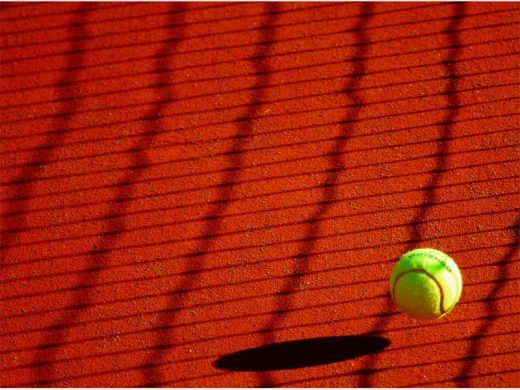
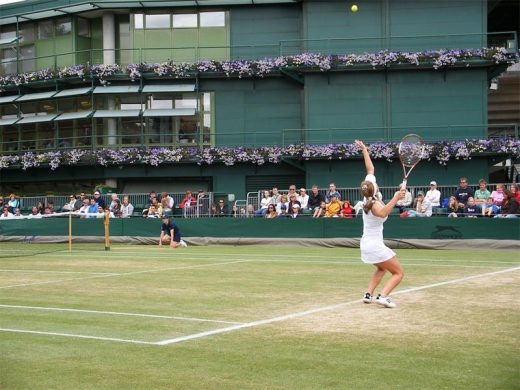
The French Open is played on slow playing clay, or more accurately, white limestone covered with a few millimetres of powdered brick dust while the other, the famous fast grass courts grown from a mixture of perennial ryegrass and creeping red fescue in London’s leafy SW19.
Two very different surfaces, indeed. Clay will suit some while others will be more at home on grass.
With Roger Federer having withdrawn, will it be Rafael Nadal, defending champion Novak Djokovic, or world number one Andy Murray who will lift the trophy at Roland Garros?
With Maria Sharapova denied a wild card and Serena Williams on maternity leave, the women’s singles could be very interesting.
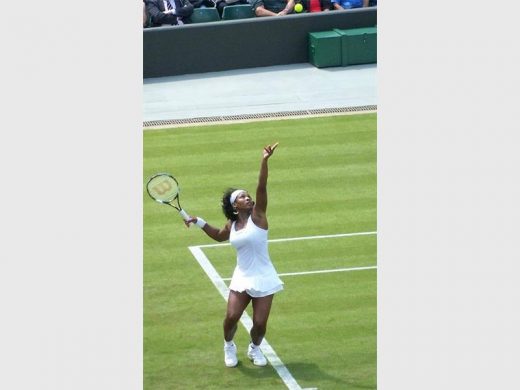
Many pundits believe defending champion Garbine Muguruza from Spain has the potential to lift the crown for a second time.
One thing we do know is that at the end of the day, there will be one man and one woman who will leave €2.1 million richer.
After the thrilling final between Federer and Nadal at the beginning of the year in the Australia Open played at the National Tennis Centre in Flinders Park, the on-court presentation ceremony with Rod Laver, sharing the podium with two of today’s most popular players, it had me thinking about the great classic players of yesterday and wondering where they would literally ‘measure up’ against today’s greats.
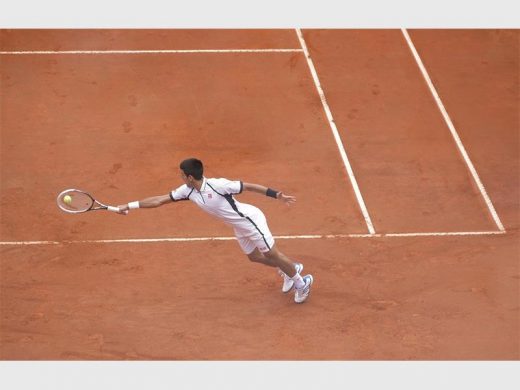
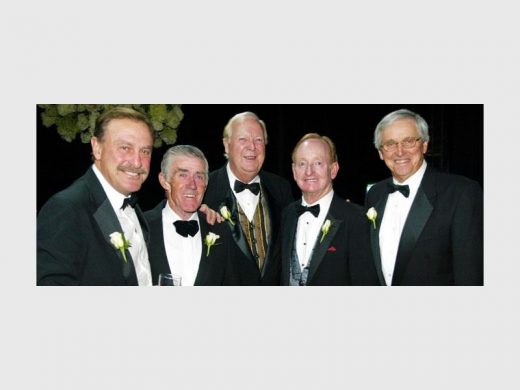
A few examples about ‘measuring up’: Ken Rosewell and the late Harry Hopman were quite short at 1.7m (5’5), the legendary Rod Laver who hailed from the north of Queensland stands at 1.73m (5’6).
Lew Hoad, sadly deceased, was slightly taller at 1.79m (5’8) as was Roy Emerson at 1.8m (5’9).
Of course there were a number of ‘big (1.85m) boys’ like Fred Stolle and John Newcombe but by and large, players were neither tall nor did they possess the noticeably well-toned athletic torsos spectators take note of today when players peel off sweat-soaked shirts and replace them with what appears to be an endless supply of perfectly laundered fresh ones.
South African Kevin Anderson, standing 2.032m (6’8) is an exceptionally tall man but by and large most of today’s top ranked men are around the six foot mark.
Murray at 1.9m (6’2) is the same height as Sharapova. Djokovic is 1.88m (6’1) and Federer and Nadal are both 1.85m (6’).
For the best part of two decades, beginning in the late 1950s, Australians dominated world tennis.
It is often referred to as ‘the golden years’. It was a country absolutely besotted about the game. Everyone played.
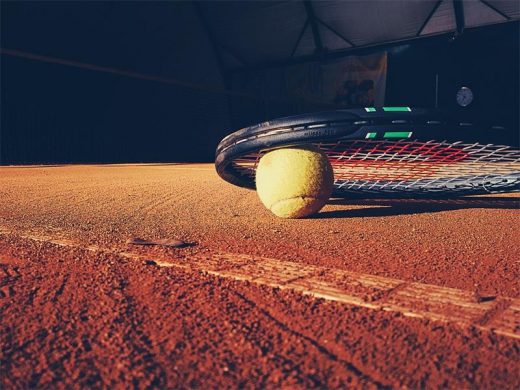
If it had been possible to fly at a low altitude over the entire continent in those years, spanning remote country regions to busy populated cities, one would not fail to notice neat rectangles measuring precisely 78 feet by 27 feet everywhere.
In those days the Australian Open was played on the grass courts of Kooyong (from the aboriginal word, kooyongkoot, meaning ‘the haunt of the wild fowl’) in Melbourne.
YOU MAY ALSO BE INTERESTED IN: Motivating juniors to play tennis
In the run up to this grand slam event, every state held an open championship.
The NSW Tennis Open was played on the grass courts at White City in the Sydney harbour side suburb of Rushcutters Bay. (Now called the Sydney Invitational the event is played at the Sydney Olympic Park Tennis Centre at Homebush).
As a young tennis-crazed teenager in 1961 I was selected to be a ball girl for one day at the NSW Tennis Open.
Unfortunately, I have no memory of how I actually got to the White City Tennis Club, (probably by bus travelling from Central Railway Station, up Williams Street via notorious King’s Cross).
It does seem so casual looking back because other than the fact that we had been told to come dressed in white tennis clothes, sandshoes and socks there were no other instructions.
There was a ‘wrinkly’ old woman in charge of girls squad. We were told to call her ‘Miss’ but in hindsight I think she was really a ‘Sir’.
Each court had six ball retrievers. Boys for the men and girls for the women’s matches. I do recall being told by ‘Miss’ that unless we were running about fetching balls we had to stand perfectly still and not to fidget.
The day I was there I had the unbelievable luck to be chosen to be on the same court with two of the greatest women players of that time, namely Maria Bueno from Brazil and Christine Truman, then ranked number two in the world.
When we were not on court, we could watch, walk around and talk to any of the players.
In my little modest ‘day bag’ I had my autograph book and a pen.
And while I knew this faded red covered book was tucked away in a large card box containing ‘miscellaneous’ treasures was in the top of a floor to ceiling cupboard at my mother’s home, a severe injury put paid to any idea of searching.
Even without the hard evidence, I clearly remember many of the entries. There was standard ‘by hook or by crook…’ on the first page followed by the timeless, ‘roses are red….’ etc. One stands out though. Penned by my headmaster in a country town it begins…“Elizabeth, a lovely name. The Queen of England has the same..”
And as for my day at the 1961 NSW Tennis Open, my autograph book was signed by some of the great players of that including Neale Fraser, Rod Laver, Roy Emerson, Ken Rosewall, Harry Hopman, Lew Hoad and Fred Stolle to remember a few.
Along with Maria Bueno and Christine Truman I recall Margaret Smith’s name along with that of a young Billie Jean Moffitt, years before she became Mrs King.
No squizzles, no wavy scrawls – full names all written clearly.
These great players of another era were all unsophisticated young men and women. And as this was eight years before the Open Era, they were all amateurs.
HAVE YOUR SAY
Like our Facebook page, follow us on Twitter and Instagram
For news straight to your phone, add us on BBM 58F3D7A7 or WhatsApp 082 421 6033