I AM South African, but I am first to admit I don’t really know much about those who changed or influenced the course of our country’s history.
In my home, most discussions about leaders, the country’s problems or daily issues take place around the kitchen table.
At school I never really had much interest in history as the future was way more exciting.
But it is history that has got us here, to this point in time, and it is people (often our leaders) who make you think about our past, our complicated and twisted present, and our uncertain future.
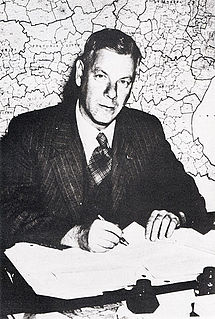
So last night, Hendrik Frensch Verwoerd (8 September 1901 – 6 September 1966) popped up in conversation. He was the man who was the driver behind socially engineering and implementing the racial policies of apartheid. He has been described as the ‘Architect of Apartheid’.
It made me realise how one man (literally) changed the course of South African history and in the process, so many lives – black, white, Indian, coloured and even Asian, were destroyed. Pain was inflicted and mindsets and attitudes were changed. Verwoerd once described apartheid as a “policy of good neighbourliness” – but from my father’s account of his childhood there was nothing good about this policy.
We all lived in Cato Manor – black, white, Indian and coloured. We lived in a happy neighbourhood. I would visit my coloured friends’ houses and they would come to mine. After an announcement on the radio one day, my mother came and told me I could not longer play with or see Eric. Life as we knew it changed. I would see Eric on the street and all I could do was wave to him. We had to leave our homes and move into designatedblack, white, coloured areas. Eric’s family later emigrated, – Ivor Aylward.
Photo by: wikipedia.org
Here are a few facts about Hendrik Verwoerd, according to Wikipedia
He was a South African professor, newspaper editor-in-chief and politician who served as Prime Minister of South Africa from 1958 until his assassination in 1966.
He played an instrumental role in helping the far right National Party come to power in 1948, serving as its propagandist and political strategist.
He eventually rose to party leader in 1958. During his time in office Verwoerd rigidly enforced apartheid policies through further introducing oppressive laws, which diminished the rights of ordinary individuals, especially black South Africans.
He greatly empowered, modernised and enlarged the police, secret police and army. Verwoerd ordered a secret all-out offensive against those who opposed apartheid, which resulted in tens of thousands of people being detained, imprisoned, exiled, assaulted, tortured and killed.
He held the belief that white control over South Africa could only continue if the races lived apart.
He survived an assassination attempt on 9 April 1960 while opening the Union Exposition in Milner Park, Johannesburg, to mark the jubilee of the Union of South Africa. David Pratt, a rich English businessman and farmer from the Magaliesberg fired two shots from a .22 pistol at point-blank range, striking Verwoerd’s right cheek and the right ear. On 26 September 1960, Pratt was committed to a mental hospital in Bloemfontein. On 1 October 1961, his 53rd birthday, he committed suicide, shortly before parole was to be considered
Verwoerd was assassinated in 1966. A uniformed parliamentary messenger named Dimitri Tsafendas stabbed Verwoerd in the neck and chest four times before being subdued by other members of the assembly.
Shona Aylward is a vastly experienced journalist working as a senior reporter. Aside from her extensive community involvement and story writing, she is also involved in creative page layout, and the various media platforms. Shona began her career with Caxton at the Southlands Sun. Previous to this she worked in the marketing industry for surf magazines. Shona is a renown 'greenie' and champions environmental causes. She is also Mom to a number of dogs and cats, and the occasional uninvited snake. When she can find some spare time, it's usually to the beach that she heads.