November 12: On This Day in World History … briefly
While he was at college, Berners-Lee made a computer out of an old television set, which he bought from a repair shop.
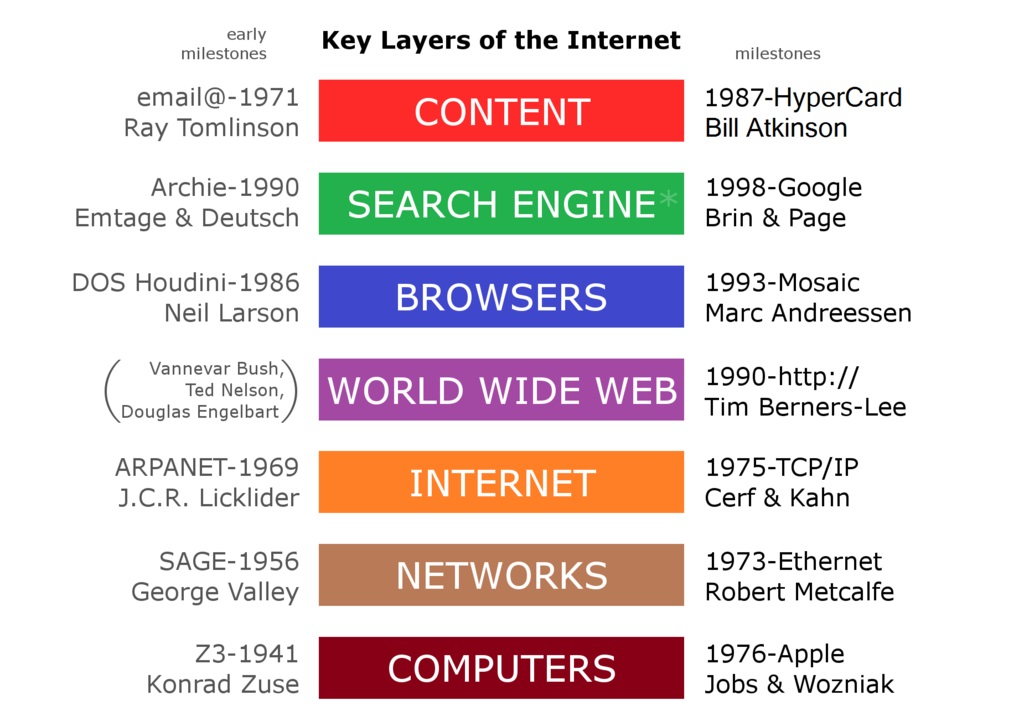
1990: World Wide Web proposal is published
Sir Timothy John Berners-Lee OM KBE FRS FREng FRSA FBCS (born 8 June 1955), also known as TimBL, is an English engineer and computer scientist, best known as the inventor of the World Wide Web.
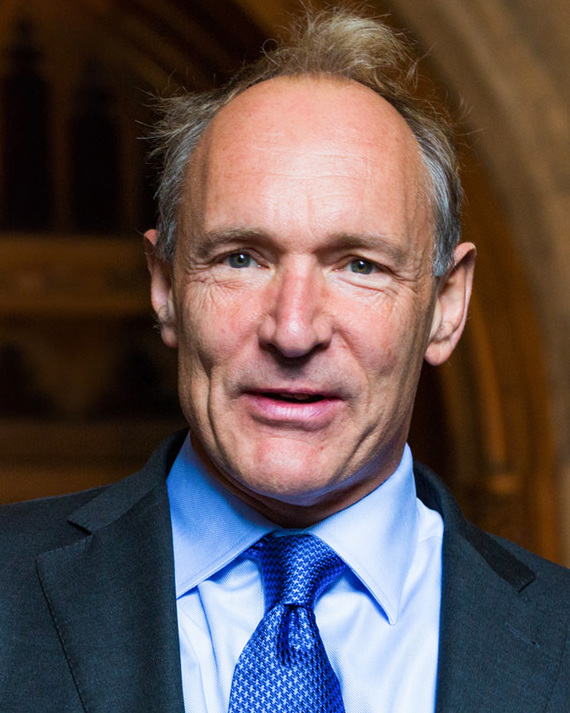
Berners-Lee was born in London, England, United Kingdom, one of four children born to Mary Lee Woods and Conway Berners-Lee. His parents worked on the first commercially built computer, the Ferranti Mark 1. He attended Sheen Mount Primary School, and then went on to attend south west London’s Emanuel School from 1969 to 1973, at the time a direct grant grammar school, which became an independent school in 1975. A keen trainspotter as a child, he learnt about electronics from tinkering with a model railway. He studied at The Queen’s College, Oxford, from 1973 to 1976, where he received a first-class bachelor of arts degree in physics.
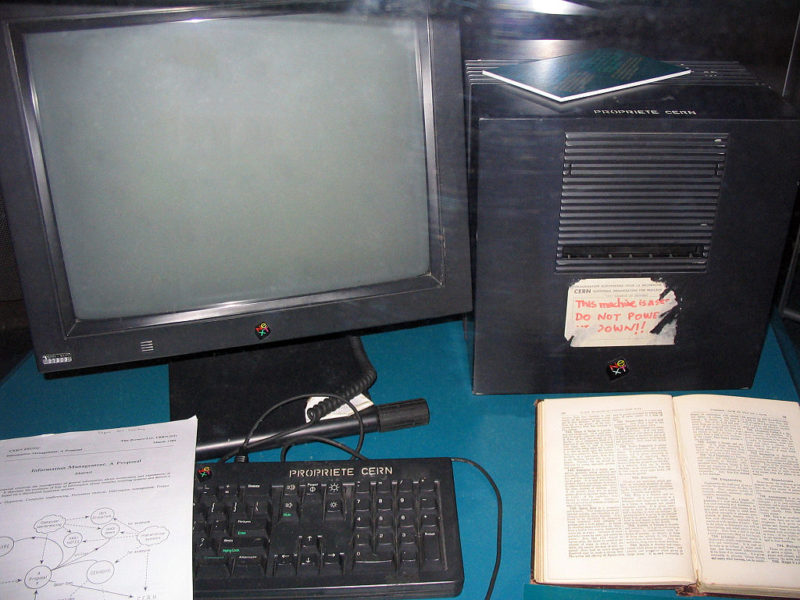
He is currently a professor of computer science at the University of Oxford and the Massachusetts Institute of Technology (MIT). He made a proposal for an information management system in March 1989, and he implemented the first successful communication between a Hypertext Transfer Protocol (HTTP) client and server via the internet on November 12.
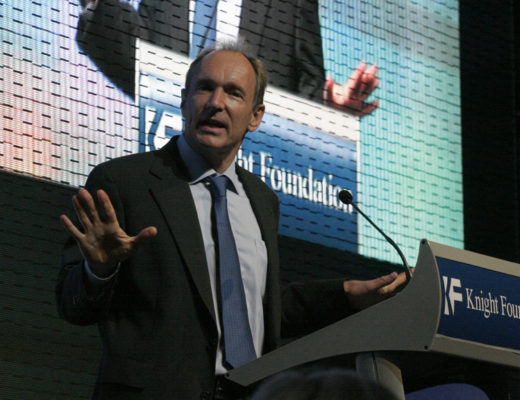
Berners-Lee is the director of the World Wide Web Consortium (W3C), which oversees the continued development of the Web. He is also the founder of the World Wide Web Foundation and is a senior researcher and holder of the 3Com founder’s chair at the MIT Computer Science and Artificial Intelligence Laboratory (CSAIL). He is a director of the Web Science Research Initiative (WSRI), and a member of the advisory board of the MIT Centre for Collective Intelligence. In 2011, he was named as a member of the board of trustees of the Ford Foundation. He is a founder and president of the Open Data Institute.
In 2004, Berners-Lee was knighted by Queen Elizabeth II for his pioneering work. In April 2009, he was elected a foreign associate of the United States National Academy of Sciences. Named in Time magazine’s list of the 100 Most Important People of the 20th century, Berners-Lee has received a number of other accolades for his invention. He was honoured as the ‘Inventor of the World Wide Web’ during the 2012 Summer Olympics opening ceremony, in which he appeared in person, working with a vintage NeXT Computer at the London Olympic Stadium.
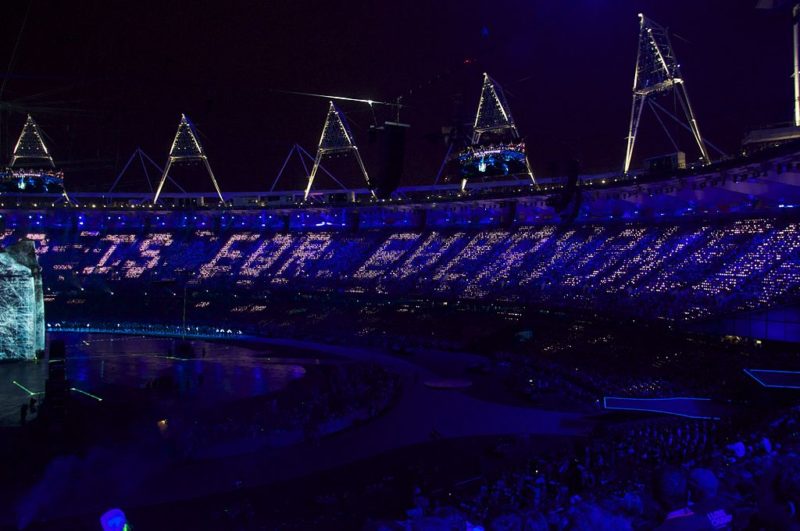
He tweeted “This is for everyone”, which instantly was spelled out in LCD lights attached to the chairs of the 80,000 people in the audience. Berners-Lee received the 2016 Turing Award ‘for inventing the World Wide Web, the first web browser, and the fundamental protocols and algorithms allowing the Web to scale’.
Did you know?
The terms Internet and World Wide Web are often used without much distinction. However, the two are not the same. The Internet is a global system of interconnected computer networks. In contrast, the World Wide Web is a global collection of documents and other resources, linked by hyperlinks and URIs. Web resources are usually accessed using HTTP, which is one of many Internet communication protocols.
Most notable historic snippets or facts extracted from the book ‘On This Day’ first published in 1992 by Octopus Publishing Group Ltd, London, as well as additional supplementary information extracted from Wikipedia.
HAVE YOUR SAY
Like our Facebook page, follow us on Twitter and Instagram
For news straight to your phone, add us on WhatsApp 082 421 6033