February 9: On This Day in World History … briefly
The next predicted perihelion of Halley's Comet is July 28, 2061, when it is expected to be better positioned for observation than during the 1985/1986 apparition, as it will be on the same side of the Sun as Earth.
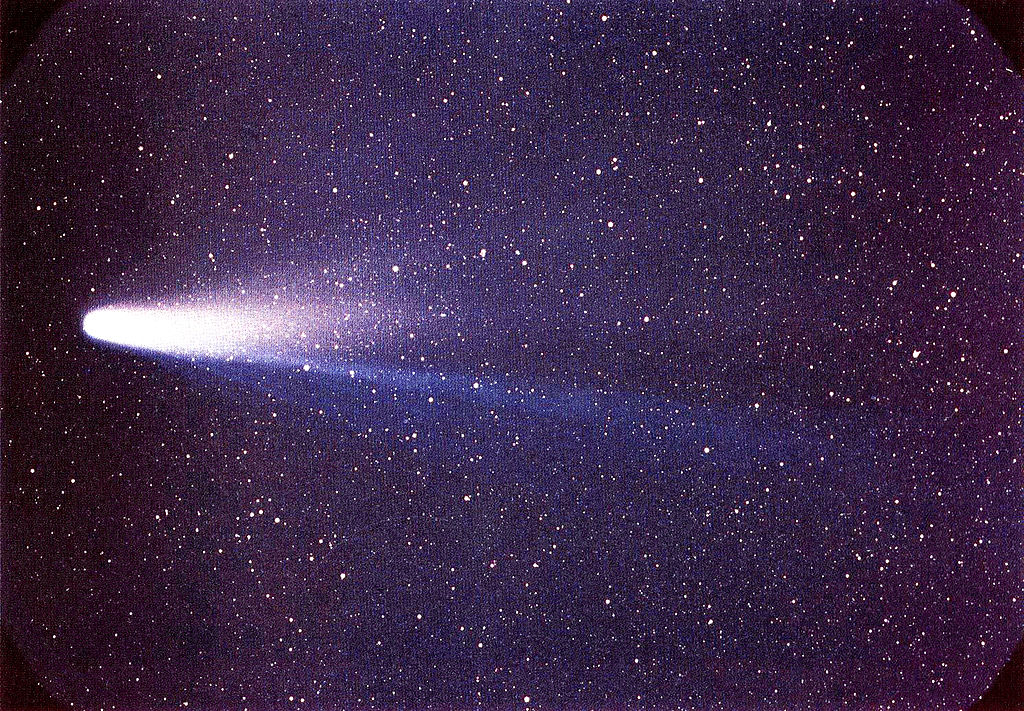
1986: Last sighting of Halley’s Comet in the Inner Solar System
Halley’s Comet or Comet Halley (officially designated 1P/Halley) is a short-period comet visible from Earth every 75 to 76 years. Halley is the only known short-period comet that is regularly visible to the naked eye from Earth, and the only naked-eye comet that might appear twice in a human lifetime. Halley last appeared in the inner parts of the Solar System in 1986 and will next appear in mid-2061.
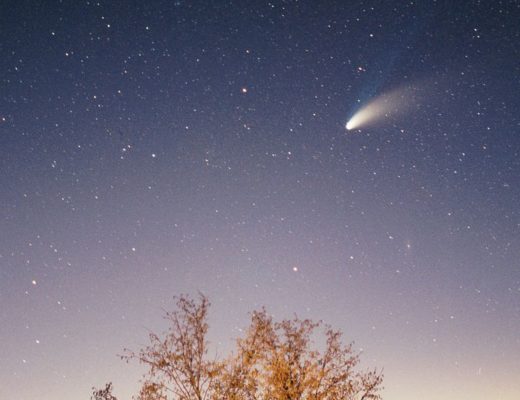
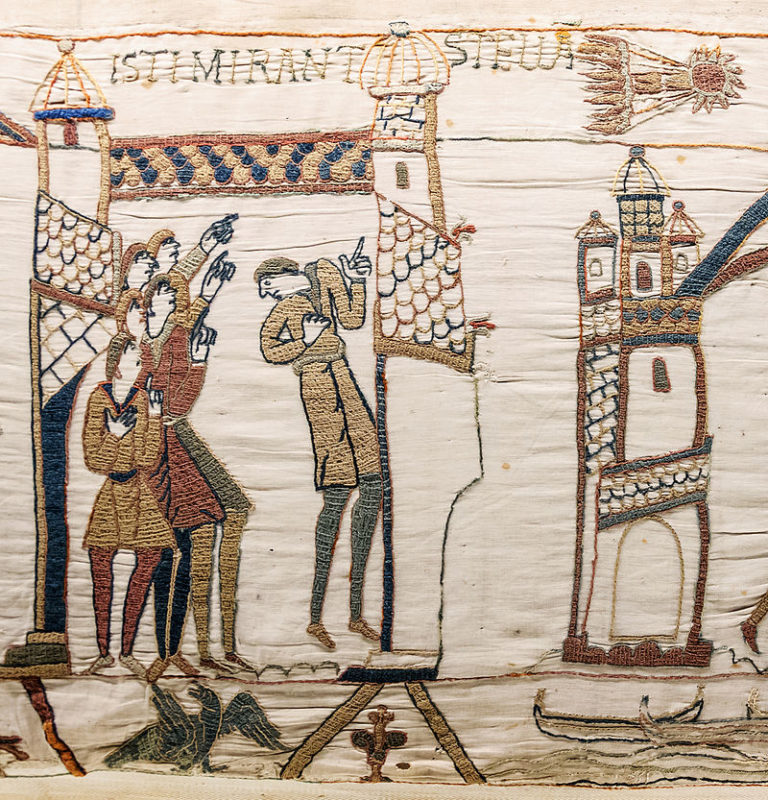
Halley’s returns to the inner Solar System have been observed and recorded by astronomers since at least 240 BC. Clear records of the comet’s appearances were made by Chinese, Babylonian, and medieval European chroniclers, but were not recognized as reappearances of the same object at the time. The comet’s periodicity was first determined in 1705 by English astronomer Edmond Halley, after whom it is now named.
During its 1986 apparition, Halley’s Comet became the first comet to be observed in detail by spacecraft, providing the first observational data on the structure of a comet nucleus and the mechanism of coma and tail formation. These observations supported a number of longstanding hypotheses about comet construction, particularly Fred Whipple’s ‘dirty snowball’ model, which correctly predicted that Halley would be composed of a mixture of volatile ices—such as water, carbon dioxide, and ammonia—and dust. The missions also provided data that substantially reformed and reconfigured these ideas; for instance, it is now understood that the surface of Halley is largely composed of dusty, non-volatile materials, and that only a small portion of it is icy.
Most notable historic snippets or facts extracted from the book ‘On This Day’ first published in 1992 by Octopus Publishing Group Ltd, London, as well as additional supplementary information extracted from Wikipedia.
HAVE YOUR SAY
Like our Facebook page, follow us on Twitter and Instagram