May 27: On This Day in World History … briefly
A crisis squad was established at the Radevormwald town hall. Due to the high body count, the dead were laid out in the Bredderstraße gymnasium. Some of the funeral homes that were asked to supply coffins at night time first thought they were receiving prank calls due to the supposed improbability of such a severe accident.

1971: West Germany’s worst railway accident kills 46
On May 27, 1971, in Dahlerau, a small town in Radevormwald, West Germany, a freight train and a passenger train collided head-on.
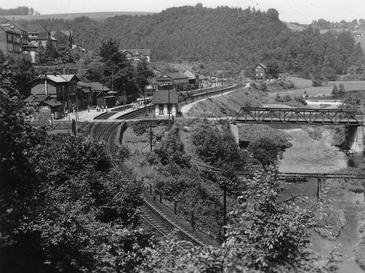
Dahlerau station was equipped with entrance signals, but it lacked exit signals to control departing trains. In place of exit signals, ‘stop’ boards were provided at the end of the platform. In absence of any other signal, all trains were obliged to stop at the board to await instructions; the signalman, however, could show a green hand lamp to an approaching train, which allowed its crew to ignore the stop board. This is what would normally have happened to the freight train. The freight train passed the entrance signal as normal and proceeded slowly into the station, expecting the signalman’s instructions. Although not strictly necessary according to the rules, the signalman declared that he showed a red hand lamp to the approaching freight train to make absolutely sure it would stop (according to the rules, the ‘stop’ board was enough to halt the train). It is unclear what happened next, but the train failed to stop as it was meant to, and departed toward Wuppertal.
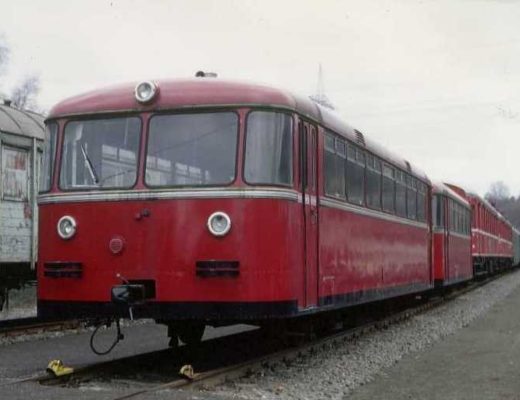
The driver later claimed that the signalman had displayed a green hand lamp, the signal to pass the ‘stop’ board. The train trailed the points already set for the passenger train; the points’ seal, which ruptures in such an event, was later found to be missing. About 800 metres (2 600 ft) north of the station, on a curve, both trains collided. The motor coach of the two-car special train was compacted to one third of its length and pushed backwards 100 metres (330 ft) by the freight locomotive, which was five times as heavy and 20 centimetres (7.9 inches) higher than the railbus. The signalman at Dahlerau tried to stop the departing freight train by running alongside it and giving emergency signals, but failed to get the driver’s attention. He then immediately telephoned the signalman at Beyenburg to try and stop the passenger train, but it had already left. Neither of the stations nor the trains were equipped with radio, and there were no further signals in between the trains. The signalmen were powerless to stop the trains. Faced with a now-inevitable crash, the Dahlerau signalman phoned the emergency services and told them what was about to happen.
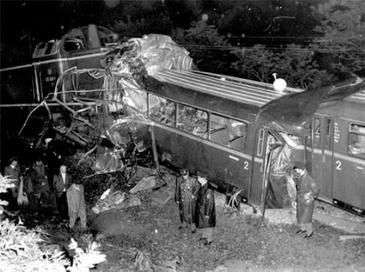
Ambulances, firefighters and police were promptly sent from Radevormwald, Wuppertal and Solingen. The rescue effort was hindered by the inaccessibility of the accident site on a hillside and by parents who had waited for the train at Radevormwald station and had now come to search for their children, as well as onlookers who were attracted by the rescue effort. Thanks to quick rescue and medical treatment, 25 people survived despite severe injuries, but 41 pupils, two teachers, a mother and two railway staff died. A single pupil was the only person to escape uninjured. Forty-six people perished in the accident; forty-one were senior year pupils of the Geschwister-Scholl-Schule in Radevormwald. It was the deadliest accident in West Germany since its foundation in 1949, surpassed after German reunification by the Eschede train disaster in 1998.
Most notable historic snippets or facts extracted from the book ‘On This Day’ first published in 1992 by Octopus Publishing Group Ltd, London, as well as additional supplementary information extracted from Wikipedia.
HAVE YOUR SAY
Like our Facebook page, follow us on Twitter and Instagram