May 30: On This Day in World History … briefly
Over time, the seaside village of Waenhuiskrans has become so associated with the wreck, that it now is also known as Arniston.
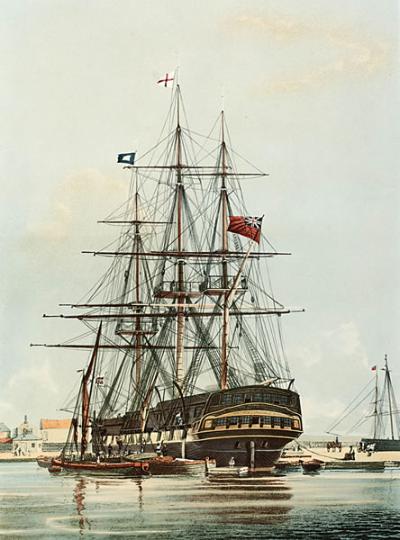
1815: Arniston is wrecked with a loss of 372 lives
The ‘Arniston’ was an East Indiaman (a general name for any sailing ship operating under charter or licence to any of the EIC of the major European trading powers of the 17th through the 19th centuries) that made eight voyages for the British East India Company (EIC). She was wrecked on May 30, 1815 during a storm at Waenhuiskrans, near Cape Agulhas, South Africa, with the loss of 372 lives – only six on board survived. She had been chartered as a troopship and was underway from Ceylon to England on a journey to repatriate wounded soldiers from the Kandyan Wars.
Controversially, the ship did not have a marine chronometer on board, a comparatively new navigational instrument that was an ‘easy and cheap addition to her equipment’ that would have enabled her to determine her longitude accurately. Instead, she was forced to navigate through the heavy storm and strong currents using older, less reliable navigational aids and dead reckoning. Navigational difficulties and a lack of headway led to an incorrect assumption that Cape Agulhas was Cape Point. Consequently, Arniston was wrecked when her captain headed north for St Helena, operating on the incorrect belief the ship had already passed Cape Point.
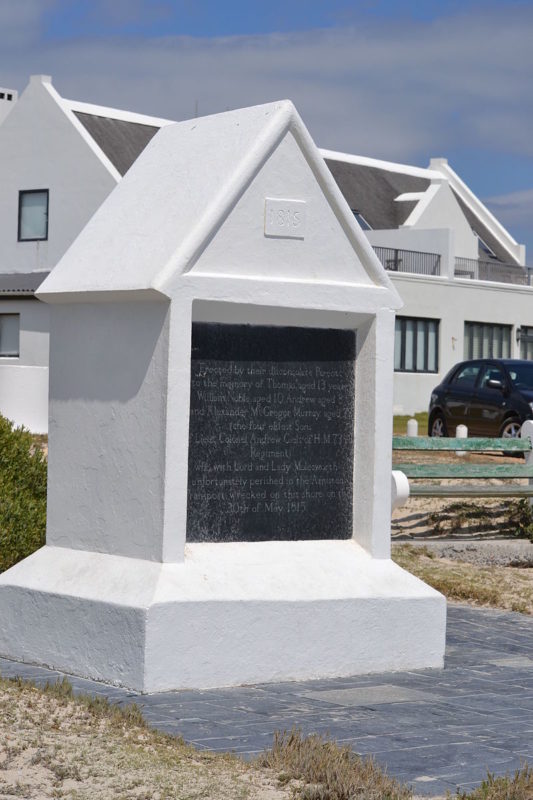
The six survivors buried the bodies found on the beach, then travelled east along the beach, expecting to reach Cape Town. However, after four and a half days, they realised their error and returned to the site of the wreck. Here they subsisted off a cask of oatmeal, while trying to effect repairs to the ship’s pinnace, which had been washed ashore. They were discovered six days later on June 14 by a farmer’s son, who was out hunting.
- Among the victims were: Captain George Simpson, Lieutenant Brice, Lord and Lady Molesworth.
- The six survivors were: Dr Gunter (boatswain), John Barrett (carpenter), Charles Stewart Scott (carpenter’s mate), William Grung (second class), Gibbs (third class), Robinson (fourth class)
Most notable historic snippets or facts extracted from the book ‘On This Day’ first published in 1992 by Octopus Publishing Group Ltd, London, as well as additional supplementary information extracted from Wikipedia.
HAVE YOUR SAY
Like our Facebook page, follow us on Twitter and Instagram