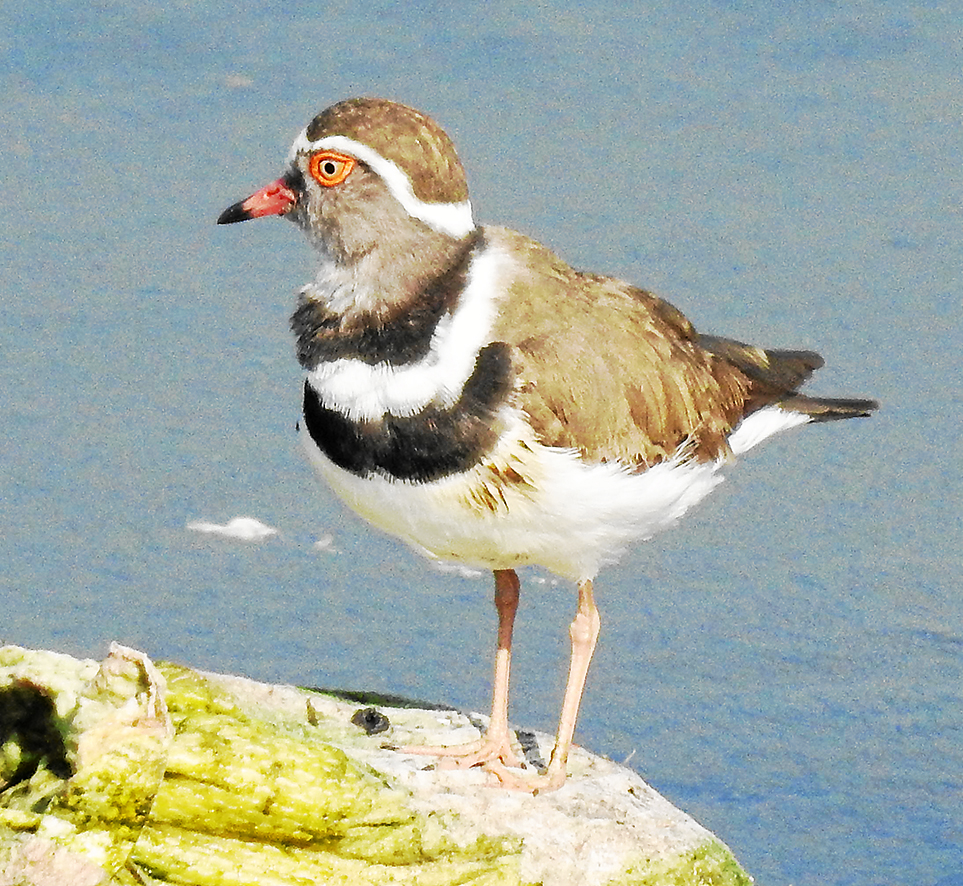
A common resident throughout Southern Africa where they enjoy firm gravel shorelines of lakes, dams, pans, rivers and marshes, but less common on rocky shorelines.
Usually in pairs when breeding, otherwise in loose flocks of up to 40 birds. Their movement is quick and jerky, running in short spurts. Then stopping to peck at substrata or probe in mud with rapid jabs feeding on insects, crustaceans, molluscs and worms.
On the ground groups of birds run together or towards each other with white feathers fluffed and giving a churring, chizzing display call.
They give a peep call on take-off and have a penetrating piping pi – peep in flight. The flight is fast with jerky wing beats.
Breeding takes place from May to January, being variable according to water levels and food supply. The nest is a shallow scrape, lined or ringed with small stones, bits of soil or dry plant fragments. Usually two creamy yellowish eggs are laid, covered with short lines and black or brown scribbles. Incubation is 26 to 30 days and they are fledgings for 30 to 32 days. Thereafter they are dependent on parents for 40 to 42 days.
The Xhosa name is Inqatha and in Afrikaans die driebandstrandkiewiet.