
Bird of the week: Southern grey-headed sparrow
They are less adapted to human habitation than Cape sparrows.
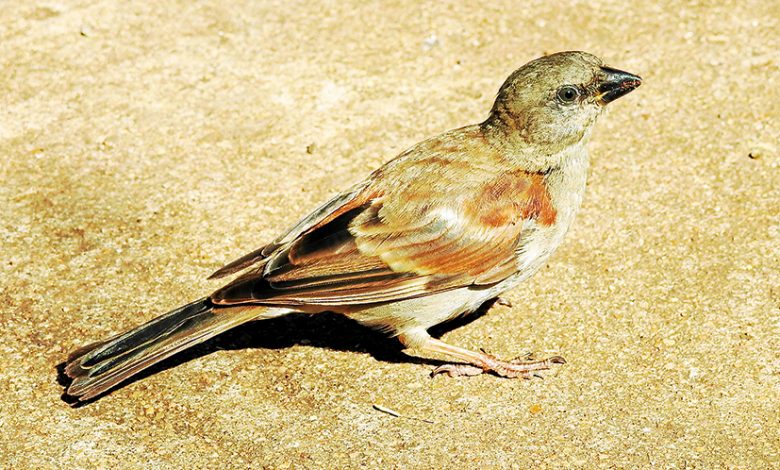
These sparrows are fairly common over most of South Africa, but absent from extreme South West and Western Cape and uncommon in the East.
They like acacia savanna, dry woodland, exotic plantations and farm yards where they feed on insects and seeds.
These sparrows are solitary or in pairs when breeding, otherwise gregarious when flocks can number between 50 to 60 birds.
They forage by walking on the ground with small shuffling steps. They are less adapted to human habitation than Cape sparrows.
The song and call notes are a high pitched thin, tinny – chirrip cheeu chiririt cheeu. Breeding takes place from September to April.
The nest is a pad of grass, wool, hair and feathers in a natural hole in a tree, hollow fence post, thatched roof or eve of a building.
Three to four heavily blotched greenish white shelled eggs are laid. Incubation and nestling periods are unrecorded.
The tribal name is Enzunge and in Afrikaans die gryskopmossie.