
Amanzimtoti cyclists excel at first ever virtual series
There are many advantages to virtual cycling.
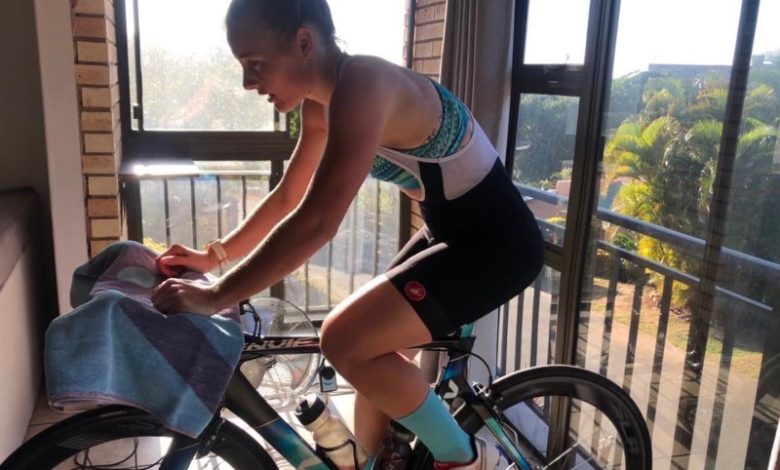
Three local cyclists excelled at the first ever virtual series hosted by KZN Cycling. The KZN Series ran from 11 June to 5 August. Lauren Symmonds, 27, won the elite women’s category and overall women.
“I missed the first five races, so had to put in some serious effort to catch up on points and climb my way up the scoreboard. It was an interesting event and a good way to remain disciplined. I was determined to carry on training during lockdown. I do enjoy virtual racing, but absolutely nothing beats being out on the road. I will most definitely continue road racing when lockdown ends. I’ve been riding on my trainer for a long while, as it’s far more safer than me being out on the roads and fighting against traffic and daylight hours during the week.”
She is currently riding a Giant Liv Envie, but is in the process of upgrading. “I’ve been riding properly for just over a year, following a programme, maintaining fitness and setting goals. I’ve loved training from the moment I started – the thrill, drive and small milestones achieved leave you wanting more and pushing those limits. It’s about the sweat and uncomfortable zones, which lead you to greater places.”
With seven race wins out of 24 contested on different courses, Bryan Cusack won his category and overall men. He finished 12th at the virtual Tour Durban, that formed part of the series, in the professional category. The 58-year-old amatuer cyclist was seeded with the younger pro riders because of last year’s wins at the Tour of Good Hope and Cape Argus, as well as the power he produces – 382 watts over an hour. To put that into perspective, a rider needs to produce over 300 to stand a chance of winning a national race.
READ ALSO: Amanzimtoti cyclist claims double victory in epic Cape races
The series featured two or three races a week on a Tuesday morning, Tuesday evening and Thursday morning. “The Tour Durban was brutal. I was at the Umgazi River Bungalows in the Eastern Cape and rode outdoors in three degrees. The series was fantastic for lockdown. It was a great initiative by KZN Cycling to keep cyclists busy and off the road.” He reckons even after lockdown ends and road races are reinstated, he will continue virtual cycling, to race and train.
There are many advantages to the virtual option. Before heading out for a training ride, the weather has to be conducive. Then you have to change into your kit, ensure your bike is ready, make sure you have the necessary repair kit and pack fluids. Then there is the safety aspect – there is the possibility you could be knocked over by a vehicle or robbed.
Eleonore Tesnaar made it a trifecta for Toti after she won her age category.
This was the first virtual series hosted by KZN Cycling. “Due to the lockdown we needed to rethink on a way to keep people racing and fit, and also get an income in for our 22 development staff,” said KZN Cycling president, Sean Lucien. “We had a total of 82 riders across the 24 races, making it a very successful series. There were all types of riders – road, MTB, track and even some first time riders, from the ages of nine to 60.
READ ALSO: Amanzimtoti teacher selected for KZN women’s netball team
“We have already started our next series called Humpday Hotseat. It’s a seven race series run on Wednesday evenings every fortnight. We will also do a Summer series. Even after lockdown, there isn’t much racing in KZN, so it makes it more affordable for people to race online, as there are no travel costs.”
How does virtual cycling work?
You have a choice of using an ordinary bike or you can cough up for a more expensive smart bike. For a non-smart set-up, there is one direction communication, and power resistance (to simulate different gradients) is done manually. Riders enjoy realistic speeds while watching geo-synced videos. These videos are created by driving the actual route in a vehicle fitted with Google Earth type cameras to record real-time changes of gradients. The bike, with its back wheel lifted off the ground by rollers, is hooked up to a power meter or speed sensor to calculate the speed or power the rider is producing.
With a smart bike or intelligent static trainer, automatic power resistance comes via the app. The three more common apps SA cyclists are using are Zwift, Rouvy and RGT cycling. The virtual cycling worlds are monitored by the rider via a laptop, tablet or smart TV in front of them. To set up, it is as easy as downloading the app, syncing it to your display device and connecting the indoor training system.
Zwift allows players to ride their bicycles on stationary trainers while navigating through six virtual worlds (Watopia, Paris, France, Richmond, London, Innsbruck, Yorkshire and New York. Players may cycle freely around the game world and join organised group rides, races, or workouts with other users. Zwift uses ANT+ or Bluetooth to transmit data that, in combination with athlete weight and equipment choices, is used to convert the athlete’s efforts as speed and power (watts).
Most riders use smart trainers. These trainers have the ability to measure the power produced by the riders. They also automatically vary the resistance according to the terrain of the virtual world being raced on the screen.
DID YOU KNOW? Click on the words highlighted in red to read more on this and related topics. To receive news links via WhatsApp or Telegram, send an invite to 061 694 6047 The South Coast Sun is also on Facebook, Twitter, Instagram and Pinterest – why not join us there?
Do you have more information pertaining to this story? Feel free to let us know by commenting on our Facebook page or you can contact our newsroom on 031 903 2341 and speak to a journalist. (Comments posted on this issue may be used for publication in the Sun)