
WATCH: Hardship of informal settlement residents
Those in the informal settlements have no services yet they are expected to vote. What do they need most? Do they feel their voices are being heard?
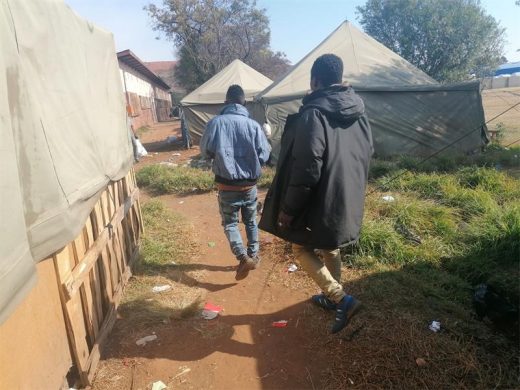
The stench of raw faeces and urine welcomes you as you enter Wembley informal settlement. Dark corridors in a dilapidated building are where some of the people live.
You can’t believe that human beings live in this filth. You have to ask yourself whether they have any choice. All they want is to live and they will do anything to achieve that.
Forgotten people
Welile Mnyaka said in her six years living in the settlement, promises after promises have been made for them to be moved to a better place.
“What can we do? We are South Africans and our government does not care about us. Every time we are about to go to polls we are promised heaven on earth,” said Mnyaka.
“However, after we voted we still find ourselves here. We are just a forgotten people, but we will keep on voting. Who knows, maybe someone, somewhere will hear us and save us from this misery.”
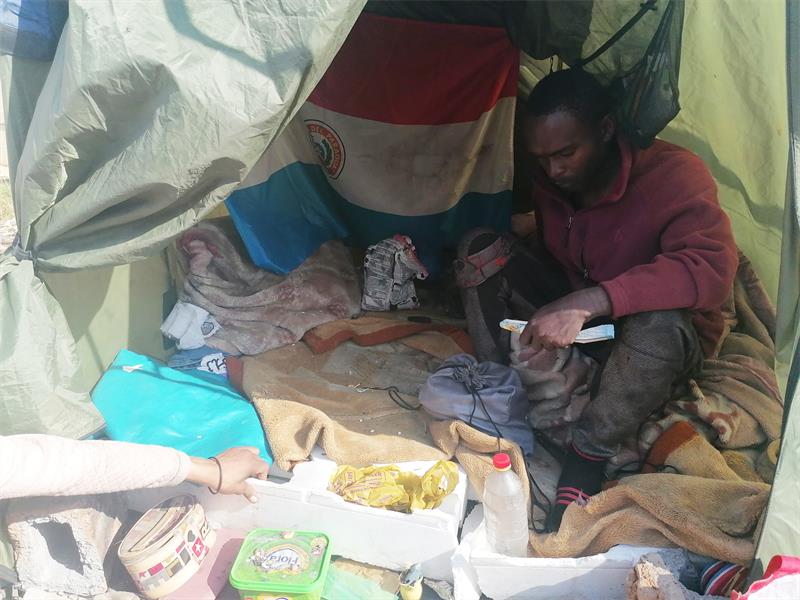
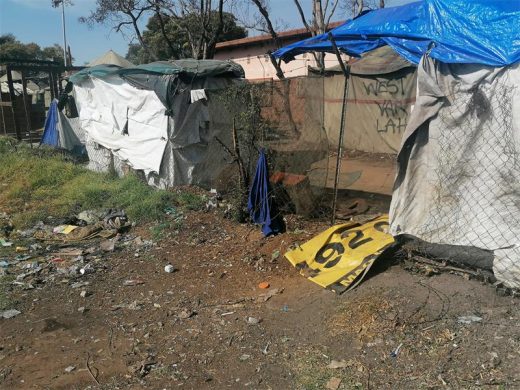
Most people live in tents and they will subdivide even such dwellings to make ‘bedrooms’ with a common ‘kitchen’.
Juma Amisi said they need a better place to live.
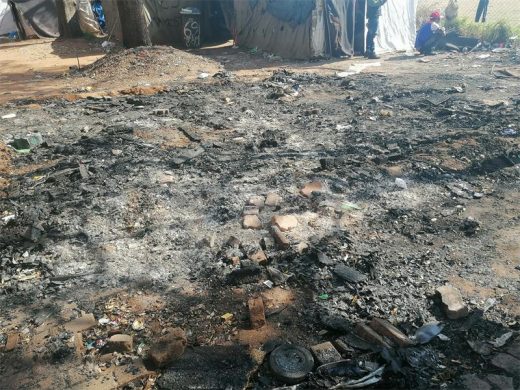
“Others have containers and they live comfortably, we also need them. It is extremely cold to sleep on the floor. To keep us warm we illegally connect electricity, which sometimes trips and can cause a fire. Last week one of the tents burnt to the ground. We also need jobs so that we can make ends meet,” he said.
Ronald Mitchell needs the government to treat them humanely and cater for them the same way they do with other people who live in a formal settlement.
“Our daily struggle is to walk the length and breadth of the city with a trolley, looking for scrap metal, boxes, wood and bottles to sell them. Otherwise, you will sleep hungry because no one cares for us. There is a makeshift spaza shop here where we buy our basic needs like mealie meal, cooking oil, sugar and salt.
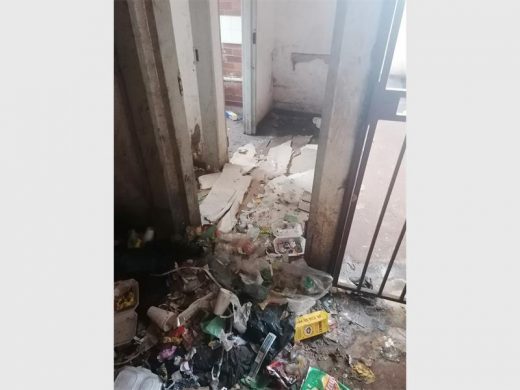
“We are a small place, living in isolation from the rest of the world, we know one another. We are grateful to those who would now and then come and help us with food, blankets and clothes.
“However this place needs a clean-up, skip bins will help a lot because we live in filth as there’s no place to discard anything. With coronavirus in our midst, it will be easy to catch germs and be infected as no one cares about us,” explained Mitchell.
Nombulelo Mumwani talked about overcrowding, especially in tents.
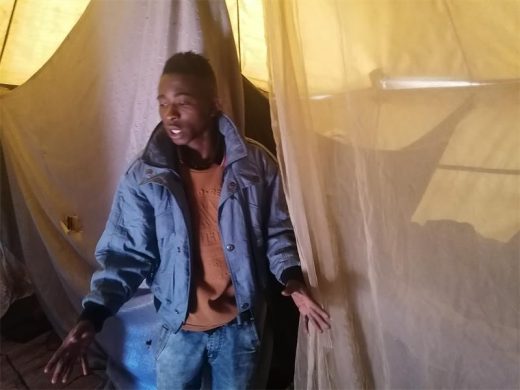
“With Covid-19 in the country, there are high possibilities to become infected. In one tent you find eight to 30 people. There are tents used by the addicts where they smoke drugs. It is not safe.
“We rely on illegal electricity, but it is not safe. Some of the people steal copper wires and sell them. There are a lot of extensions where people connect electricity straight from light bulbs, which is so risky. A fire can break out.
“We don’t have running water, we have to go and fetch water,” she said.