
KZN storm after-effects: Beware of increased snake activity
The heavy rains will also cause the more commonly seen terrestrial species to seek refuge – often in and around homes.
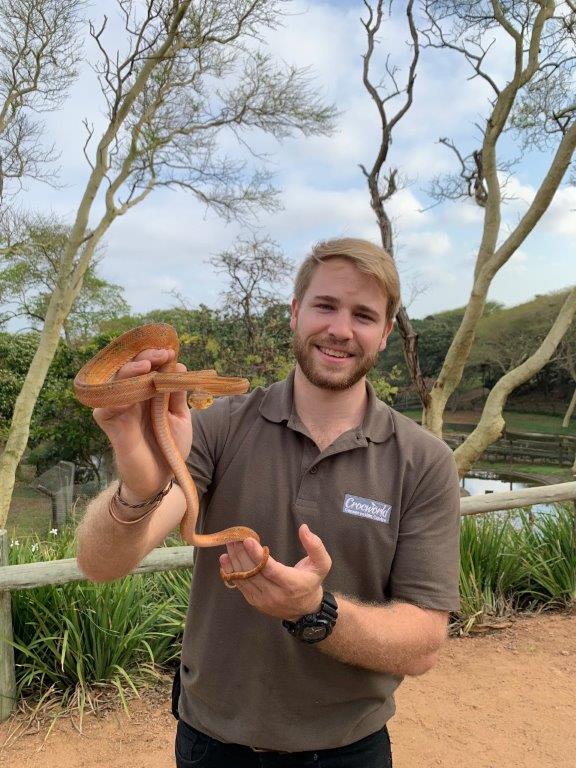
THE wet conditions caused by the persistent rainfall, heavy thundershowers and saturated ground conditions over the last few days, are likely to result in the emergence of certain ground-dwelling snake species seeking places of safety.
James Wittstock, Reptile Curator for Crocworld Conservation Centre, explained that there are several snake species that live just below the ground, which are known to emerge after heavy rains: “With the rain comes the smaller fossorial species which are snakes that spend most of their time beneath the surface of the ground. As the water levels rise, the oxygen levels diminish and these snakes are forced to leave their subterranean homes. While most of these are harmless to humans, there are certain species that could be potentially dangerous.”
He explained that the most commonly found fossorial snakes in this area are the Bibrons Blind Snake (which is harmless) and Southern Stiletto snake (also known as the Bibrons Burrowing Asp or Side Stabbing Adder) which has a potent cytotoxic venom. A bite from a Southern Stiletto Snake is very painful and causes moderate-to-severe swelling in most cases. If left untreated, it could lead to the loss of a limb or digit as the venom breaks down the tissue cells surrounding the bite.
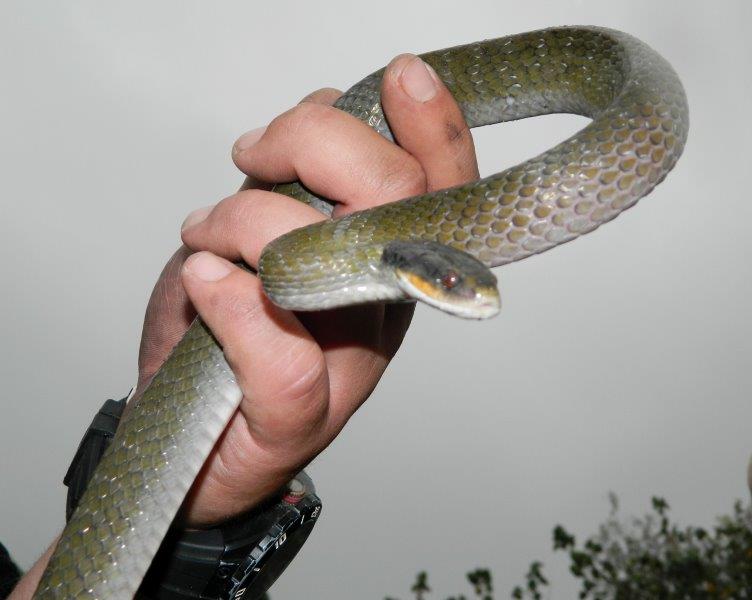
(Image: Supplied by Martin Rodrigues)
The Stilleto snake is a small species of snake reaching lengths of about 40 to 50 cm with a small, flat head. To the untrained eye, they may appear to look harmless. They are dark in colour, usually black, and the underbelly is often cream in colour, sometimes extending up the sides of the snake. When threatened they arch their neck with their head facing the ground and they will readily bite if they feel threatened.
“The heavy rains will also cause the more commonly seen terrestrial species to seek refuge – often in and around homes,” continued Wittstock. “This is generally because they are seeking warmth and food. It is not uncommon for snakes to be found in the roofs of houses, where it is dry and they can hunt rats and geckos.”
He warned that if a snake is encountered, the best thing to do is keep an eye on the animal from a safe distance, while calling a professional to come and retrieve the snake. The animal can then be safely relocated to a suitable habitat. Attempting to capture or kill the snake is both unnecessary and incredibly dangerous as it is when most bites occur.
Crocworld Conservation Centre offers a free service of identifying and removing snakes for the communities of Scottburgh, Umkomaas, Pennington and Park Rynie. For more information or assistance contact Crocworld Conservation Centre on 039 976 1103 or alternatively contact James Wittstock on 066 292 0880 or Martin Rodrigues on 078 484 1859.
DID YOU KNOW?
Click on the words highlighted in red to read more on this and related topics.
To receive news links via WhatsApp or Telegram, send an invite to 061 876 3179
The Southlands Sun is also on Facebook, Twitter, Instagram and Pinterest – why not join us there?
Do you have more information pertaining to this story?
Feel free to let us know by commenting on our facebook page or you can contact our newsroom on 031 903 2341 and speak to a journalist.
To receive our free newsletter click here
(Comments posted on this issue may be used for publication in the Sun)