
SA mining industry’s greatest challenge
According to the Zama Zamas’ there are over 20 open mine sites on Main Reef Road.
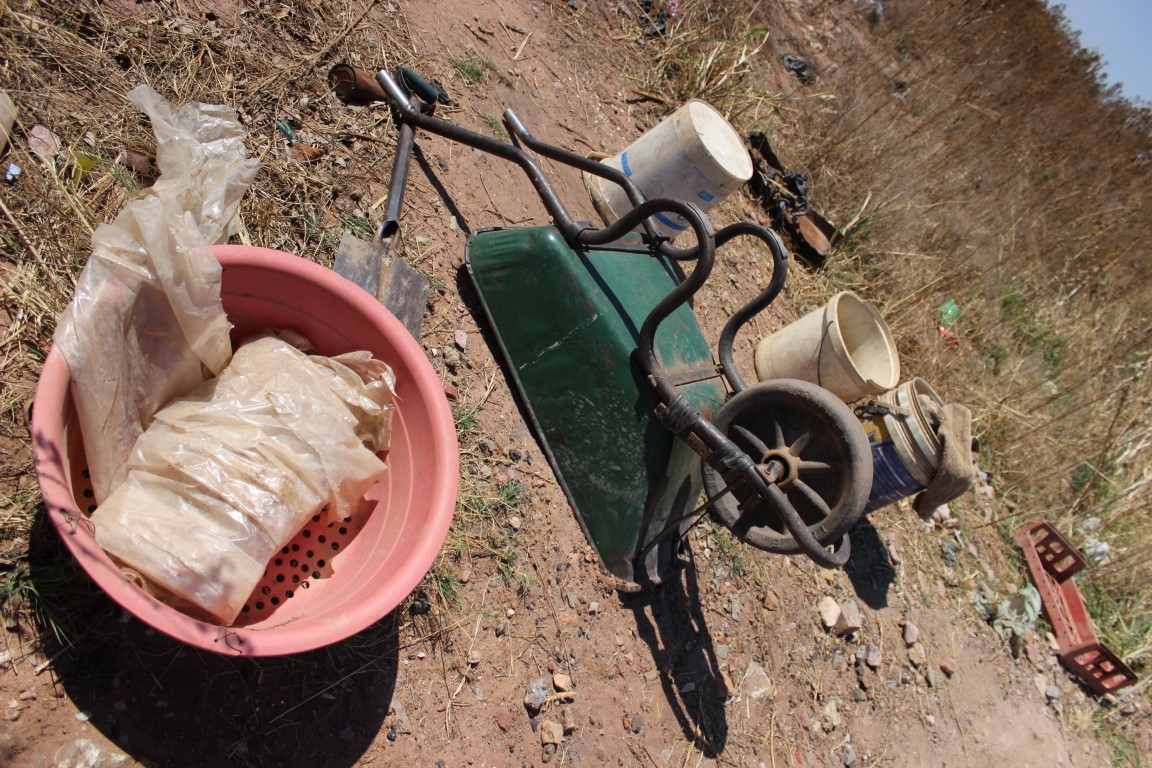
Move over Lonmin, AngloGold, Ashanti: here come the Zama Zama (most popular name that brings fear with it), bread winners. Here you have mining where there is never a strike for wages.
Both men and women are mining, claiming poverty has driven them to this dangerous form of earning money, or just plain making some kind of living.
Compared to other countries, South Africa is particularly vulnerable to the illegal mining practice.
South Africa, formerly the world’s biggest gold producer until 2008, has a large number of abandoned, deep running mines, making police enforcement near impossible.
An illegal miner that did not want to be named said: “I have moved from Durban because this is the City of gold.
“I have three wives and nine children to feed; there isn’t any work out there.”
Most of these illegal miners have decided to leave their families in other provinces to provide by the means of spending days under ground.
They spend days under-ground in poor working conditions and still being able to come out with over 10kg of gold every visit down according to another illegal miner.
According to the South African Council for Geoscience, about 4400 of some 6000 abandoned mines in the country are being illegally mined.
And the number of illegal miners is rising.
“We are very close to the point where there will be more illegal miners than legal miners,” said a South African mining consultant Anthony Turton.
Then there are two types of crushers:
• The first are usually women (even those with children on their backs) who crush the specially selected stones using a coarse stone until they get to a finer product.
• The second type of crushers is usually men who crush the stones to a finer product by using heavy steel balls inside a container that can be manually spun.
• When the crushing is complete, the finer product is moved to a washing basin (wash plant and shake table) to begin the separation process. If lucky, one could come out with some gold dust, which will be taken to the smelter for final processing.
For smelters, there are three options:
• The first is on direct fire on the ground where the gold dust is cooked/melted until gold can be extracted.
• The second method is the underground ovens.
• Third, and most advanced, is the use of gas torches.
The operations are well co-ordinated; the shafts are not world standard, but still, gold can be extracted from the rubble that they collect daily. https://www.youtube.com/watch?v=o7p4o3ULTwY