
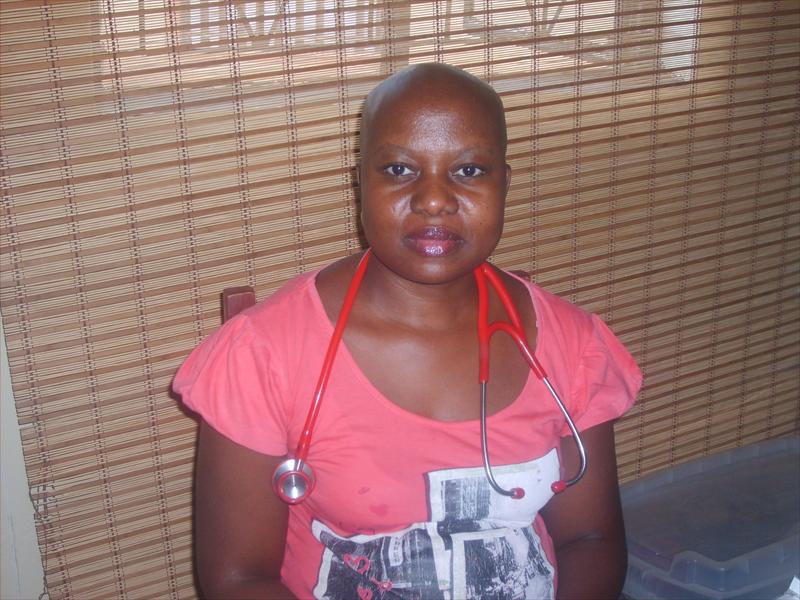
Dr Gabaza Ngobeni a community based doctor that runs a Healing Centre in Diepkloof Zone Four says osteoporosis is a condition characterised by a decrease in the density of bone, decreasing its strength and resulting in fragile bones.
“Osteoporosis literally leads to abnormally porous bone that is compressible, like a sponge.
“This disorder of the skeleton weakens the bone and results in frequent fractures (breaks) in the bones,” said Gabaza.
She said, “It can be present without any symptoms for decades because osteoporosis doesn’t cause symptoms until bone fractures.
“Moreover, some osteoporotic fractures may escape detection for years when they do not cause symptoms. Therefore, patients may not be aware of their osteoporosis until they suffer a painful fracture.”
“The symptom associated with osteoporotic fractures usually is pain and the location of the pain depends on the location of the fracture.
“Fractures of the spine (vertebra) can cause severe ‘band-like’ pain that radiates from the back to the sides of the body,” said Ngobeni.
She said, “Over the years, repeated spinal fractures can lead to chronic lower back pain as well as loss of height or curving of the spine due to collapse of the vertebrae.
“The collapse gives individuals a hunched-back appearance of the upper back, often called a ‘dowager hump’, because it commonly is seen in elderly women.”
A fracture that occurs during the course of normal activity is called a minimal trauma or stress fracture. For example, some patients with osteoporosis develop stress fractures of the feet while walking or stepping off a curb.
Osteoporotic bone fractures are responsible for considerable pain, decreased quality of life, lost workdays, and disability.
Up to 30% of patients suffering a hip fracture will require long-term nursing-home care.
Ngobeni said, “Elderly patients can develop pneumonia and blood clots in the leg veins that can travel to the lungs (pulmonary embolism) due to prolonged bed rest after the hip fracture.
“Osteoporosis has even been linked with an increased risk of death. Some 20% of women with a hip fracture will die in the subsequent year as an indirect result of the fracture.”
“Bone mass (bone density) is determined by the amount of bone present in the skeletal structure.
She said, “Normally, bone density accumulates during childhood and reaches a peak at the age of 25.
Bone density then is maintained for about 10 years.
“After the age of 35, both men and women will normally lose 0.3%-0.5% of their bone density per year as part of the aging process.”
Estrogen is important in maintaining bone density in women.
When estrogen levels drop after menopause, loss of bone density accelerates.
During the first five to 10 years after menopause, women can suffer up to 2%-4% loss of bone density per year.
This can result in the loss of up to 25%-30% of their bone density during that time period.
Accelerated bone loss after menopause is a major cause of osteoporosis in women.
Risk factors and causes of osteoporosis:
The following are factors that will increase the risk of developing osteoporosis.
• Female
• Thin and small body frame.
• Family history of osteoporosis (for example, having a mother with an osteoporotic hip fracture doubles your risk of hip fracture).
• Personal history of fracture as an adult.
• Cigarette smoking.
• Excessive alcohol consumption.
• Lack of exercise.
• Diet low in calcium.
• Poor nutrition and poor general health.
• Low oestrogen levels in women (such as occur in menopause or with early surgical removal of both ovaries)
• Amenorrhea (loss of the menstrual period) in young women associated with low oestrogen and osteoporosis).
• Chronic inflammation, due to chronic diseases such as rheumatoid arthritis or liver diseases.
• Immobility, such as after a stroke or from any condition that interferes with walking.
• Hyperthyroidism, a condition wherein too much thyroid hormone is produced by the thyroid gland (as in Grave’s disease) or is ingested as thyroid hormone medication.
• When vitamin D is lacking, the body cannot absorb adequate amounts of calcium from the diet to prevent osteoporosis. Vitamin D deficiency can result from lack of intestinal absorption of the vitamin such as occurs in celiac spruce and primary biliary cirrhosis.