
Watch: Godongwana tables 2026 budget as opposition questions growth projections
The speech follows the President’s SONA, which outlined government’s policy priorities and programme of action for the year.
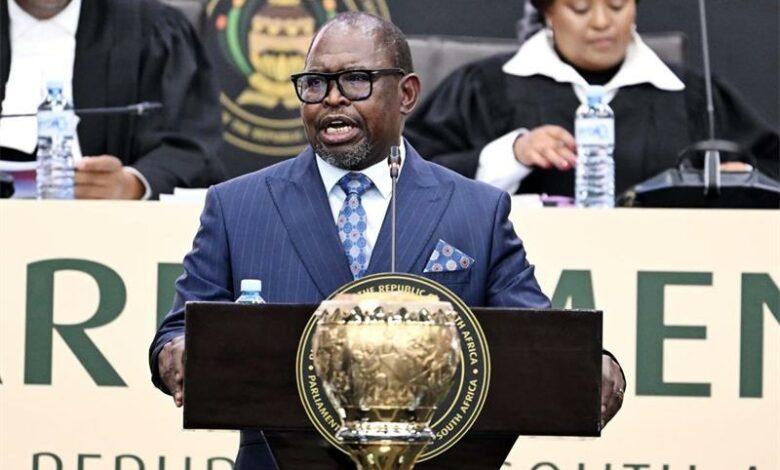
The Minister of Finance, Enoch Godongwana, delivered the 2026 Budget Speech at the Parliament Dome in Cape Town on February 25.
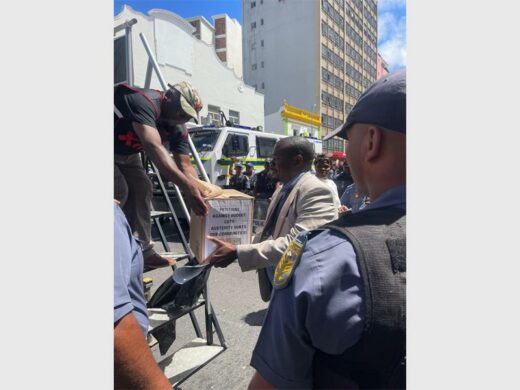
Earlier in the day, members of the Cape Town community took to the streets near the Dome, protesting for increased budget allocations that they believe would play a significant role in improving their quality of life.
The finance minister announced that debt levels will stabilise and said that over the past three years, South Africa’s tax system has shown resilience despite slow economic growth.
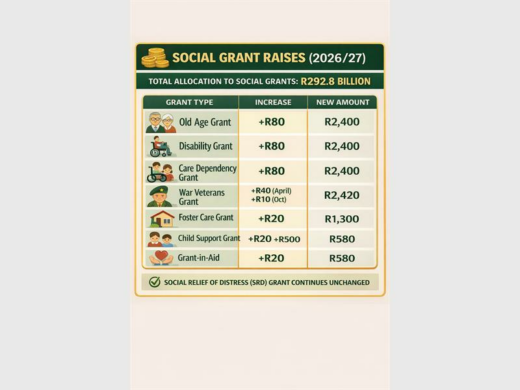
Social grants were among the key points addressed. Godongwana stated that the old age, disability, care dependency, foster care and child support grants will increase, while the Social Relief of Distress grant will remain unchanged.
Spending on education remains the largest component of the budget, with early childhood development receiving the majority of the additional funds.
Acting parliamentary leader of the uMkhonto weSizwe Party, Des van Rooyen, said the 2026 Budget Speech is built on unreliable economic projections and fails to address the urgent needs of ordinary South Africans.
Van Rooyen argued that credible fiscal planning depends on accurate growth forecasts, something he believes the government has repeatedly failed to achieve.
He pointed to projected growth rates of 1.1% in 2024, 1.4% in 2025 and 1.6% for 2026, questioning what informs these figures.
ALSO READ: Start money conversations early to build lifelong financial habits
According to the MK Party, these projections consistently miss their targets, undermining the foundation of the budget framework.
He rejected suggestions that the inaccuracies are deliberate, but described the budget as an exercise in “balancing the books” rather than transforming lives.
Van Rooyen said South Africans are less concerned with fiscal ratios such as primary surpluses or debt stabilisation, and more focused on employment, poverty reduction and inclusive economic participation.
He warned that slow economic growth, combined with a fast-growing population, is deepening inequality and pushing more citizens into a poverty trap.
Leader and founder of Build One South Africa, Mmusi Maimane, said greater investment should be directed towards Maths and Science education, as it will play a critical role in empowering young people and improving future economic opportunities.
Julius Malema, leader of the EFF, expressed dissatisfaction following the speech. Speaking to Urban News, he said key issues were not adequately addressed, contributing to what he described as a struggling economy.
However, Malema acknowledged the adjustment to personal income tax brackets, noting that it would offer some relief to workers.
Addressing ongoing water and electricity shortages, Godongwana said the national government will engage Gauteng leaders to tackle mismanagement and poor leadership in the province.
ALSO READ: Ten practical tips to survive the January financial crunch
Education has been placed at the centre of the medium-term expenditure framework, reaffirming the government’s commitment to strengthening the sector.
Professor Raymond Parsons from the Faculty of Economics and Management Sciences at North-West University said the overall impact of the Budget on the economy will be positive and confidence-building.
He believes markets will price in what he calls a “good news” budget in favourable fiscal circumstances, noting that Godongwana has shown a credible pair of hands in managing competing demands on limited public finances.
Parsons further said improved terms of trade from the commodity price boom have strengthened the macro-background, creating prospects for further interest rate cuts and possible sovereign credit rating upgrades.
ALSO READ: DWYPD warns of rising financial abuse risks during festive season
Budget relief on bracket creep, medical aid credits and VAT assistance to SMMEs should also boost business and consumer confidence.
However, he cautions that the recovery remains modest and uneven. Much higher levels of fixed capital formation are needed if the projected 1.8% average growth rate is to exceed expectations and move towards the GNU’s 3.5% GDP target by 2030.
He stresses that rapid growth is the only path, and that confidence in fiscal sustainability must translate into tangible delivery.
Structural reform delays, high crime, corruption, weak state capacity and slow implementation remain key constraints.