
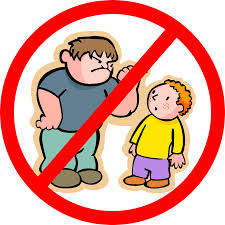
The overall viewpoint of people with knowledge of bullying and researches that are situated on the territory is that the school does, on the whole, not deal with bullying.
It has been found that in some schools incidents of bullying is much higher than in other schools – up to five times higher in some cases.
The question arises as to what the qualities of the schools are where these incidents of bullying are higher or lower.
In every school there are cases of bullying, even if the school is supported and if there is focus on the child, but appears to drop drastically if the school community takes a firm stand in this matter.
On the whole it is found that most educators support the victims of bullying, and that any form of bullying will not be tolerated.
There are different ideas as to who is primarily responsible for dealing with bullying and to what extent the victim can expect to be protected.
In many cases the educators do not become involved because they fear doing so, and would rather ignore it.
Although the investigation can be time-consuming to get to who the guilty person is, and address the matters according to the law and regulations as laid down, the matter cannot be ignored.
Every school and the community have a responsibility to address this crime in the optimal way possible.
Ideas that definitely do not work, for example:
- That the bullies themselves should be put down so that they never bully again.
- Show the victims how to protect themselves and give the bullies some of their own medicine.
- Be friendly to bullies, build up their confidence, then they will stop bullying others.
The above is a simplistic way of perceiving that bullying is an unacceptable form of social behaviour with far-reaching results which should not be ignored.
It is of cardinal importance that every school or school community acknowledges that bullying signifies victimisation and can have serious repercussions for both the victim and the bully.
Optimism in relation to the outcome of new innovative policies and specific practises are necessary with the eye on the problem, to fight against it.
An additional aspect to keep in mind regards the reaction of the power of the teaching staff.
Teachers have extraordinary say over children that, in general, is appropriate.
When this power is abused it can be extremely painful for the child.
Other children are also inclined to carry on bullying and victimising the teacher’s victim.
Encourage the pupil to talk and tell about the bully.
Educators and other staff members must accept responsibility to allow the victim to talk freely about the problem so that those incidents will not re-occur.
Without the empathy, worry and care for the victim, the bully will not stop this behaviour.
It is very important that the educator really listens and reacts to the matter – therefore effective listening skills must be learnt and applied.
Develop a collective plan of action amongst all the staff to combat bullying.
Approaches to and knowledge of risks, supervision in the classroom, playground and other risks in the locales and on the bus must be of paramount importance.
Keeping a close eye on the bullies, the teacher can confront them immediately, thus sparing the victim the trouble of retelling the incident.
The staff involvement and vigilance remains the best pro-active measure, in order to decrease these incidents.
Ineffective supervision and involvement of staff will have the opposite effect.
Ineffective supervision combined with over-crowding on the grounds and unusual physical contact, such as (bumping, pushing and grabbing), is a recipe for anti-social behavioural manifestation.
Catching the behaviour on camera is of great help and the supervision staff should be able to share their observations with each other.
Competition or working together?
A school atmosphere of working together is worth much more than excessive competition.
A system of “compete with yourself” and the “acknowledgement thereof” restricts jealousy followed by bullying. Unhealthy competition can be prevented through exaggerated non-academic brilliance, to do away with the “Top 10” syndrome.
Teaching methods that promote effective interaction between the pupils and interesting subjects/projects lend themselves to every group being involved in problem-solving.
The co-operation as a group prevents individual and competitive behaviour.
The classroom set-up can also play a big role in bully behaviour.
The bully is not allowed to sit at the back of the classroom where his behaviour and actions are less conspicuous and cannot be monitored.
Thorough preparation and interesting subjects and teaching material must be used so that no learner, especially bullies, can become bored.
Class activities must be informative and enlightening; the bully will then learn to identify with the victim.
Videos, role-play, the writing of essays and verbal discussions regarding bully behaviour can be taught with great success.
The end result with regard to the above is that no names may be mentioned.
The educator can use the following framework to render assistance:
- what is bullying behaviour?
- Where does it happen and why?
- What happens to people who are bullied?
- What happens to bullies?
(This framework can also be used by parents to render assistance).
Teach children to describe the following:
- time frame of how long someone’s words and behaviour has hurt you.
- Time frame of how long they have said something to, or hurt someone.
- Time frame when they saw or heard bullying behaviour and did nothing about it.
It is of cardinal importance to teach children about acceptable social values, for example to be able to sum up a situation correctly and understand (especially what others mean) and accordingly make a correct plan and to carry it out, problem-solving and to reason by, and in time to focus on and find a solution to conflict.
It remains a very difficult, time-consuming process, but as educators, parents and community leaders we cannot neglect our responsibility.