
OPINION | Everest and the ballot box: 10 lessons in responsible leadership
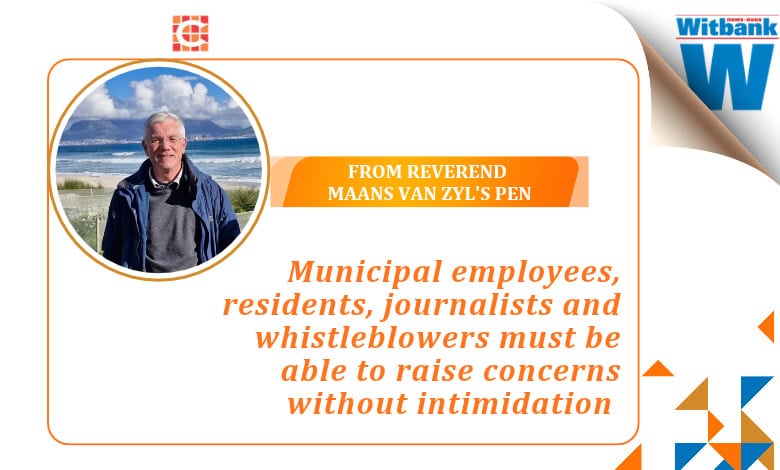
Municipal employees, residents, journalists and whistleblowers must be able to raise concerns without intimidation, says Witbank News columnist.
The choices that individual climbers make while ascending to the summit of Mount Everest can be fatal.
When self-interest overrides caution and discretion, choices are made that were better left unmade.
Climbing to the top of Mount Everest is not just about determination and all things good for the individual climber.
Sound leadership is based on solid preparation, integrity, a great deal of knowledge and experience, service to others and accepting responsibility for others.
South Africa is facing its own ‘Everest’ challenge in the form of local government elections, due to take place on November 4.
For these, voters will need to assess the leaders of communities and councils based on three key criteria: character, competence and service delivered.
Unemployment, violence, corruption, nepotism and other failures by government and others impacting families and communities daily need to be addressed by responsible leaders.
In the second quarter of 2026, South Africa’s official unemployment rate rose to 33.6% with 8.5 million people affected.
Between April and June 2026, for example, no fewer than 5 427 murders were recorded – an average of almost 60 every day.
Set a clear, achievable destination
Mountaineer Mark Pattison emphasises that an expedition begins with an understandable objective. Municipal government requires the same clarity.
‘We will improve everything’ is insufficient. Leaders must identify which water problems they will resolve, which infrastructure they will repair, what it will cost and when the work will be completed.
Ambitious goals require realistic budgets and measurable milestones. The reason is straightforward: Without a workable route, an election promise remains a slogan. Citizens must be able to assess progress instead of repeatedly receiving new excuses.
Serve people before protecting your position
Looking at the lessons of the Everest ascent by Michael Useem and others, service is at the heart of leadership. Notice when people need help, support them where necessary.
In Mark 10:42-45 Jesus associates great things with service. So, in Christian politics, the accessibility, humility and concern for the vulnerable are evidence of Christian political leadership.
Public authority is a trust given to individuals and exercised for the good of the community. When those in office give priority to their status, income and party interests over all else, they are betraying that trust. Leadership is a responsibility, not a privilege.
Choose competence over nepotism
No Everest team is ever successful by bringing their friends along to fill out key roles for which they are completely unqualified.
Experienced guides, logistical experts, and knowledgeable Sherpas are required to ensure the success of a season of climbing on the highest mountain on Earth.
Likewise, municipalities require competent engineers, financial managers and administrators, not political loyalists who cannot fix the sewage treatment plant, or relatives who cannot manage the complex budget.
The only person better than yourself to hire to complete a task or manage a programme or department is someone who is more competent than you to complete that same task or manage that same programme or department.
Hire based upon competence and not upon connections.
Prepare before the crisis arrives
As climbers check their mountaineering gear, oxygen supply, weather forecasts and their emergency plans, the local authorities must apply similar discipline to the maintenance of infrastructure for water supply and electricity as well as to the emergency response.
To be prepared, one needs reliable information and a good administration.
According to a DA press release dated July 13, 2026, at the time of issuing the press release there were 298 710 DNA exhibits on hand, of which 228 017 exceeded the processing time limits for such DNA exhibits, leaving people waiting for justice.
The DNA-processing crisis shows what happens if one does not have the required capacity.
Tell the truth and communicate clearly
Useem highlights the importance of communication being received and understood by others. Citizens need clear information about problems, costs and responsibilities as well as detailed information on repair times.
Leaders must use statistics responsibly. A claim such as ‘only’ one in 14 murder cases is solved must not be presented as fact but rather be referenced to a verifiable source and clearly defined as to what is meant by ‘solved’. Truth is the basis of trust.
Those who lead and communicate are busting a cork to contain a fermenting volatility if they conceal problems and manipulate figures to justify their stance. This includes admitting uncertainty and detailing failures.
Protect people from the leader’s ambition
‘Summit fever’ is a term that has been used to describe summit attempts on Everest over the years, where people ignore escalating danger to reach the top.
Political ‘summit fever’ occurs when someone is so driven to win an election or to maintain power that they prioritise their own interests over the needs and welfare of the residents of a town.
We can look to the story of David Breashears and his team, as told by Dori Digenti, who abandoned their filming to help in the rescue of several imperilled climbers.
One’s selfish desires can occasionally call for selfish behaviour, but that doesn’t mean that one is justified in ignoring public needs and succumbing to greed and indifference.
Leaders in public life must use their best judgement to serve the public.
Allow people to challenge those above them
On a mountain, a junior team member may be the first to recognise danger. When authority suppresses criticism, the entire team loses valuable knowledge.
Municipal employees, residents, journalists and whistle-blowers must be able to raise concerns without intimidation. Honest disagreement prevents small mistakes from becoming major disasters.
Strong leaders investigate uncomfortable information, acknowledge errors and act. Weak leaders protect their image by attacking the messenger.
Christian humility includes the willingness to accept correction and learn from it. Accountability strengthens responsible authority.
Persevere, but change a failing course
Saray Khumalo’s journey to Everest shows that even repeated failure to reach a goal is not necessarily a reason to give up on it.
However, perseverance also requires wisdom to know when to retreat because things are becoming too dangerous.
Politicians must re-examine failed strategies, wrong appointments and unsustainable expenditure. Loyalty to the community can sometimes require one to give up on one’s original intentions.
‘We have already invested too much’ is not a good enough reason to continue wasting public funds.
Responsible leaders can learn from failure, repair the damage and do things better the next time. However, that perseverance must be in the interest of good service to the community and not to save face.
Build co-operation around community needs
The diagram shows the leadership needs of task, individual and group. Healthy leadership therefore addresses the needs of the task, individual and group.
In municipal government this would include co-operation between residents, businesses, churches and civic organisations as well as between government on different levels.
National policing and DNA laboratories are not under the control of the councillor.
However, as leader of the municipal safety partnership, the local leader can create responsibility for safety in public spaces by promoting safety partnerships, adequate lighting of public spaces and related measures.
Responsibility implies using the power one has effectively and holding others accountable. One must refuse to make promises one is not able to fulfil.
Read more Building a culture that delivers – how accountability turns change into results
Test Christian claims by visible conduct
South Africa needs Christian leaders of honesty, justice, compassion and self-control.
Faith in Christ can express itself in many ways, but in a political leader it will express itself in fairness to all citizens, regardless of their faith or political allegiance.
The candidate’s conduct, interests, competence and record need to be scrutinised, and as followers of Christ we need to be discerning of religious language which in itself does not equal integrity.
The true political summit will be a community where people live in greater safety, services are functioning and public monies are being managed efficiently. The voter too has a responsibility – to vote wisely and hold the elected accountable.
This column is the opinion of the writer and does not represent the views of Witbank News.
Your city, your story, as it happens. Stay in the loop with WITBANK NEWS.
Find us on our website, Facebook, X, Instagram or TikTok
Got a tip? Email: info@witbanknews.co.za