
Endangered crane species ‘crowned’ as new residents at Crocworld Conservation Centre, KZN
After the successful breeding of both the blue crane and the grey-crowned cranes, the conservation centre now hopes to start a breeding programme aimed at South Africa’s most endangered crane species – the wattled crane.
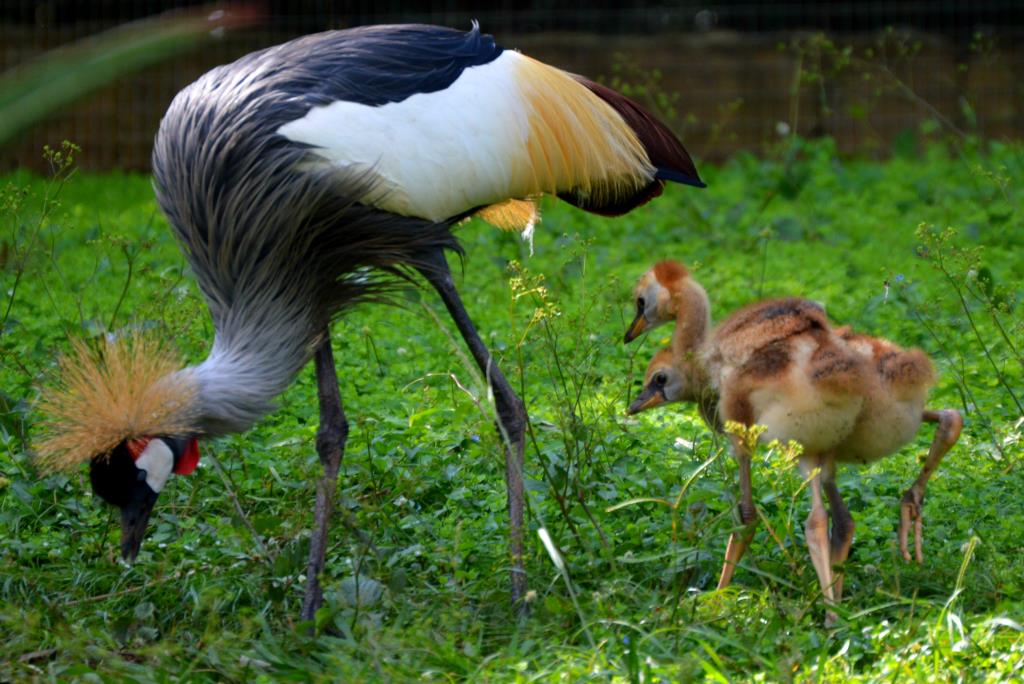
For the first time ever, two endangered grey-crowned cranes have been hatched and reared at Crocworld Conservation Centre, South Coast Herald reports.
The newcomers joined the two adult birds – resident at the centre for the past five years – earlier this year, creating high hopes for future breeding programmes.
Centre manager, Martin Rodrigues said they are really excited about the progress being made by the juveniles.
“They have already grown remarkably well. The centre currently has two of the three crane species – including the blue crane – endemic to South Africa.
The grey-crowned crane faces a very high risk of extinction in the wild. The International Union for Conservation of Nature lists it as endangered, and it is also protected by South African law in order to ensure its survival.
Some facts about the grey-crowned crane species:
• They are found in grassland and wetland areas of the eastern and southern African regions.
• Unlike other cranes, grey-crowned cranes usually roost in trees.
• Their courting involves dancing – a nuptial dance – to attract a mate which involves a range of bobs, bows, jumps and calls made by inflating the gular sack.
• Breeding peaks from December to February in response to rainfall.
• The breeding pairs mate for life.
• They share their parental duties so the male and the female both help to build the nest, incubate the egg, and care for the young.
• They lay between two and five eggs at a time and eggs hatch 28 to 31 days after they’re laid.
• The chicks are ‘precocial’ which means they can run as soon as they hatch. Within 12 hours they can swim and float.
• Standing at more than a metre tall, with a wingspan of more than two metres, grey-crowned cranes are giants among the bird world.
• They’re omnivores – eating both plants and animals – and their diet usually consists of plants, grain, insects, snakes and small fish.
• The wild crane lives for 22 years on average but some reports indicate they could live for up to 60 years in captivity.
After the successful breeding of both the blue crane and the grey-crowned cranes, the conservation centre now hopes to start a breeding programme aimed at South Africa’s most endangered crane species – the wattled crane.
Read original story on southcoastherald.co.za