
What is the fuss about frogs?
Peptides isolated from amphibian skin are showing pharmacological promise as antibiotics and analgesics.
WHY care about amphibians?
In the light of the extinction crisis now recognised as one of the biggest challenges facing scientists and conservationists, this question is being asked by society.
This is because public perception surrounding amphibians has oftentimes been less than positive.
Changing such perceptions plays a crucial part in the overall plan to save amphibians.
Globally, the statistics for amphibians are shocking.
They are the most rapidly declining vertebrate group on earth, with a third of all species currently listed as threatened.
This dire state of affairs has several causes, including disease and pollution.
The single most dangerous contributor to amphibian decline, however, is man-made.
Habitat destruction is responsible for the majority of dwindling populations.
Sadly, these figures are reflected in South Africa, where 30% of frog species are Red Listed as Critically Endangered, Endangered or Vulnerable.
KwaZulu-Natal is home to six endangered frog species, the second-highest number in the country.
Of prime significance are the integral roles amphibians play in most ecosystems.
Adults consume vast quantities of insects, many of which are not available to other vertebrate groups.
For example, they are known to prey on hundreds of flies and mosquitoes in a single night and are accordingly vital as bio-control agents for agricultural pests and disease-carrying insects.
Amphibian larvae are usually aquatic and are consumers of primary production in the form of algae and by doing so, assist in keeping waterways clean.
Hunter becomes prey
As prey, amphibians (both adults and larvae) are an important protein source for numerous species of invertebrates, reptiles, birds, mammals and other amphibians.
Amphibians are also well recognised as important indicators of environmental health and the state of the biosphere as a whole.
This is because amphibians have a number of physiological, ecological and life-history characteristics that make them prone to changes in the environment.
Most species make use of both the aquatic and terrestrial environments during their lifecycles and, as a result, are sensitive to changes in both systems.
A high proportion of amphibian decline is an indication that ecosystems worldwide are in potential jeopardy.
Based on the percentage of species currently threatened with extinction the expected magnitude in the loss of amphibians is significant and will undoubtedly have a multiplier effect, ultimately contributing to declines and extinctions of other species which rely on them.
Medical uses
More recently, the use of amphibian products for western medicine has gained increased attention.
One of the first uses was for pregnancy testing, with the African clawed frog (Xenopus laevis) used extensively for this purpose.
Amphibian skin secretions harbour a diversity of defensive biological compounds, which provide immunity against infections, viruses and bacteria.
Peptides isolated from amphibian skin are showing pharmacological promise as antibiotics and analgesics.
Current active fields of research include the investigation of frog skin peptides to block HIV transmission.Loss of species could mean the loss of potential cures for important diseases.
The loss of biodiversity in general does not bode well for human well-being considering our dependence on ecosystem processes and services such as clean water, pollination, food, medicines and material resources.
Dr Jeanne Tarrant, Manager of the Endangered Wildlife Trust’s Threatened Amphibian Programme (EWT-TAP), is working hard to turn the tide on the extinction of our amphibians.
The EWT-TAP aims to implement specific conservation actions to tackle direct threats, as well as protecting critical amphibian habitat.
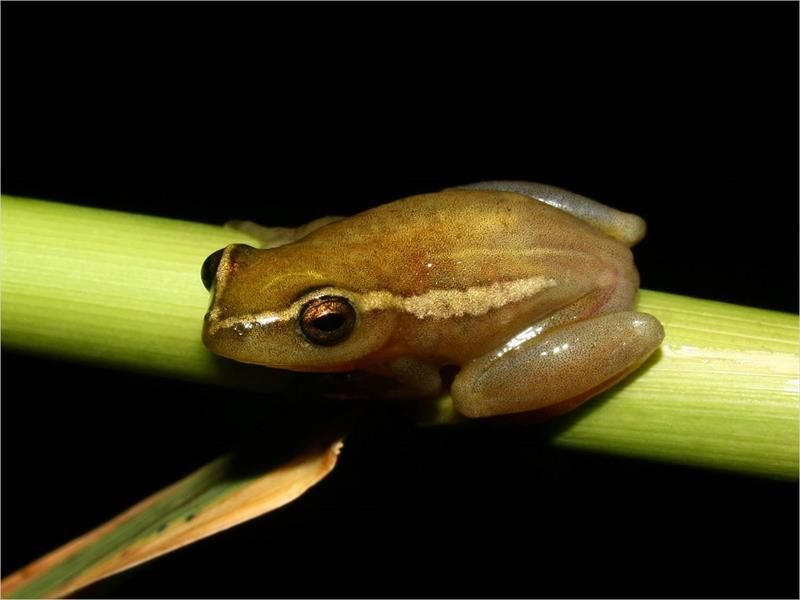
Awareness campaigns are also a vital part of the programme’s agenda, and focal species include the Critically Endangered Pickersgill’s Reed Frog, which is endemic to the KwaZulu-Natal coastline.
To find out more about what you can do to save our frogs visit www.ewt.org.za.