
Emergency drought measures announced
A short-term drought relief programme is being introduced by the Department of Water and Sanitation.
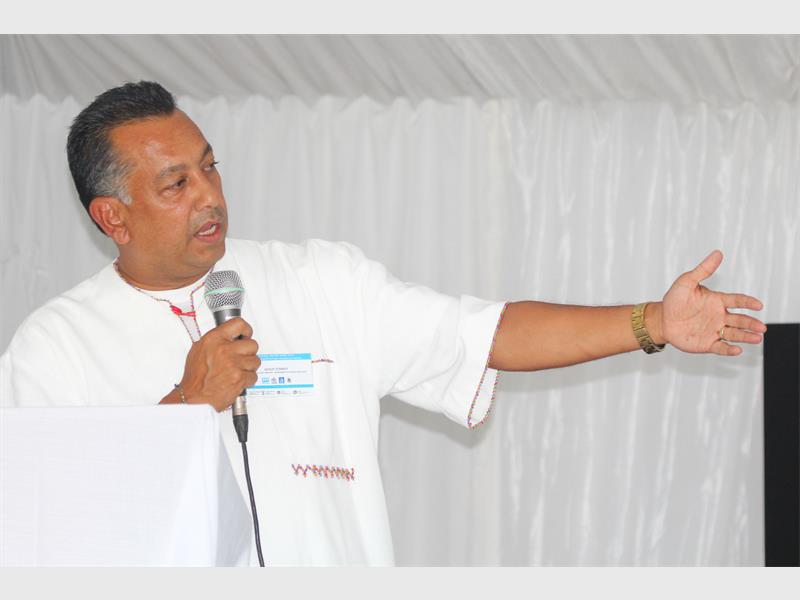
THE Department of Water and Sanitation (DWS) has announced short-term interventions to address the immediate demand for water in Zululand. This comes after long-term measures to curb the growing demand for the scarce commodity were already unveiled by the national department.
At a media briefing at Hazelmere Dam last week, KZN Chief Director Ashley Starkey said that R353 757 000 had been allocated to the province to relieve the drought situation.
Of these funds, R123 550 000 will be used to purchase 96 water tankers, which will deliver water to the drought stricken areas.
These tankers will not deliver water to individual households, but DWS will buy and erect 1 905 water tanks and stands at a cost of R19 660 000, to which water will be delivered.
Of the emergency funding, an allocation of R14 690 000 is being provided for the operational costs of these tankers over the next six months.
The existing water tanker deliveries will be reduced, as they have been found to be inefficient owing to malpractices and fraud in some instances by the operators.
The balance of the money will be spent on the protection of existing springs, refurbishing and upgrades of existing infrastructure and borehole development through siting studies, drilling and equipment.
Water leakages
Of growing concern to the department is the volume of what is termed ‘non-revenue water’ (NRW).
This is water which is being supplied through the various municipalities and water agents, but is not paid for as a result of theft, illegal connections or leakages.
Figures for uThungulu show that 46.8% of the revenue is lost, of which 37.4% are real losses owing to piping.
uMhlathuze is better off with only 16% NRW with 11.5% real loss.
Ilembe District has a NRW of 59.4% with 31.8% real loss.
Starkey said that this could be expected as one of the major problems affecting water reticulation in towns is that many of the older towns such as eShowe and Melmoth had ageing infrastructure.
The old pipes are mostly asbestos and they can no longer cope with the increased water pressures, causing them to burst. This is being addressed and pipe replacement programmes are ongoing as budgets allow.
As the country commemorates National Water Week, which extends until Friday, Starkey said consumers needed to seriously consider the theme ‘Water has no substitute’.
‘What if this was the last drop?’ he said.