
Arbor Week commemorates the future
This year's theme is 'Forests and People: Investing in sustainable future'.
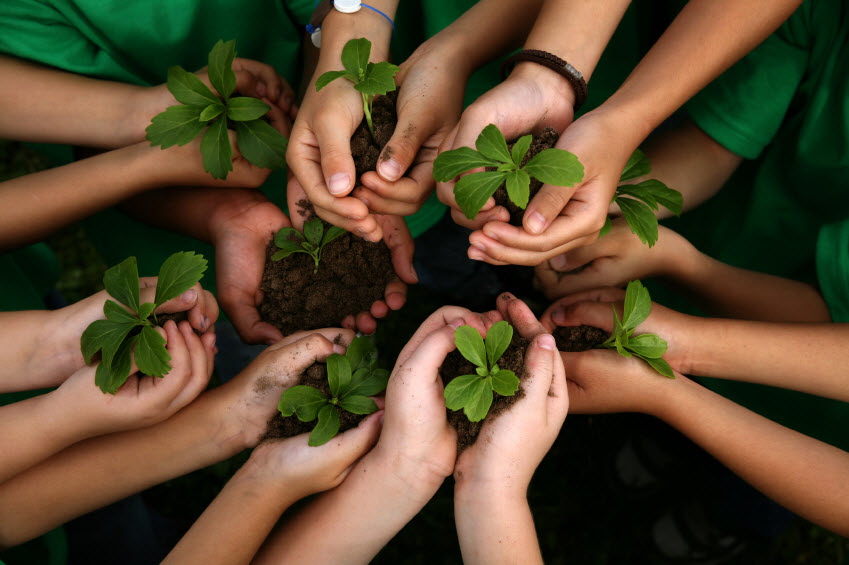
WHILE most commemorations reflect on past events, Arbor Day and Arbor Week commemorate the future.
By planting a tree, whether it is a fruit tree or a tree for shade, the benefits will only be recognised over time.
In South Africa Arbor Week is celebrated annually from 1 to 7 September.
This year it will be celebrated under the theme ‘Forests and People: Investing in a sustainable future’.
The theme has been adopted from the XIV World Forestry Congress and this year’s campaign will highlight the value of forests with regard to sustainable livelihoods, environmental conservation and development in general.
National Arbor Week is an opportune time to call on all South Africans to plant indigenous trees as a practical and symbolic gesture of sustainable environmental management.
• It affords the government, the private sector, non-governmental and community-based organisations and the public to be involved in ‘greening’ their communities.
• Greening refers to an integrated approach to the planting, care and management of all vegetation in urban and rural areas, to secure multiple benefits for communities.
• Greening in the South African context takes place in towns, former townships and informal settlements specifically, because in the past many of these areas were disadvantaged in terms of planning for parks as well as tree planting in streets and open spaces.

The 2015 trees of the year
Forest bushwillow (Combretum krausii)
This tree has been selected from the list of common species.
It is a handsome, quick growing and reasonably cold resistant specie which is recommended for shady areas in gardens with a mild to warm climate.
The trees is found from the coast to the midlands in the eastern regions of South Africa and neighbouring Swaziland.
The habitat ranges from rocky hillsides at altitudes from almost sea level up to 1 200 m.
It grows anywhere, from evergreen forest or forest margins to dense woodland.

Parsley tree (Heteromorpha arborescens)
This rare tree is a small to medium-sized, deciduous tree or straggly shrub and is suitable for small maintenance-free gardens.
It occurs in wooded grassland, bushveld and on forest margins.
It is fairly widespread in the eastern regions of South Africa, from the southern Cape up through Eastern Cape and eastern Free State, Kwazulu-Natal, Swaziland into Gauteng, Mpumalanga and Limpopo.
It also occurs further north in Africa.