
Correct tyre deflation is key for off-road trails
Top tips to look after your tyres when driving off-road
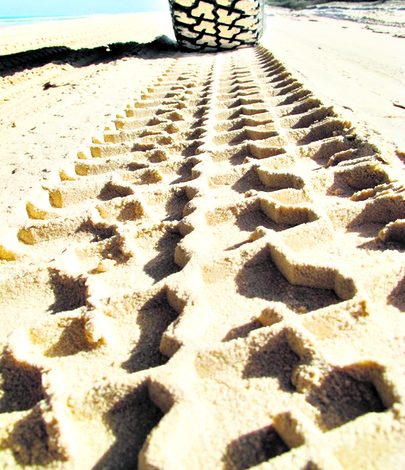
It’s holiday time and old and novice 4×4 owners will be looking to put their vehicles and their driving ability to the test off the beaten track.
With that said, deflating your tyres must be the most important aspect of off-road driving.
ALSO READ: Do not use rivers and dams as alternatives to beaches
But with so many variables at play, 4×4 owners almost never agree on figures.
What’s more, with numerous variables like the terrain, tyre size, vehicle mass (including payload) and tyre construction (sidewall thickness), it’s difficult to know what pressure is right for the track ahead.
One must also consider pressure fluctuations caused by heat and rising surface temperatures.
In the end, the art of tyre deflation is best mastered through a process of trial and error – one determined by personal preference, vehicle set-up and tyre brand.
However, to help in this process, here are a few tyre deflation tips to consider:
Small changes, big results
Never underestimate the impact of tyre pressure changes, even if it’s small.
For example, what may not be possible at 1.0 bar, could be a breeze at 0.8 bar.
Avoid sharp turns
Never perform a sharp turn if your tyres are deflated below 1.2 bar – doing so will place pressure on the tyre’s sidewall and may cause it to come off the rim.
Front and rear
Your 4×4’s rear tyres can be deflated slightly more than the front tyres.
This is because the rear tyres are not subjected to turns and sidewall load, however keep your payload in mind.
In most cases, you can deflate your 4×4’s rear tyres slightly more than the front.
Carry essential gear
Always travel with an accurate tyre-pressure gauge, a heavy-duty compressor, and a puncture repair kit in your 4×4.
Look after these items because most gauges (even the digital kind) will be hopelessly inaccurate if you drop them.
Speed kills flat tyres
No matter what the terrain type, never drive a deflated tyre at speed. Doing so will cause heat build-up, irreparable damage and ultimate tyre failure.
If you’ve reached a stretch which allows faster travel, get out and inflate the tyres accordingly to prevent damage to an expensive off-road tyre.
Gravel travel
A small decrease in tyre pressure will dramatically improve your vehicle’s gravel-driving performance and road comfort – especially over corrugations.
Over the top
Drive over rocks rather than trying to squeeze around them because the tread or road surface area is the strongest part of a tyre, and it can also be repaired when damaged.
In contrast, the sidewall is a tyre’s weakest and most vulnerable area, and it can’t be repaired.
Rough guide
If unsure what the correct tyre pressures must be, stick to these guidelines:
* Travelling to your off-road destination, stick to the manufacturer’s recommendations found in the vehicle’s user manual.
* Upon reaching the gravel road, deflate by 10 to 15%.
* For safe and comfortable travel on corrugated dirt tracks, deflate 15%.
* When the going gets muddy, a 25% drop in tyre pressure usually keeps you going.
* For thick sand, pressures can be dropped as much as 50 to 60%
HAVE YOUR SAY
Like our Facebook page and follow us on Twitter.
For news straight to your phone invite us:
WhatsApp – 060 784 2695
Instagram – zululand_observer