
The U-turn: a major threat to safety on South African roads
The Road Traffic Act in South Africa contains specific legislation making it illegal to make a U-turn on a highway
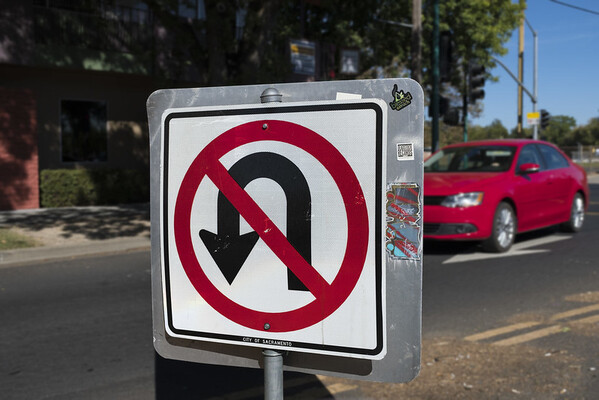
One of the most dangerous driving manoeuvres on the roads in South Africa is the U-turn.
A contributing factor to many fatalities on South African roads, even on national freeways, the U-turn is illegal most of the time and seemingly on the increase.
ALSO READ: 6 tips for minor fender benders
When executed at the wrong place and in the incorrect manner, the U-turn places in danger the life of the offending motorist and other road users.
Arrive Alive takes a look at why the U-turn is so dangerous and what the law stipulates regarding this manoeuvre.
A most dangerous driving tactic
Accidents resulting from U-turns are almost always fatal because it is an unexpected manoeuvre and does not allow time for the faster-moving vehicle to change course and avoid an accident.
The U-turn requires a roadway wide enough for the motorist to complete the manoeuvre, and is especially risky as the motorist has to cross lanes of traffic.
Arrive Alive says trucks executing U-turns are especially dangerous as they cross the entire roadway, heightening the risk of a ‘run-under’ accident, and because they oftentimes have insufficient, if any, reflectors along the sides of the truck.
U-turns and the law
It does not matter if a driver considers conditions safe enough to execute a U-turn if the law deems it illegal in that location.
‘Just because there may not be a ‘no U-turn’ road sign displayed to indicate a U-turn is illegal, does not mean they are permitted,’ says Arrive Alive.
‘Other factors, such as road markings, a painted island, traffic flow, and more, can also make a U-turn an illegal manoeuvre.’
U-turns are illegal in these locations
• On a curve where approaching traffic from either direction cannot be seen for a distance of at least 150m
• Within 30m of a railway crossing
• On undivided highways. A U-turn is not legal on a controlled access highway except through an opening provided for that purpose in the dividing curb section, separation or line
• Within 150m of a bridge, viaduct or tunnel where the view of traffic is limited
• U-turns are prohibited in no-passing zones and one way streets
• In front of a fire station
• At a traffic light-controlled intersection (likely to find a ‘U-turn prohibited’ sign displayed).
Arrive Alive urges motorists to be cautious of this manoeuvre even where not expressly prohibited by a road sign.
The Road Traffic Act in South Africa contains specific legislation making it illegal to make a U-turn on a highway.
HAVE YOUR SAY
Like our Facebook page and follow us on Twitter.
For news straight to your phone invite us:
WhatsApp – 060 784 2695
Instagram – zululand_observer