
Understanding hearing loss and the benefits of cochlear implants
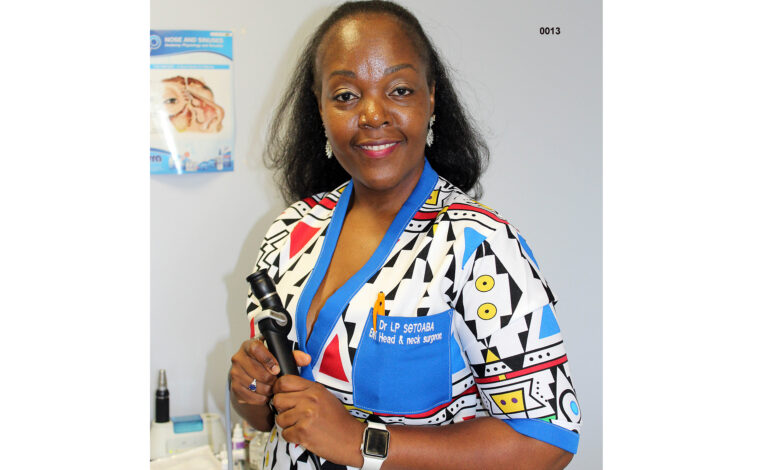
Dr Lungile Precious Setoaba, ENT Specialist and Lead ENT Surgeon of the Cochlear Implant Programme, KZN Auditory Implants Unit Zululand, delves into the topic of cochlear implants
Hearing is one of the most important senses for communication, learning, social interaction and participation in everyday life. Hearing loss can occur at any age and may result from congenital conditions, infections, ageing, noise exposure, trauma, medications, genetic conditions or diseases affecting the ear and auditory nerve.
For many people, hearing loss can be successfully managed with conventional hearing aids. However, when the inner ear is severely damaged and hearing aids no longer provide sufficient benefit, cochlear implantation can provide an alternative pathway to hearing.
How normal hearing works
Hearing involves a remarkable sequence of mechanical, electrical and neurological events.
- Sound enters the outer ear through the ear canal.
- The sound waves cause the eardrum to vibrate.
- Vibrations are transmitted through the three tiny middle-ear bones — the malleus, incus and stapes.
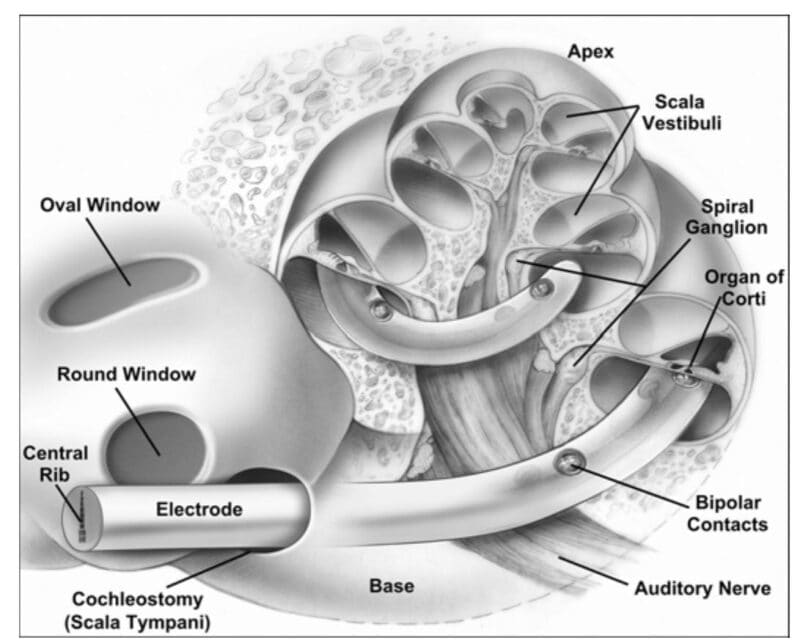
- The stapes transfers these vibrations into the fluid-filled cochlea.
- Movement of cochlear fluid produces a travelling wave along the basilar membrane.
- This movement stimulates microscopic hair cells within the organ of Corti.
- The hair cells convert mechanical movement into electrical neural signals.
- These signals travel through the auditory nerve to the brain.
- The brain processes these signals and interprets them as speech, music and environmental sounds.
The cochlea therefore acts as a sophisticated biological sound analyser, converting different frequencies of sound into patterns of neural activity.
What happens when hearing is lost?
The mechanism of hearing loss depends on which part of the auditory pathway is affected.
Conductive hearing loss
Conductive hearing loss occurs when sound cannot efficiently reach the inner ear. Problems may involve the ear canal, eardrum or middle ear.
Examples include:
- Earwax obstruction
- Middle-ear fluid
- Chronic otitis media
- Perforation of the eardrum
- Ossicular abnormalities
- Otosclerosis
Because the cochlea may remain relatively intact, conductive hearing loss can frequently be treated medically or surgically, and hearing aids may also be useful.
Sensorineural hearing loss
Sensorineural hearing loss results from damage to the sensory cells or nerve fibres of the inner ear.
Common causes include:
- Age-related hearing loss
- Prolonged occupational or recreational noise exposure
- Genetic causes
- Certain infections
- Ototoxic medications
- Trauma
- Sudden sensorineural hearing loss
- Certain metabolic and neurological conditions
One important consequence of sensorineural hearing loss is damage to the cochlear hair cells. Noise exposure, for example, can damage and eventually destroy these sensory cells.
Once significant numbers of hair cells have been lost, simply making sound louder may no longer allow the ear to convert that sound into a meaningful neural signal. This is an important distinction between a hearing aid and a cochlear implant.
Hearing aids versus cochlear implants
A conventional hearing aid primarily amplifies sound. It relies on functioning hair cells within the cochlea to convert the amplified acoustic signal into neural information.
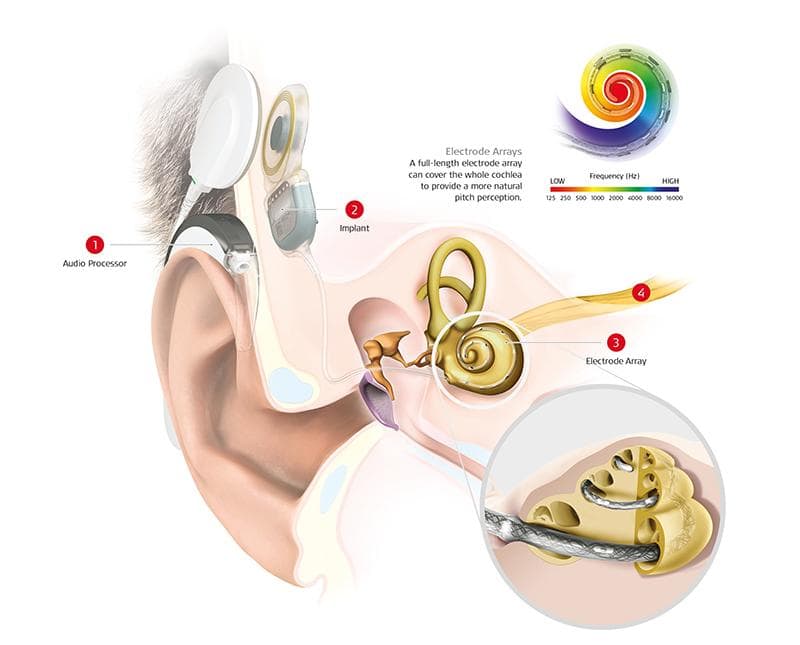
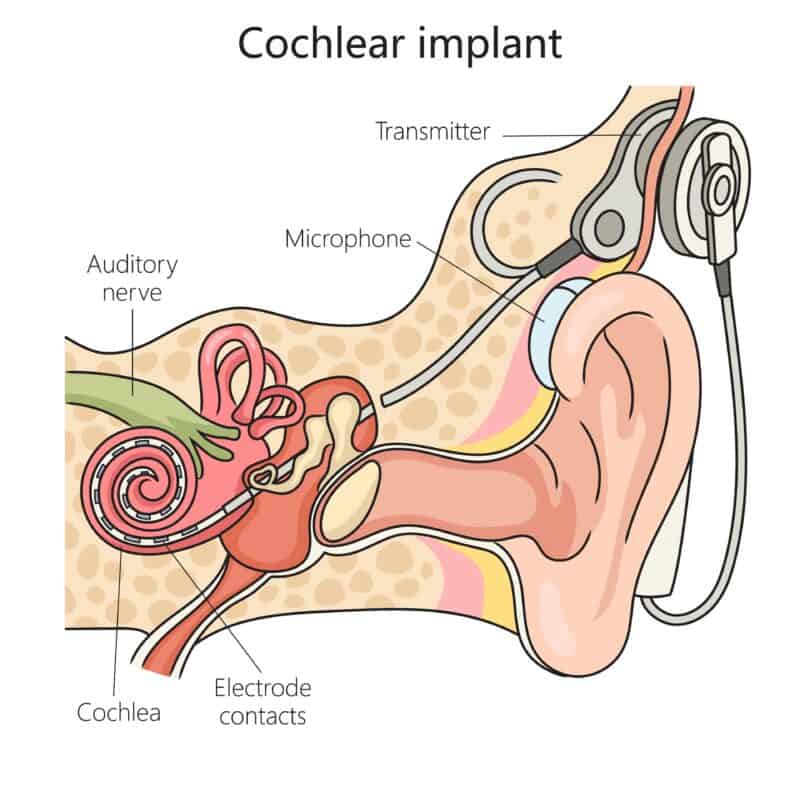
A cochlear implant works differently. Rather than simply making sound louder, it bypasses damaged portions of the cochlea and electrically stimulates the auditory nerve.
The system consists of an external sound processor and an implanted component containing a receiver/stimulator and electrode array. The microphone detects sound, the processor analyses and codes it, and the electrode array delivers electrical stimulation to the auditory nerve. The brain then learns to interpret these electrical patterns as meaningful sound.
Who may benefit from a cochlear implant?
Cochlear implants may be considered for appropriately selected children and adults with severe-to-profound or otherwise qualifying sensorineural hearing loss, particularly when conventional hearing aids provide inadequate speech understanding.
Importantly, cochlear implantation is not simply a surgical procedure. Successful implantation involves:
- Detailed audiological assessment
- Hearing-aid evaluation
- Speech perception testing
- Medical and ENT assessment
- Radiological assessment when indicated
- Cochlear implant counselling
- Surgery
- Device programming (“mapping”)
- Audiological follow-up
- Auditory rehabilitation and training
The outcome varies between individuals, and hearing through a cochlear implant is different from natural hearing. The brain requires time and training to interpret the electrical information generated by the implant.
Benefits of cochlear implantation
For appropriately selected patients, cochlear implantation can provide significant functional benefits.
Improved speech understanding
Many recipients develop substantially improved speech perception, allowing them to communicate more effectively in everyday situations. Adults who have lost hearing after acquiring spoken language can often associate the electrical signals with sounds they previously experienced.
Improved communication
Improved access to speech can make conversations with family, colleagues and friends easier and can facilitate participation in education and employment.
Access to environmental sounds
Cochlear implants can provide awareness of sounds such as alarms, traffic, doorbells and other environmental cues.
Benefits for children
Early identification and appropriate intervention are particularly important in children because hearing is fundamental to the development of spoken language and communication.
Research supported by the National Institute on Deafness and Other Communication Disorders indicates that children who receive cochlear implants early, together with appropriate auditory rehabilitation, can demonstrate substantial improvements in speech perception, language and communication.
Improved participation and quality of life
Restoring meaningful access to sound can enable people with severe hearing loss to participate more fully in family, educational, professional and social environments.
Cochlear implantation in Zululand
Access to advanced hearing healthcare should not be limited to major metropolitan centres. For communities in Zululand and northern KwaZulu-Natal, a cochlear implant service provides an opportunity for patients with severe hearing impairment to undergo assessment and, where appropriate, receive advanced auditory implantation closer to their communities.
Dr Lungile Precious Setoabais an ENT specialist involved in the KZN Auditory Implants Unitand serves as the lead ENT surgeon for cochlear implantation in Zululand. The service encompasses multidisciplinary assessment and management of patients requiring advanced hearing rehabilitation.
The broader auditory implant field also includes technologies such as bone-conduction implants and active middle-ear implants, which may be appropriate for selected patients depending on the underlying hearing disorder.
A message to patients
Hearing loss should not simply be accepted as an inevitable part of ageing or occupational exposure. A comprehensive hearing assessment can determine the type and severity of hearing loss and identify the most appropriate intervention.
For some people, this may be medical or surgical treatment. For others, hearing aids may provide excellent benefit. For appropriately selected patients with more severe hearing loss, a cochlear implant or another auditory implant may provide an important pathway to improved access to sound and communication.
Early assessment is particularly important for children with significant hearing loss, where timely access to sound and appropriate auditory rehabilitation can have important implications for speech and language development.
Patients in Richards Bay, Zululand and surrounding areas who are experiencing hearing difficulties can be assessed by Dr LP Setoaba, ENT Specialist, at Melomed Richards Bay.
The practice provides assessment and management of hearing disorders, including evaluation for cochlear implants and other implantable hearing technologies, alongside general ENT services.
Practice information:
Dr LP Setoaba – Richards Bay ENT
Melomed Richards Bay Private Hospital
John Ross Eco Junction, John Ross Highway
Richards Bay, 3900, KwaZulu-Natal
035 791 5300
This article is intended for general patient education. Suitability for cochlear implantation or another hearing implant can only be determined following an individual ENT, audiological and multidisciplinary assessment.