
Unizulu meteorologists explain frenetic Richards Bay weather activity
The Zululand Observer spoke with University of Zululand (Unizulu) meteorologists and lecturers Dr Marshall Mdoka and Nkosinathi Xulu, who explained the phenomenon
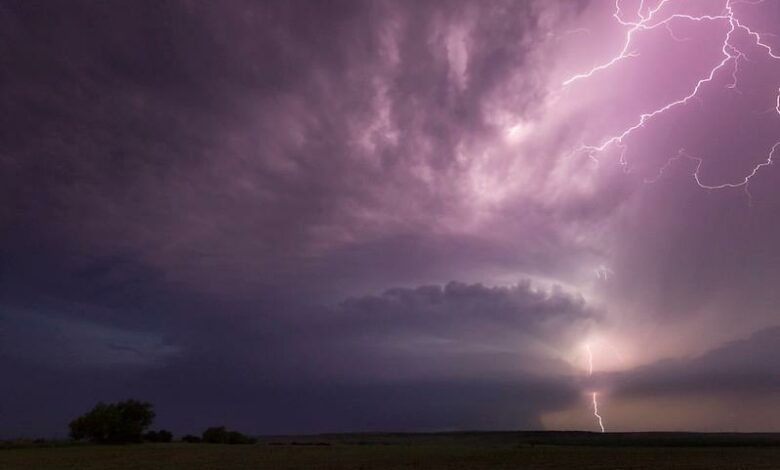
Short-lived showers with gusty winds, followed by clear skies have been a recent occurrence in Richards Bay and surrounds these past few weeks.
The Zululand Observer spoke with University of Zululand (Unizulu) meteorologists and lecturers Dr Marshall Mdoka and Nkosinathi Xulu, who explained the phenomenon.
“Short-lived showers are a common feature at local scale. This normally occurs with the development of a single-cell storm.
“Also called a ‘pulse’ thunderstorm, the ordinary cell consists of a one-time updraught and one-time downdraught. In the mature cumulus stage, the rising updraught will suspend growing raindrops (condensation) to the point where the weight of the water is greater than what can be supported.
“At this point, drag of air from the falling drops begins to diminish the updraft and, in turn, allows more raindrops to fall. In effect, the falling rain turns the updraught into a downdraught.
“With rain falling back into the updraught, the supply of rising moist air is cut-off and the life of the single-cell thunderstorm is short.
“Single-cell thunderstorms are short-lived and last less than an hour on average. While gusty wind and hail can develop, these occurrences are typically not severe.
“However, if atmospheric conditions are right and the ordinary cell is strong enough, there is the potential for more than one cell (multi-cell storms) to form and can include microburst winds (usually less than 112km/h) and weak tornadoes (www.weather.gov).
Mesoscale considerations
“Isolated single-cell storms are generally localised. As the mesoscale effect becomes significant, the convection becomes more organised. Thus, sea breezes and their fronts, valley and plain mountain winds blowing over heated slopes and localised topographic modifications to the surface divergence field to enhance (or suppress) convective activity in the boundary layer (Tyson and Preston-Whyte, 2000).
“It will, therefore, depend on the location over Richards Bay getting showers, gusty winds and then clear skies in a short period of time.”
HAVE YOUR SAY
Like our Facebook page and follow us on Twitter.
For news straight to your phone invite us:
WhatsApp – 060 784 2695