
Zululanders called on to report sightings of African woolly-necked stork nests for research
Public urged to contribute to ongoing study by reporting sightings of ringed storks
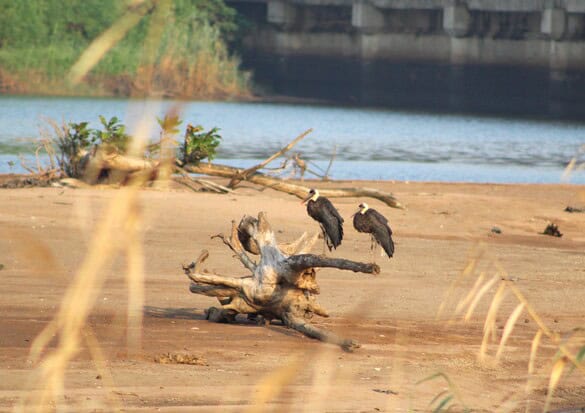
In what is likely the first study on the population ecology of woolly-necked storks anywhere in Africa, one PhD candidate has uncovered some unprecedented findings.
Jonah Gula, a PhD student at the University of KwaZulu-Natal in Durban, has for the last three years been colour-ringing woolly-necked stork nestlings, with members of the public for the last two years contributing by reporting sightings of ringed storks.
This input means Gula has a constantly-growing database of sightings that will eventually allow him to do some statistical models for estimating survival rates of immature woolly-necked storks.
While Gula’s studies have thus far focused on the Durban and Pietermaritzburg areas, he plans to widen the net to incorporate the Zululand region.
“By colour-ringing nestlings with alpha-numeric rings with unique codes, I have been collecting useful data on movement and survival,” Gula told the Zululand Observer.
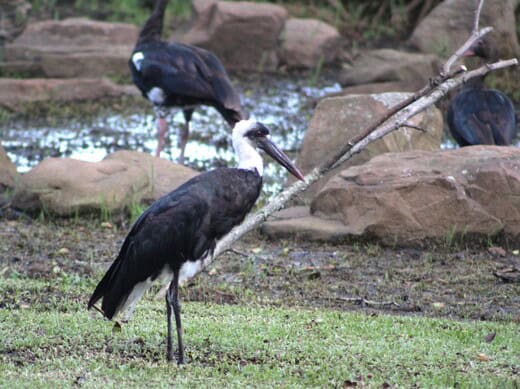
Photo: Tamlyn Cramer
“Of course by having an urban focus, the study is not necessarily representative of populations in natural habitats.
“But it is interesting nonetheless because 30 to 40 years ago, the woolly-neck was one of the rarest birds in Natal.
“They have rapidly colonised urban areas and expanded southward, almost reaching the Eastern Cape at this point. It is unprecedented.
“For my PhD, I have also been using these ring sightings to inform about dispersal distances as storks become independent of their parents.
“I have largely solicited sightings down in this part of KZN, but I had a GPS-tagged juvenile that flew all the way from Kloof, near Durban, up to St Lucia.”
Gula calls on avid birders and environmentalists to report sightings of woolly-necked stork nests in the Zululand region.
“This could provide insight into dynamics in natural area populations, as their ecology is certain to be a bit different,” he said.
To report woolly-necked nest sightings to Gula, send information and/or photographs via WhatsApp on 071 1900604.
Sightings of ringed woolly-necked storks can also be reported to him on the same number.
Don’t have the ZO app? Download it to your Android or Apple device here:


HAVE YOUR SAY
Like our Facebook page and follow us on Twitter.
For news straight to your phone invite us:
WhatsApp – 060 784 2695
Instagram – zululand_observer