
Farmers urged to prepare for hotter, wetter days
Farmers urged to plan ahead as above-normal rainfall and temperatures are expected for the next few months
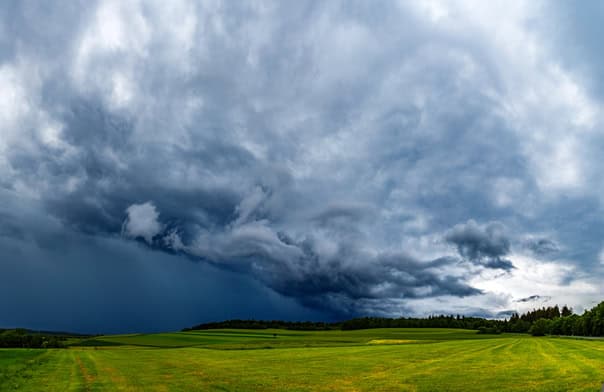
With above-normal rainfall and temperatures expected for the next few months, farmers are urged to implement strategies to safeguard their crops and livestock.
According to the 2024/25 summer season report issued by the National Agro-meteorological Committee (NAC), farmers should concentrate their efforts on short-term planning in line with seven-day weather forecasts.
“The basic strategy to follow would be to minimise and diversify risk, optimise soil water availability, and manage the renewable resources [rainwater and grazing] to uphold sound farming objectives,” the report reads.
Long-term mitigation strategies include techniques to enhance in-field water harvesting by improving infiltration and reducing run-off.
“Reduced tillage methods are very important in this regard, as is basin tillage, to capture rainwater in the drier areas,” stated the report.
Most parts of KZN recorded normal rainfall in November, with some patches above normal.
As such, summer pastures are in a good condition and farmers are preparing croplands, with some planting already having begun.
The report notes veld fires, floods and severe thunderstorms leading to wind damage in some cases.
“The average level of major dams has slightly decreased as compared with the previous years [80% in 2024, 81% in 2023].”
Commenting on climate drivers, the report mentioned that the El Niño-Southern Oscillation (ENSO) is currently still in a neutral state and is predicted to weaken mid-summer. This could potentially impact the country’s rainfall later in the summer season.
“There is also still significant uncertainty in the predictions at this stage on whether or not a La Niña event will occur.
“Above-normal rainfall is expected in the north-eastern parts of the central interior and coastal areas in late summer, and above-normal for the eastern regions in autumn.
“Temperatures are expected to be above normal, but below-normal daytime temperatures are anticipated along the south coast,” it reads.
Recommended strategies
• Choose a suitable soil type and land use management practices that would control wind and water erosion in cultivated lands
• Roughen the soil surface to enhance rain water penetration and reduce run-off
• Minimise compaction by reducing the passing of heavy machinery in the field
• For sequestration of atmospheric carbon in the soil, for increased biological activity, and better conservation of water, zero or minimum tillage is advised were possible
• Do not unnecessarily expand land under crop production
• Prioritise fallow land
• Choose short season, locally adapted cultivars as a precautionary measure
• Consider staggered planting – spreading over weeks
• Do not experiment with new and unknown cultivars
• Practice crop rotation
• Consider intercropping for improved soil structure and pest/diseases control
• Planting in a controlled environment (eg green house) is advisable where possible
• Consider mulching to minimise evaporation
• Control weeds regularly
• Consider a conservative fertilising strategy during dry conditions
• Consider organic fertilisation
• Scout for pests and diseases regularly, and control where necessary
• Remove all weeds containing seeds but keep other vegetative rests on the land because that will reduce evaporation
• Manage irrigation so the plant receives water only when needed
Don’t have the ZO app? Download it to your Android or Apple device here:


HAVE YOUR SAY
Like our Facebook page and follow us on Twitter.
For news straight to your phone invite us:
WhatsApp – 060 784 2695
Instagram – zululand_observer