
Coal on SA’s high-critical minerals list
Department of Mineral and Petroleum Resources (DMPR) has listed coal among SA's high-critical minerals list
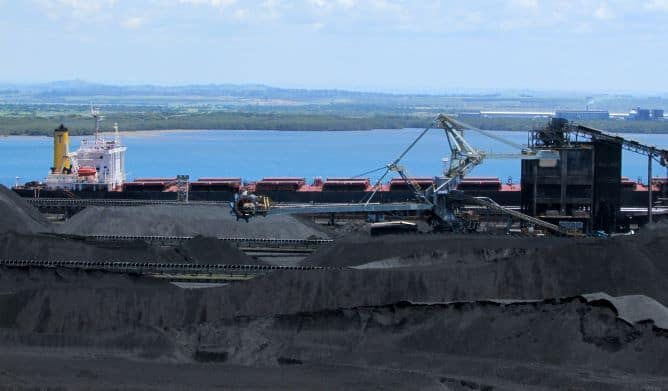
Five key minerals, including coal, have been placed on South Africa’s high-critical minerals list.
This was revealed by Minister Gwede Mantashe on Tuesday, who cited manganese, iron ore, platinum and chrome ore as also included in the list.
It follows Cabinet’s approval of the Critical Minerals and Metals Strategy for South Africa and the Mineral Resources Development Bill of 2025.
Mantashe said the move seeks to maximise the ‘country’s potential in the global market for minerals’.
According to the department, coal is the most widely used primary fuel, accounting for about 36% of the total fuel consumption of the world’s electricity production. About 77% of South Africa’s primary energy needs are provided by coal.
Some 28% of the country’s production is exported, mainly through the Richards Bay Coal Terminal, making South Africa the fourth-largest coal exporting country in the world.
In drafting SA’s critical minerals strategy, Mantashe said there are eight key indicators, including export potential, employment indicator, supply risk, export sales, domestic sales, and substitutability indicators.
“This focus ensures minerals with the highest potential to drive economic and industrial growth are prioritised,” said Mantashe.
The minister highlighted that mineral commodities such as gold, vanadium, palladium, rhodium and rare earth elements were also identified as minerals with moderate to high criticality.
Minerals such as copper, cobalt, lithium, graphite, nickel, titanium, phosphate, fluorspar, zirconium, uranium and aluminium were identified as minerals with moderate criticality.
“The list will constantly be reviewed and updated as the criticality classification mix is dependent on underlying market conditions, exploration, technological advancement, substitutability, recycling, and geopolitics, among other factors.
“Additionally, the strategy does not view critical minerals in isolation, instead they are treated as part of a larger ecosystem that drives essential technologies such as electric vehicles, hydrogen fuel cells, wind turbines, battery storage systems, microelectronics and advanced manufacturing.”
Don’t have the ZO app? Download it to your Android or Apple device here:


HAVE YOUR SAY
Like our Facebook page and follow us on Twitter.
For news straight to your phone invite us:
WhatsApp – 060 784 2695
Instagram – zululand_observer