
New study investigates role of asymptomatic transmission in TB fight
Richards Bay residents join global study investigating if people without symptoms are unwittingly spreading TB within their own homes.
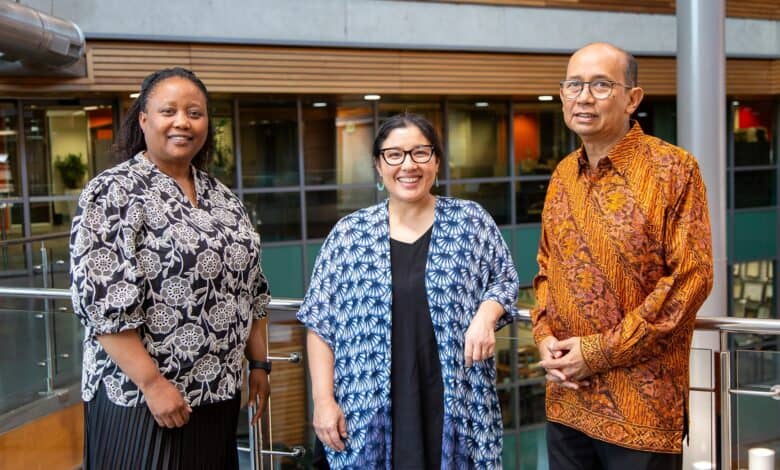
COULD symptom-free people be unwittingly passing TB to others?
This is the subject of a major new TB study whose findings could change the way the world tackles the disease.
In light of World TB Day, observed annually on 24 March, residents in and around Richards Bay are among the first to participate in this ground-breaking international research project entitled Asymptomatic TB Transmission in Indonesia and South Africa (ATTIS).
According to a statement issued by the Africa Health Research Institute (AHRI) based in Somkhele, Mtubatuba, asymptomatic TB remains one of the most complex issues hindering progress in the fight against TB – one of the leading causes of death in South Africa.
Evidence suggests more than half of all people who have TB are unaware of their status as they have no symptoms.
Large-scale research project
Researchers from AHRI and Padjadjaran University will recruit 90 000 adult volunteers from households with children in South Africa and Indonesia to participate in community-based TB screening, including chest X-rays, said AHRI.
Among volunteering households, children will be tested for immune responses to Mycobacterium tuberculosis complex (MTBC), the bacteria that causes TB, enabling the study team to assess whether asymptomatic TB in adults contributes to transmission within families.
AHRI research teams are offering this free TB screening close to people’s homes in the Mzingazi, Mandlazini and eNseleni areas.
In eligible households, all residents aged 15 years and older can be screened for TB.
The aim is to detect the disease as early as possible and refer anyone who needs treatment for further care.
“TB is often thought of as a disease that makes people very sick, with symptoms such as persistent cough and weight loss,” said Professor Limakatso Lebina, AHRI director of science.
“But we know about half of people with TB don’t feel ill at all. If we can understand if they are still passing the infection on, and at what rates, that will be a game-changer for TB control globally.”
Professor Emily Wong, AHRI faculty member, added, “TB is currently detected when people seek care at clinics and hospitals when they feel sick. If the ATTIS study shows that people who feel well have infectious asymptoma tic TB, we might have to flip the paradigm of global TB control away from clinics and screen people in their communities.”
The project will integrate innovative diagnostics and biological investigations, including testing of exhaled breath and biobanking of blood samples to support cutting-edge research.
Don’t have the ZO app? Download it to your Android or Apple device here:


HAVE YOUR SAY
Like our Facebook page and follow us on Twitter.
For news straight to your phone invite us:
WhatsApp – 060 784 2695
Instagram – zululand_observer
TikTok – @zululand_observer