The science behind KZN’s patchy sardine run
Sardine run holds great economic importance for KZN and has become the focus of a growing tourism industry
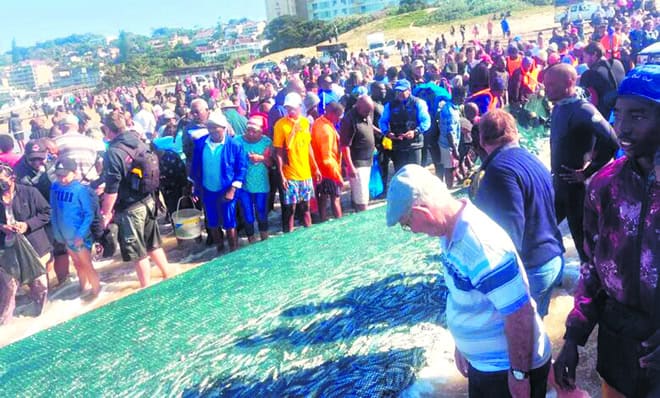
Avid anglers have been waiting patiently for the sardines to ‘run’ further north after the annual migration appeared to halt in the waters off KZN’s lower south coast last month.
The sardine run holds great economic importance for KZN, and has become the focus of a growing tourism industry.
Yet the ecological aspects of this phenomenon remain poorly understood.
ALSO READ: KZN sardine run in limbo amid warmer water conditions
The first sardines in this year’s run were netted off Port Edward on 13 June.
After a break of almost a month, sardines were finally netted slightly further north last weekend, off the coast of Hibberdene and Uvongo, with anglers believing they may soon reach Durban.
Dr Ryan Daly, Durban-based ORI (Oceanographic Research Institute) senior scientist, took the time to explain potential reasons behind this year’s apparent stagnated sardine run, but emphasised that it could typically go on until end August.
“Sea temperature plays a critical role in determining the movement and distribution of sardines along the coast,” explained Daly in a post published on the SAAMBR (South African Association for Marine Biological Research) Facebook page.
ALSO READ: Commercial-scale gill netters impact centuries-old traditional fishers in Kosi Bay
“On 13 June, sea surface temperatures at Port Edward were a favourable 19.5°C, creating suitable conditions for sardines to move northward.
“However, conditions changed rapidly over the following days. By 16 June, water temperatures on the upper south coast had risen to approximately 23.5°C, while warm water continued to persist around the Durban area.
“Sardines generally favour cooler water temperatures, and the intrusion of warmer water onto the KZN coast can slow or temporarily halt their northward progression.”
Speaking to the ZO on Monday, Daly said, while this year’s sardine run has been ‘a little patchy’, it is still too early to say if the fish are not going as far north as usual.
“Once the sardines come up to KZN, sea temperature seems to be less of a factor,” he explained.
“They can often be found in sea temperatures of 22°C. The cold temperatures are what get them moving into KZN, so they may follow a cool band of inshore water which may then warm up.”
Daly said, while this year’s shoals appear smaller than in previous years, fluctuations are expected.
“The sardine run in KZN for the past five years has been very good, so there are no indications that it is getting any worse,” he reassured.
Climate change effect
Speaking in broader terms about whether or not climate change and its effect on sea temperatures plays a role in the sardine run, Daly said it is difficult to say how this phenomenon affects local sea temperatures.
“I do think there are cycles, some warmer years and some cooler years, but this is just sea surface temperature. We know a lot less about thermoclines, temperature in the deep, etc.” he said.
In a 2024 paper published on Nature Climate Change and authored by Daly and other marine scientists, the correlation between climate change cooling and fatal marine strandings was explored.
“The impacts on marine species from secular warming and heatwaves are well demonstrated; however, the impacts of extreme cold events are poorly understood,” reads the paper.
Using a March 2021 incident in which more than 260 marine animals – 81 different species – washed ashore dead, the paper explains how climate change causes extreme intense cold upwelling events in the Agulhas Current.
The paper warned that climate change is impacting marine organisms at all levels of biological organisation; gene expression, behaviour and community structure.
“In particular, warming oceans and changes in circulation patterns drive shifts in marine species’ distributions, with tropical species moving polewards, often displacing temperate species.
“However, secular trends are complicated by intermittent extreme events, which are increasingly being recognised for long-term impacts on marine species.”
Daly et al focused on mobile marine species, such as Zambezi (bull) sharks, which was one of the species affected by the intense cold upwelling incident that led to the March 2021 fatal stranding.
Their results suggest that climate change-driven upwelling intensity could increase the frequency at which migratory sub-tropical marine life experiences these ‘killer cold events’.
Ultimately, movement patterns and species distribution could be affected.
Cold events increasing
The paper said there was an overall increasing trend in the annual number and intensity of cold events during southern hemisphere summers between 1981 and 2022.
“This increasing trend was strongest at Port Alfred and Port Elizabeth.”
Read the full report here: https://www.nature.com/articles/s41558-024-01966-8.
Dubbed the ‘Greatest shoal on earth’, the sardine run remains the subject of scientific investigation to better understand this phenomenon.
Don’t have the ZO app? Download it to your Android or Apple device here:


HAVE YOUR SAY
Like our Facebook page and follow us on Twitter.
For news straight to your phone invite us:
WhatsApp – 060 784 2695
Instagram – zululand_observer
TikTok – @zululand_observer