
Media panel cautions on election dangers
High-profile panel discussion unpacks Local Government Elections at Forum of Community Journalists (FCJ) national seminar
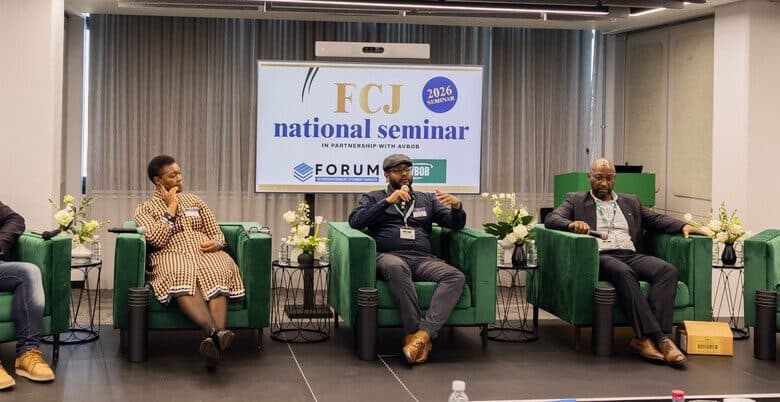
Disinformation and misinformation will be the greatest issues influencing the coming local government elections.
Hence, accuracy is the single-most important currency in journalism.
That caution came through clearly during a high profile panel discussion at last week’s Forum of Community Journalists (FCJ) national seminar held in Pretoria, sponsored and hosted by AVBOB.

Expertly led by FCJ director Ronelle Ramsamy, the panel comprised Phatiswa Magopeni – executive director of the SA Press Council, Pieter du Toit – political author and deputy editor at News24, James Aphane – general manager for electoral matters at the IEC, and Orrin Singh – investigative reporter at the amaBhungane Centre for Investigative Journalism.
ALSO READ: Elections 2026: Here’s your voting day checklist
Speaking to an audience of community journalists, their responses to probing questions revealed that an uninformed or misled electorate could easily be swayed by deliberately deceitful or even well-meaning narratives, often fed by AI and online sources.
“With the general public spreading and publishing opinion rather than fact, the onus is on the formal media sector to find and publish the truth,” said Du Toit.
ALSO READ: Elections 2026: What happens when you vote?
“Whether at national or community press level, the function is the same: to investigate, be informed, gather evidence, do research and document what is true or false on issues such as corruption, service delivery and the claims of politicians.

“It’s become unfashionable to be slow and cautious in publishing news, and taking the time to be more accurate, rather than fall for the dopamine effect of social media hits.”
The message was amplified by Magopeni: “We presently lack ethical codes on AI use but in time this will be brought into the Press Code, especially disclosures with regard to written text.
“Voters do not always understand the power they wield, and it is chiefly the job of the community press – the closest to grassroots issues – to inform and educate the electorate.
ALSO READ: Quick facts about local government elections in SA
“Take up your space – you are a trained journalist,” said Magopeni.
A former ZO journalist, Singh had special insight: “Street level journalism is important, as the eyes and ears of the community, speaking also to low literacy environments in terms they can understand.

“Address the immediate issues affecting your local community,” said Singh.
“You know who they are, where they live and what problems they face daily. And keep a respectful distance from politicians and other sources that might try to wield undue influence.
“Focus on the ward candidates; the public votes for councillors they know, not for mayors or parties per se.”
IEC spokesperson, James Aphane stressed that the IEC has information available to both media and the public, and said newspapers can be a valuable conduit of election information.
“The people need to understand the process, from how and where to vote, to the results process and counting of votes.
“We are totally transparent and available to answer any query or concern,” said Aphane.
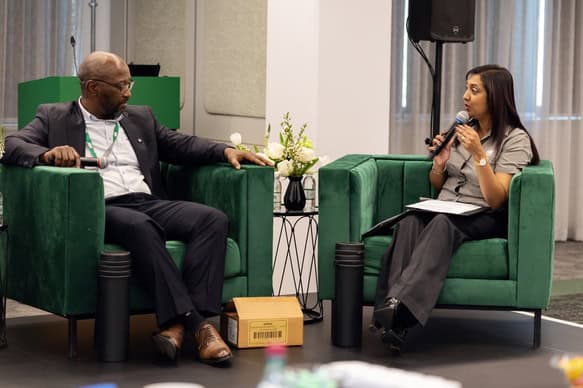
In a following session, Africa Check researcher Kirsten Cosser addressed the verifying of claims, images and videos.
“There is in fact a twofold problem: something thought to be true can be false, and something appearing as false might actually be true.
“There are various guides to verifying or refuting written or visual claims, which often take words or photos out of context to influence voter decisions, including false claims about the electoral process.
“Untrue statistics are published, and these often play on fear, anger or sensation to gain traction.
“We remember during the last election how false stories and photos were shared about bundles of uncounted ballots lying in bushes; or that ink in the pens at voting stations evaporated so that ballot papers could be rigged; or that if you failed to vote, your vote is automatically assigned to the ruling party.
“When in doubt, you can contact Africa Check online,” said Cosser.
Don’t have the ZO app? Download it to your Android or Apple device here:


HAVE YOUR SAY
Like our Facebook page and follow us on Twitter.
For news straight to your phone invite us:
WhatsApp – 060 784 2695
Instagram – zululand_observer
TikTok – @zululand_observer