Defence challenges murder investigation as state closes its case in Stapelberg trial
Legal teams will return to the Palm Ridge Magistrate's Court later this month to argue whether the accused should be acquitted without presenting a defence.
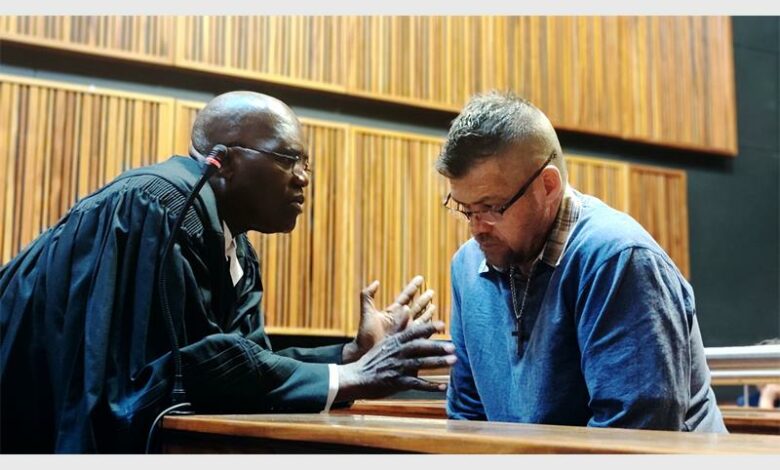
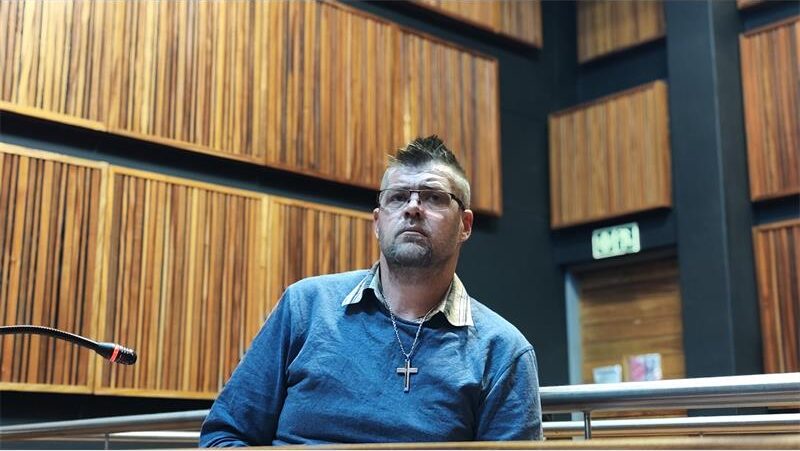
The defence in the murder trial of Freddie Stapelberg has questioned the credibility of the police investigation, the reliability of a key State witness and the handling of insurance claims as the State brought its case to a close at the Palm Ridge Magistrate’s Court on November 2.
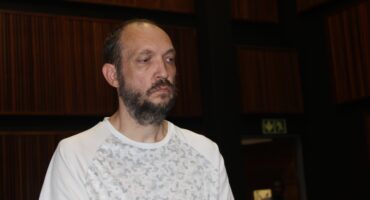
Freddie Stapelberg is facing charges relating to the November 2023 murders of his partner, Nadine Terblanche, and her young son, Ruandré Vorster.
Questions over Danhire’s confession and the investigation
Advocate Solly Tshivhase, representing Stapelberg, spent much of the proceedings cross-examining the investigating officer, Sergeant Moloto, focusing on alleged inconsistencies in the account of convicted killer Pardon Danhire, the circumstances surrounding the investigation and the financial evidence linked to the deaths of Terblanche and her son, Ruandré Vorster.
The proceedings followed the state’s applications on October 27 to introduce additional evidence, including digital forensic findings, insurance records and financial documents relating to the November 2023 murders.
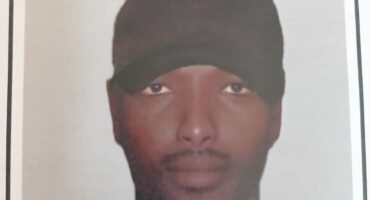
One of the main issues raised during cross-examination was the reliability of Danhire’s account, which allegedly implicated Stapelberg in the murders.
Moloto told the court that she was assigned to investigate the case in November 2023, shortly after the incident on November 27.
She testified that she first interviewed Danhire on November 28, the day after the murders. During that initial interview, Danhire denied killing the deceased. However, according to Moloto, he later indicated that he wanted to tell the truth.
Tshivhase questioned why the officer believed Danhire’s later account after he had initially denied involvement.
Moloto said she did not believe he had deliberately lied but thought he had been trying to protect himself before deciding to reveal what had happened.
The defence also challenged the timing of Danhire’s confession. During questioning, Moloto was asked to clarify whether the confession had been made on November 28, as she had previously indicated, or whether that was the date on which arrangements were made for it to be taken.
She explained that she interviewed Danhire on November 28 and informed her commander that he wanted to confess.
Arrangements were then made and the confession was taken later, possibly two to three days afterwards.
The officer further confirmed that Danhire made a separate statement after he had been sentenced. She could not recall the exact date but placed it in 2025. She was not present when the statement was taken, explaining that another officer had gone to the prison to obtain it.
Tshivhase questioned why it had taken so long for Danhire to make the statement, given the seriousness of the case. Moloto explained that he could only testify as a witness after he had been sentenced, as he had previously been an accused person.
Alleged murder weapon and evidence against Stapelberg
The defence also questioned the officer about an axe allegedly used during the commission of the crime. Moloto confirmed that she had investigated where the axe came from and had interviewed its owner.
She further testified that she had questioned Danhire about whether Stapelberg knew about the weapon.
According to Moloto, Danhire told her that Stapelberg knew nothing about the axe, had not obtained it from him and had not been told anything about it.
The defence also raised questions about the alleged physical attack on Stapelberg by Danhire, which Stapelberg reported.
Moloto recalled receiving a message from him asking whether he should open a case after being attacked by Danhire. She said he had also mentioned the incident in a statement.
When asked why she had not opened a separate case, the officer explained that she regarded it as part of the existing matter. However, Tshivhase challenged this approach, arguing that the alleged attack and the murders were separate incidents.
The defence further put it to Moloto that Stapelberg had sent her messages warning that Terblanche’s sister and her boyfriend had threatened to kill him. The officer said she could not recall receiving such messages.
Questions were also raised about whether Moloto had personally interviewed Stapelberg following his arrest.
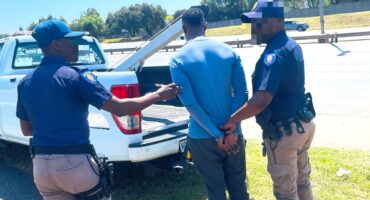
She testified that he was arrested in January 2024, approximately two months after the murders and maintained that she had visited him in the cells and interviewed him.
The defence disputed this, suggesting that other officers, including Warrant Officer Frederick Brandt and a police officer from Pretoria, had conducted the interview. Moloto said she could not rule out that they had also interviewed him.
Insurance payouts and alleged financial motive
Another significant part of the cross-examination concerned insurance policies linked to the deceased and Stapelberg.
The issue followed the State’s presentation of insurance and financial records during the October 27 proceedings.
These included documents from Hollard, FNB and Nedbank relating to funeral benefits, insurance claims and payments made after the deaths.
The records included a R20 000 funeral benefit paid to Stapelberg on December 13, 2023, following Terblanche’s death, as well as an FNB claim of R154 350 paid into his account. Nedbank records also reflected a R30 000 funeral claim paid into the nominated account on December 7, 2023.
During the November 2 proceedings, Moloto confirmed that Stapelberg was a beneficiary of insurance policies linked to Terblanche. She also acknowledged that she helped him complete forms for three funeral policies, all of which were paid out.
However, she explained that the life cover was not paid because Stapelberg had become a suspect in the murder investigation.
According to her testimony, she acted after discussing the matter with her commander and another officer, Warrant Officer Warren.
They decided to inform FNB that the beneficiary was a suspect and to place the life-policy payout, worth more than R1.2m, on hold. Moloto said she had also sent a letter to the bank requesting that the payment be stopped. However, the funeral benefits were paid because the bank indicated that funeral cover had to be paid out.
Tshivhase questioned the difference in how the funeral policies and the life cover were treated, particularly because Stapelberg was a beneficiary of all the policies.
The officer maintained that the life cover could not be paid while the beneficiary was a suspect in the matter.
The defence also questioned whether Moloto had investigated why Stapelberg was a beneficiary. She said she had not questioned him about it, explaining that she believed he was entitled to claim the funeral benefits if he was the nominated beneficiary.
However, she acknowledged that certain matters had raised suspicion during the investigation, including the life policy and an email relating to a request to change the will.
Moloto also testified that the investigation initially lacked evidence to corroborate Danhire’s allegations against Stapelberg. She said the focus shifted towards Stapelberg after Danhire made his confession.
She told the court that investigators subsequently found that Stapelberg had been in possession of the deceased’s laptop and cellphones. She also referred to an email sent to Quintin Cass, a financial broker and a call made to another insurer, which she said contributed to her belief that Stapelberg was involved.
State closes its case as defence prepares discharge application
Before the cross-examination continued, the court also dealt with an affidavit from Leslie Maselo. The document had initially been handed in provisionally after an issue was raised about its compliance with affidavit requirements.
The court was informed that the problem had been corrected after the relevant witness was consulted. It was confirmed that Maselo had signed the affidavit and that it had been commissioned in his presence. The witness then handed in the corrected document as an exhibit.
The court also asked clarifying questions about the PINs used to access the deceased’s cellphones. The witness, Moloto, confirmed that Stapelberg had supplied two possible PINs, identified as letters L and N and that one of them worked on a cellphone.
Following Moloto’s testimony and the conclusion of the state’s case, the defence indicated that it intended to bring an application under Section 174 of the Criminal Procedure Act 51 of 1977.
The provision allows a court, at the close of the prosecution’s case, to discharge an accused person and return a verdict of not guilty where there is no evidence that the accused committed the offence.
The court directed that the defence submit its application by November 4. The State’s advocate would then be required to respond by November 5.
The matter returned to the Palm Ridge Magistrate’s Court on November 6, for arguments on the Section 174 application. However, proceedings could not proceed because the defence was unavailable.
The matter has been postponed to November 19, when arguments are expected to resume.
ALSO READ: State seeks to introduce digital, financial evidence in Freddie Stapelberg murder trial